10-Day Adriatic Antiquities: Italy & Croatia

10-Day Adriatic Antiquities: Italy & Croatia

About This Cruise

Who Is This Cruise For?

  • Families

    5 kids’ and teens’ clubs on board Oosterdam

  • Couples

    A premium ship with a grown-up, relaxed atmosphere

  • Over 50s

    Holland America Line is a favourite with mature travellers

  • Solo travellers

    Low or no single supplement on selected cabins

Type

Ocean, Premium

Ship

Oosterdam

Departure Date

31 October 2027

Cruise Line

Holland America Line

Duration

10 Nights

Select Your Cabin Type
Select your cabin type
Call Us at (01) 554 1010

Itinerary

Italy

Civitavecchia

Italy's vibrant capital lives in the present, but no other city on earth evokes its past so powerfully. For over 2,500 years, emperors, popes, artists, and common citizens have left their mark here. Archaeological remains from ancient Rome, art-stuffed churches, and the treasures of Vatican City vie for your attention, but Rome is also a wonderful place to practice the Italian-perfected il dolce far niente, the sweet art of idleness. Your most memorable experiences may include sitting at a caffè in the Campo de' Fiori or strolling in a beguiling piazza.

Italy

Naples

Naples, in the Campania region, is Italy's third largest city. Its claim to fame is the spectacular location along one of the world's most splendid bays, backed by the perfect cone of Mount Vesuvius. In addition to its beautiful setting, Naples' surprises with other outstanding attractions such as the Royal Palace, San Carlos Opera House, the impressive National Archaeological Museum and the Castel Nuovo, dating from the 13th-century. The city's central area is best explored on foot. Chaotic traffic conditions make driving around the city a very frustrating experience. Naples provides a convenient starting point for trips to such favored destinations as Pompeii, Herculaneum and Mount Vesuvius. The Isle of Capri can be reached via a 45-minute hydrofoil service. The region of Campania was home to Greeks settlers some 300 years before Rome was founded. Pompeii, too, was a Greek town before being conquered by the Romans during the 5th century BC. It was under the Romans that Pompeii flourished and grew prosperous. When Mount Vesuvius erupted in 79 AD, the population of 20,000 was wiped out, but dozens of buildings were preserved under layers of cinder more than 20 feet deep. The most important finds from Pompeii are displayed in Naples' National Archaeological Museum. A visit here will no doubt enhance a visit to ancient Pompeii.

Italy

Palermo

Once the intellectual capital of southern Europe, Palermo has always been at the crossroads of civilization. Favorably situated on a crescent-shaped bay at the foot of Monte Pellegrino, it has attracted almost every culture touching the Mediterranean world. To Palermo's credit, it has absorbed these diverse cultures into a unique personality that is at once Arab and Christian, Byzantine and Roman, Norman and Italian. The city's heritage encompasses all of Sicily's varied ages, but its distinctive aspect is its Arab-Norman identity, an improbable marriage that, mixed in with Byzantine and Jewish elements, created some resplendent works of art. No less noteworthy than the architecture is Palermo's chaotic vitality, on display at some of Italy's most vibrant outdoor markets, public squares, street bazaars, and food vendors, and above all in its grand climax of Italy's most spectacular passeggiata (the leisurely social stroll along the principal thoroughfare).

Italy

Messina

Home to the Museo Regionale of Messina, known for featuring two of Caravaggio's paintings, the city is also famous for having been the capital of the ancient kingdom of Sicily.

Greece

Corfu

Corfu town today is a vivid tapestry of cultures—a sophisticated weave, where charm, history, and natural beauty blend. Located about midway along the island's east coast, this spectacularly lively capital is the cultural heart of Corfu and has a remarkable historic center that UNESCO designated as a World Heritage Site in 2007. All ships and planes dock or land near Corfu town, which occupies a small peninsula jutting into the Ionian Sea.Whether arriving by ferry from mainland Greece or Italy, from another island, or directly by plane, catch your breath by first relaxing with a coffee or a gelato in Corfu town's shaded Liston Arcade, then stroll the narrow lanes of its pedestrians-only quarter. For an overview of the immediate area, and a quick tour of Mon Repos palace, hop on the little tourist train that runs from May to September. Corfu town has a different feel at night, so book a table at one of its famed tavernas to savor the island's unique cuisine.The best way to get around Corfu town is on foot. The town is small enough so that you can easily walk to every sight. There are local buses, but they do not thread their way into the streets (many now car-free) of the historic center. If you are arriving by ferry or plane, it's best to take a taxi to your hotel. Expect to pay about €10 from the airport or ferry terminal to a hotel in Corfu town. If there are no taxis waiting, you can call for one.

No summary for this day yet.

Montenegro

Kotor

Backed by imposing mountains, tiny Kotor lies hidden from the open sea, tucked into the deepest channel of the Bokor Kotorska (Kotor Bay), which is Europe's most southerly fjord. To many, this town is more charming than its sister UNESCO World Heritage Site, Dubrovnik, retaining more authenticity, but with fewer tourists and spared the war damage and subsequent rebuilding which has given Dubrovnik something of a Disney feel.Kotor's medieval Stari Grad (Old Town) is enclosed within well-preserved defensive walls built between the 9th and 18th centuries and is presided over by a proud hilltop fortress. Within the walls, a labyrinth of winding cobbled streets leads through a series of splendid paved piazzas, rimmed by centuries-old stone buildings. The squares are now haunted by strains from buskers but although many now house trendy cafés and chic boutiques, directions are still given medieval-style by reference to the town’s landmark churches.In the Middle Ages, as Serbia's chief port, Kotor was an important economic and cultural center with its own highly regarded schools of stonemasonry and iconography. From 1391 to 1420 it was an independent city-republic and later, it spent periods under Venetian, Austrian, and French rule, though it was undoubtedly the Venetians who left the strongest impression on the city's architecture. Since the breakup of Yugoslavia, some 70% of the stone buildings in the romantic Old Town have been snapped up by foreigners, mostly Brits and Russians. Porto Montenegro, a new marina designed to accommodate some of the world’s largest super yachts, opened in nearby Tivat in 2011, and along the bay are other charming seaside villages, all with better views of the bay than the vista from Kotor itself where the waterside is congested with cruise ships and yachts. Try sleepy Muo or the settlement of Prčanj in one direction around the bay, or Perast and the Roman mosaics of Risan in the other direction.

Croatia

Dubrovnik

Nothing can prepare you for your first sight of Dubrovnik. Lying 216 km (135 miles) southeast of Split and commanding a jaw-dropping coastal location, it is one of the world's most beautiful fortified cities. Its massive stone ramparts and fortress towers curve around a tiny harbor, enclosing graduated ridges of sun-bleached orange-tiled roofs, copper domes, and elegant bell towers. Your imagination will run wild picturing what it looked like seven centuries ago when the walls were built, without any suburbs or highways around it, just this magnificent stone city rising out of the sea.In the 7th century AD, residents of the Roman city Epidaurum (now Cavtat) fled the Avars and Slavs of the north and founded a new settlement on a small rocky island, which they named Laus, and later Ragusa. On the mainland hillside opposite the island, the Slav settlement called Dubrovnik grew up. In the 12th century the narrow channel separating the two settlements was filled in (now the main street through the Old Town, called Stradun), and Ragusa and Dubrovnik became one. The city was surrounded by defensive walls during the 13th century, and these were reinforced with towers and bastions in the late 15th century.From 1358 to 1808 the city thrived as a powerful and remarkably sophisticated independent republic, reaching its golden age during the 16th century. In 1667 many of its splendid Gothic and Renaissance buildings were destroyed by an earthquake. The defensive walls survived the disaster, and the city was rebuilt in baroque style.Dubrovnik lost its independence to Napoléon in 1808, and in 1815 passed to Austria-Hungary. During the 20th century, as part of Yugoslavia, the city became a popular tourist destination, and in 1979 it was listed as a UNESCO World Heritage Site. During the war for independence, it came under heavy siege. Thanks to careful restoration, few traces of damage remain; however, there are maps inside the Pile and Ploče Gates illustrating the points around the city where damage was done. It’s only when you experience Dubrovnik yourself that you can understand what a treasure the world nearly lost

Croatia

Split

Split's ancient core is so spectacular and unusual that a visit is more than worth your time. The heart of the city lies within the walls of Roman emperor Diocletian's retirement palace, which was built in the 3rd century AD. Diocletian, born in the nearby Roman settlement of Salona in AD 245, achieved a brilliant career as a soldier and became emperor at the age of 40. In 295 he ordered this vast palace to be built in his native Dalmatia, and when it was completed he stepped down from the throne and retired to his beloved homeland. Upon his death, he was laid to rest in an octagonal mausoleum, around which Split's magnificent cathedral was built.In 615, when Salona was sacked by barbarian tribes, those fortunate enough to escape found refuge within the stout palace walls and divided up the vast imperial apartments into more modest living quarters. Thus, the palace developed into an urban center, and by the 11th century the settlement had expanded beyond the ancient walls.Under the rule of Venice (1420–1797), Split—as a gateway to the Balkan interior—became one of the Adriatic's main trading ports, and the city's splendid Renaissance palaces bear witness to the affluence of those times. When the Habsburgs took control during the 19th century, an overland connection to Central Europe was established by the construction of the Split–Zagreb–Vienna railway line.After World War II, the Tito years saw a period of rapid urban expansion: industrialization accelerated and the suburbs extended to accommodate high-rise apartment blocks. Today the historic center of Split is included on UNESCO's list of World Heritage Sites.

Italy

Trieste

Up until the end of World War I, Trieste was the only port of the vast Austro-Hungarian Empire and therefore a major industrial and financial center. In the early years of the 20th century, Trieste and its surroundings also became famous by their association with some of the most important names of Italian literature, such as Italo Svevo, and English and German letters. James Joyce drew inspiration from the city's multiethnic population, and Rainer Maria Rilke was inspired by the seacoast west of the city. Although it has lost its importance as a port and a center of finance, it has never fully lost its roll as an intellectual center. The streets hold a mix of monumental, neoclassical, and art-nouveau architecture built by the Austrians during Trieste's days of glory, granting an air of melancholy stateliness to a city that lives as much in the past as the present.
Suite

Pinnacle Suite

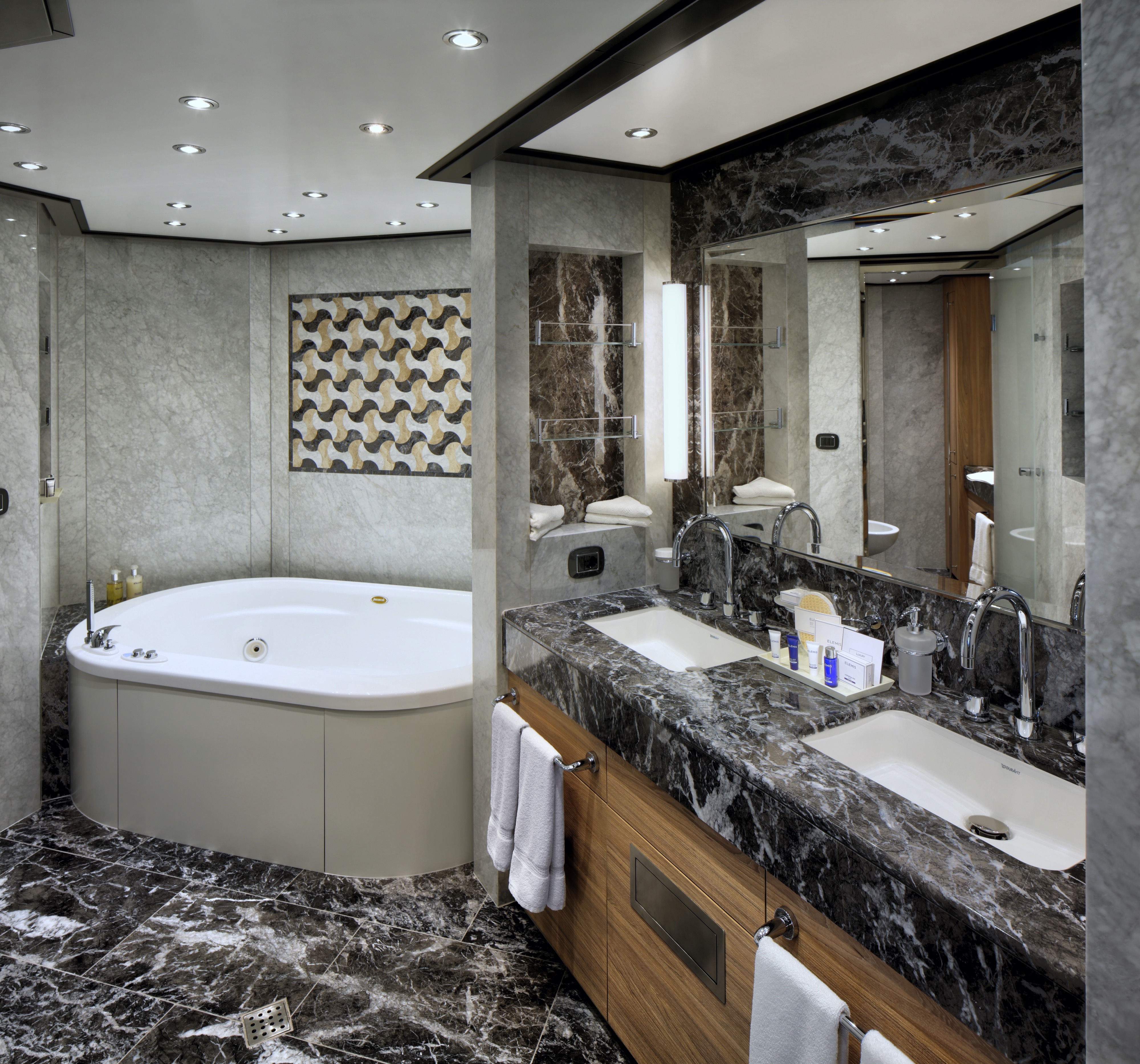
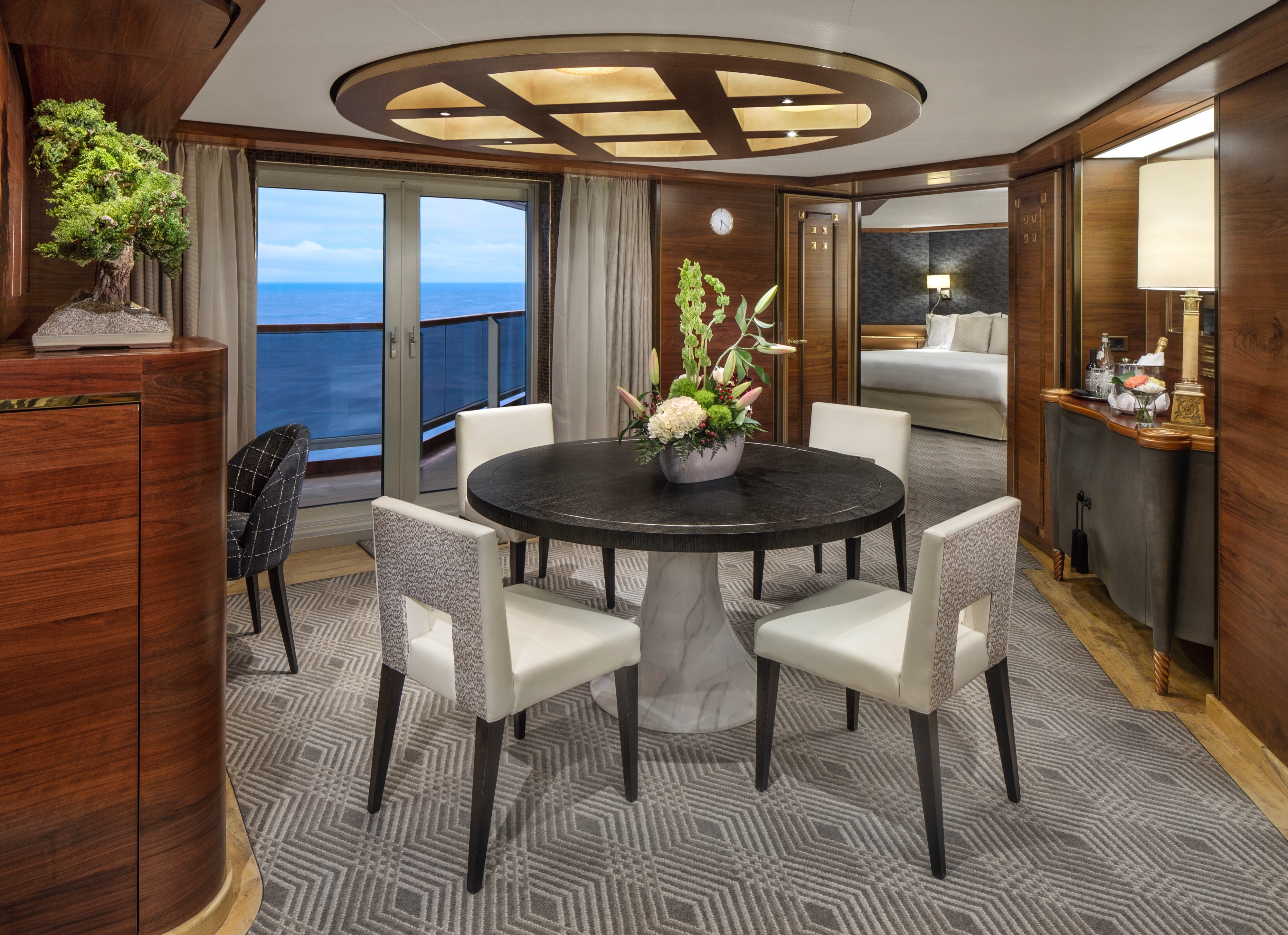
Our premier 1,290 sq. ft. Pinnacle Suite features floor-to-ceiling glass doors, a large private Whirlpool verandah, living, dining, and dressing rooms, and lush sleeping accommodations with luxurious Duxiana® king beds. These elegant suites sleep up to four guests and include a deep soaking tub and an independent, full-size shower stall, dual-sink vanities, and guest toilets.

  • 1,290 sq. ft.
  • Exclusive access to the Neptune Lounge
  • Personal concierge
  • Priority check-in
  • Complimentary laundry service, pressing, and dry cleaning
Suite

Neptune Suite

Featuring floor-to-ceiling glass doors, a spacious private verandah, expansive sitting areas, and comfortable sleeping accommodations with Mariner’s Dream™ beds, our 465–502 sq. ft. suite sleeps up to four guests and boasts a deep soaking tub and an independent, full-size shower stall, dual-sink vanities, premium bathrobes, pillow menus, fresh flowers, and binoculars.

  • 465–502 sq. ft.
  • Exclusive use of Neptune Lounge
  • Personal concierge
  • Priority check-in
  • Complimentary laundry service, pressing, and dry cleaning
Suite

Signature Suite

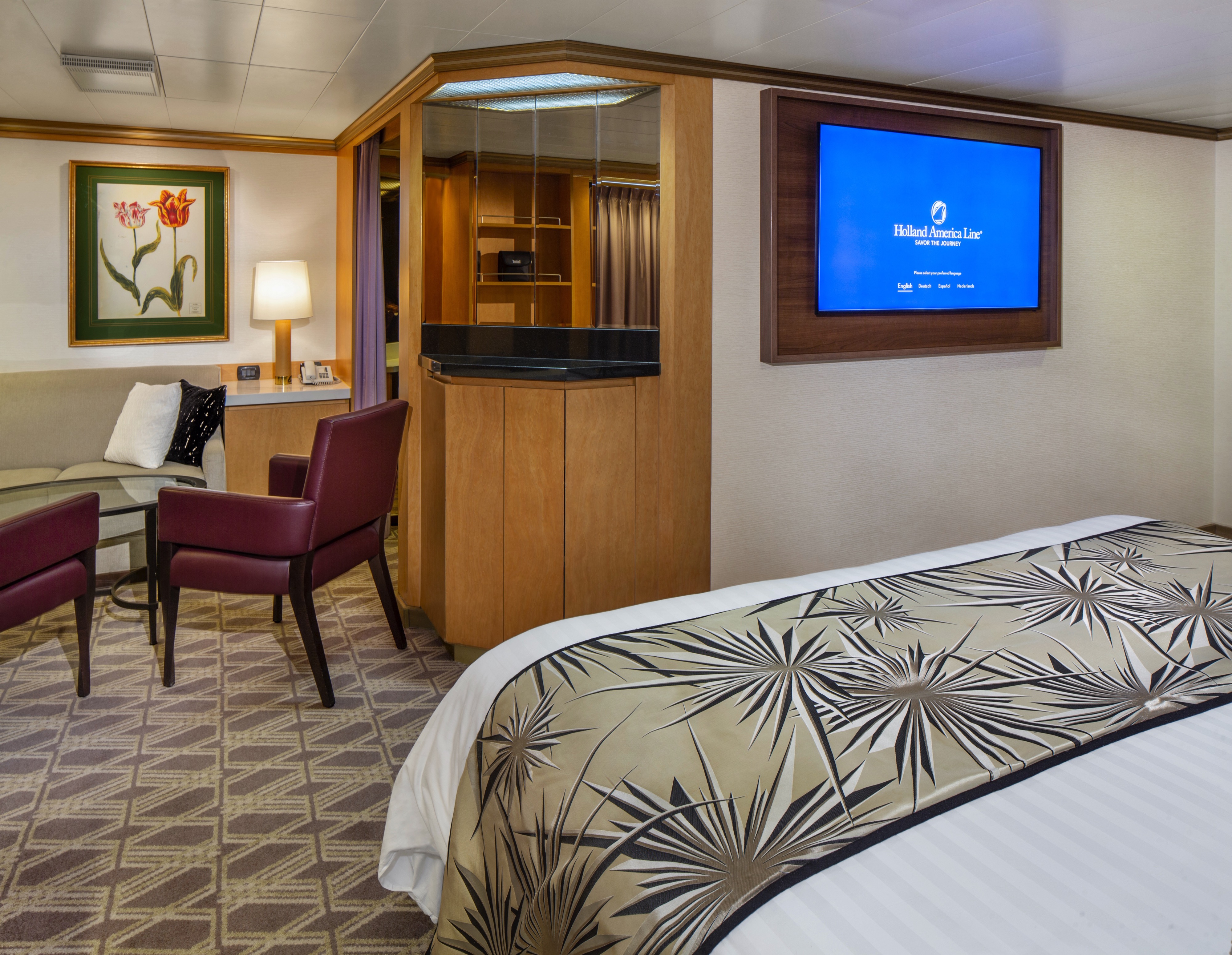
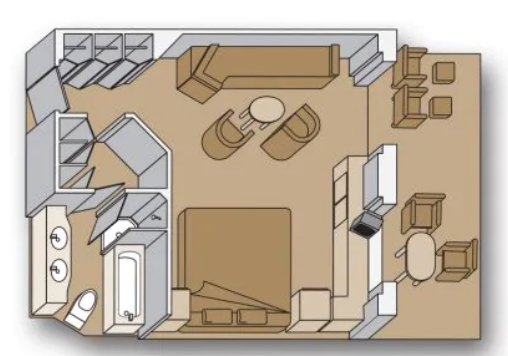
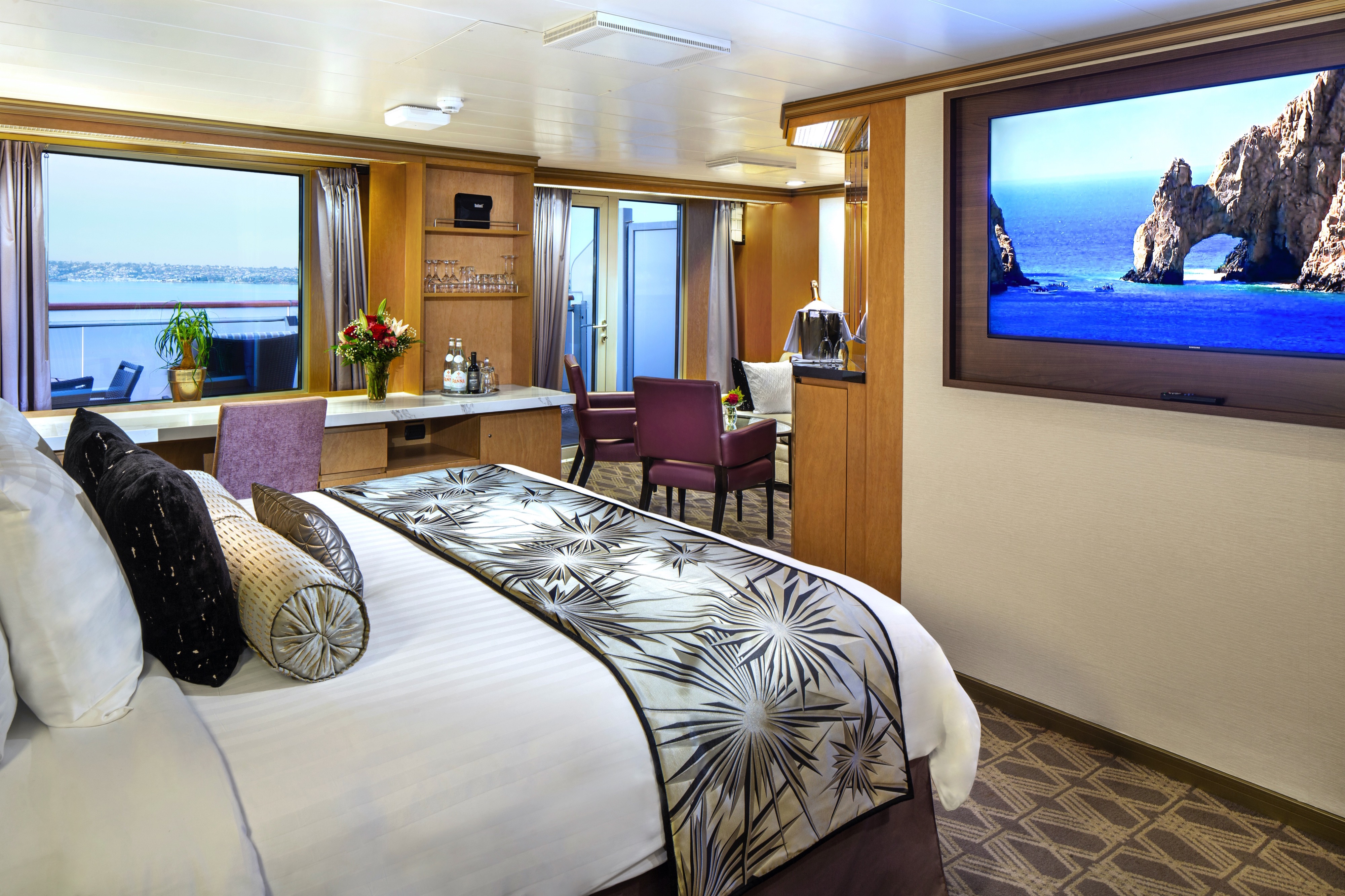
These elegant 393–400 sq. ft. suites feature a sitting area with floor-to-ceiling glass doors overlooking a private verandah. Signature Suites accommodate up to four guests with two beds that convert to a queen- or king-size bed — our signature Mariner’s Dream™ bed, and a Murphy, Pullman, or sofa bed, depending on configuration.

  • 393–400 sq. ft.
  • Full-size Whirlpool bath
  • Refrigerator
  • Set of binoculars

Balcony

Verandah

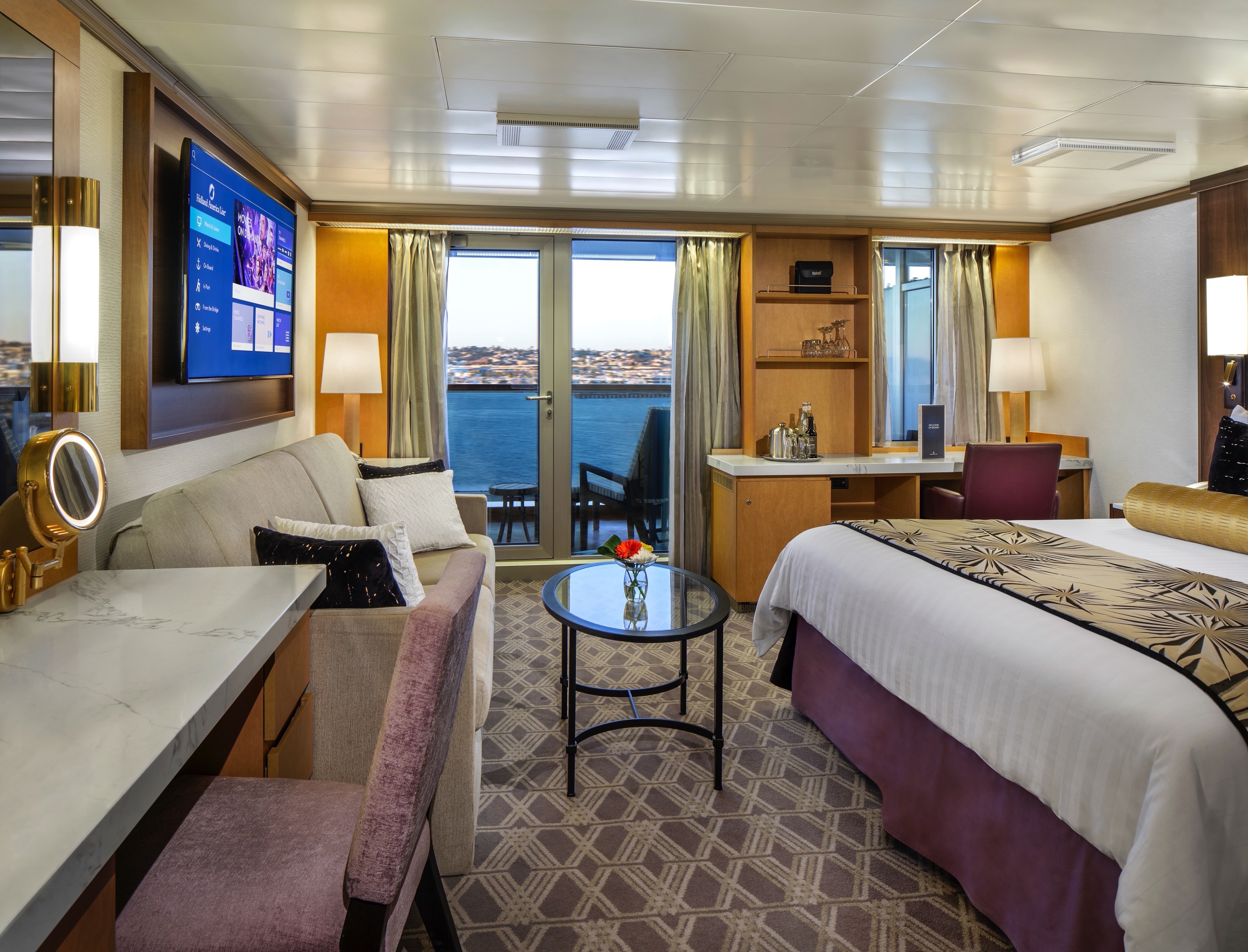
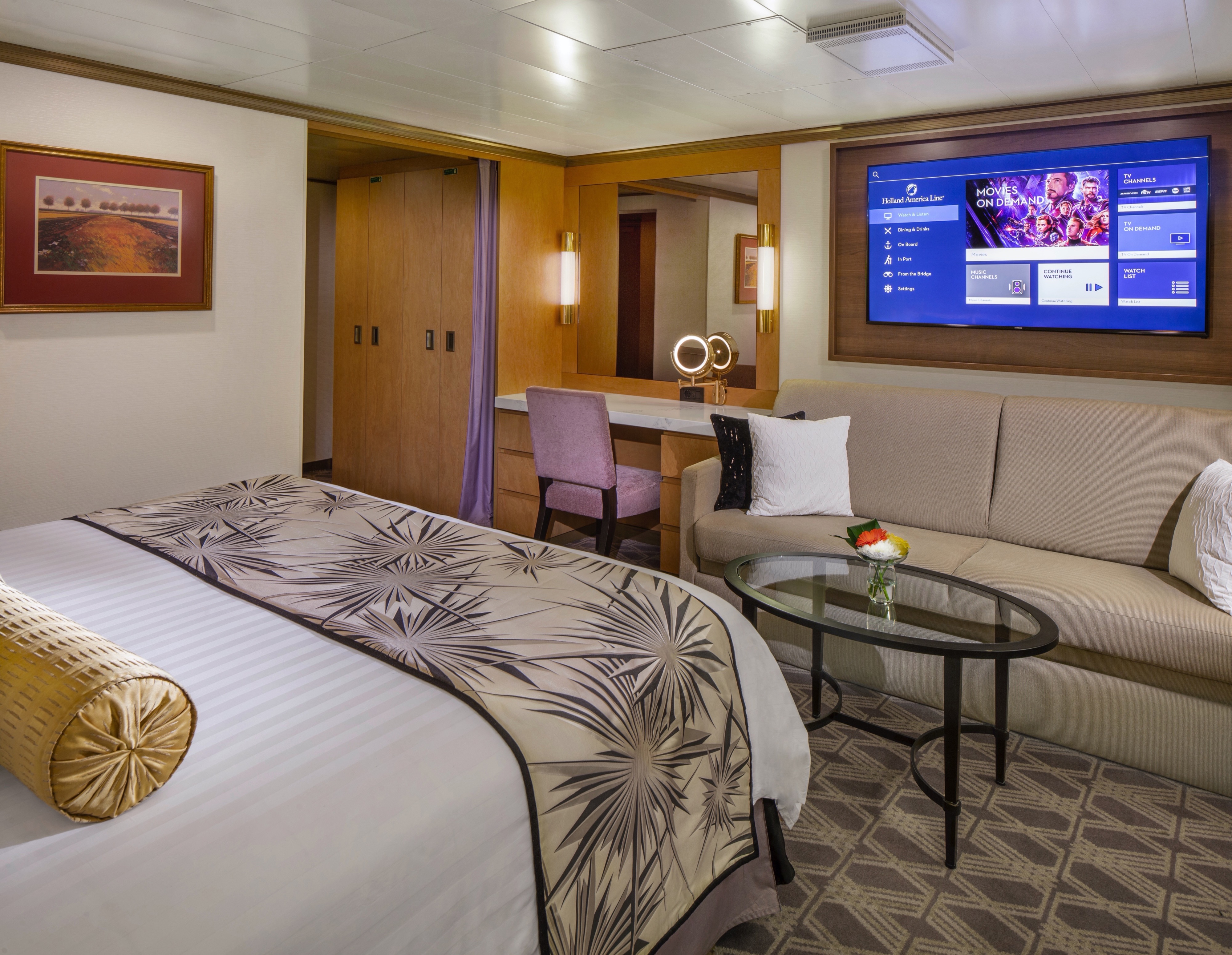
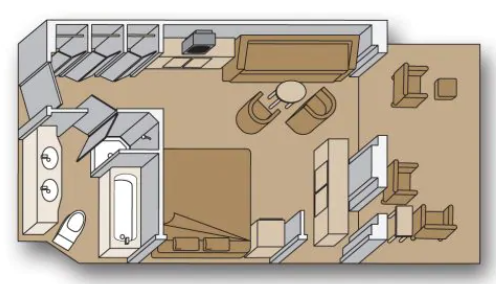
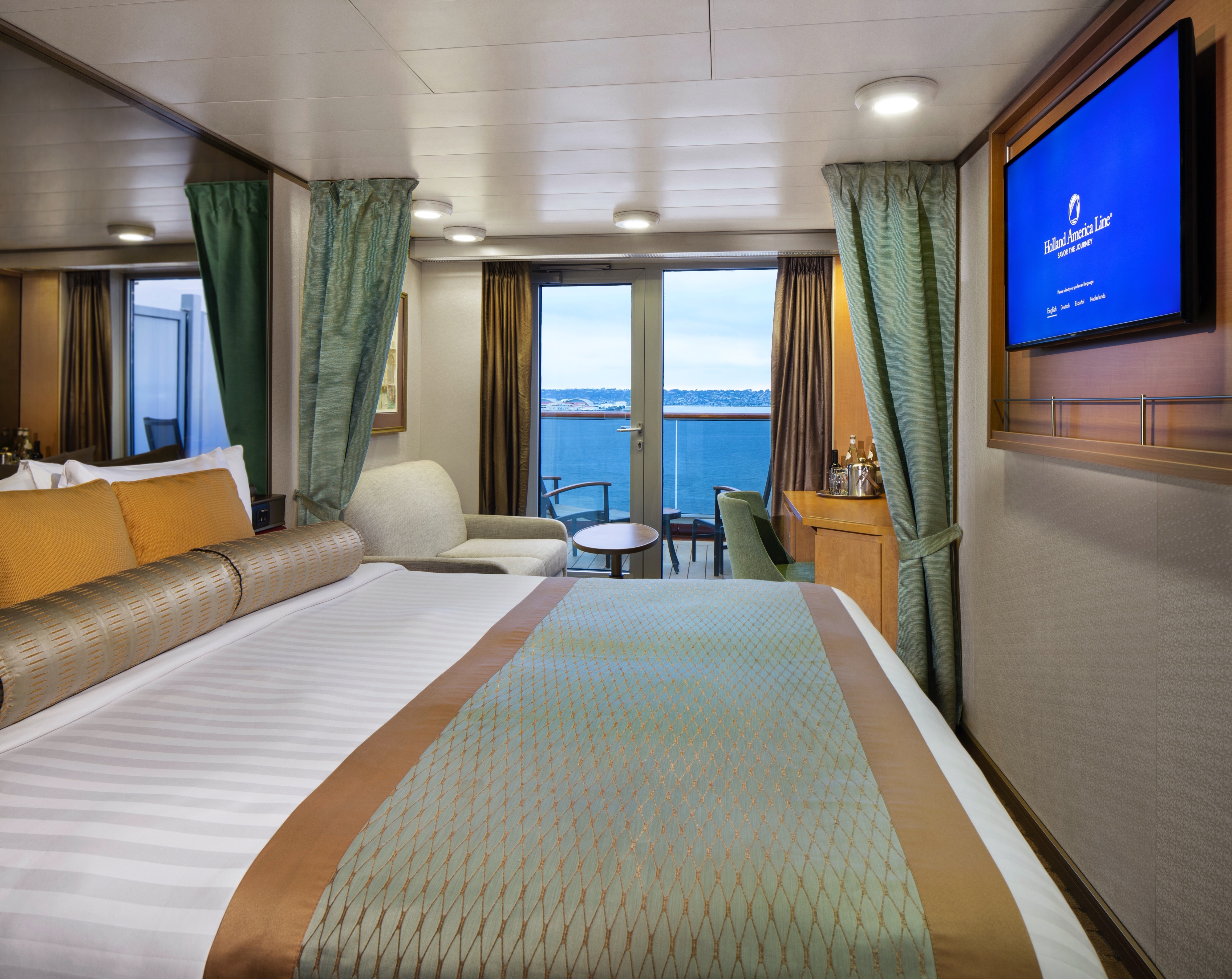
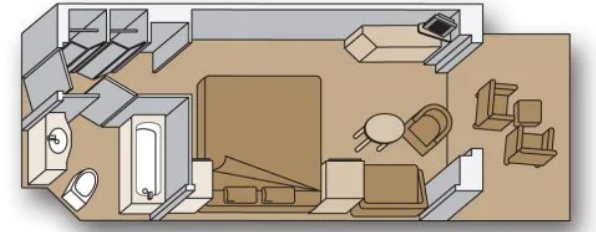
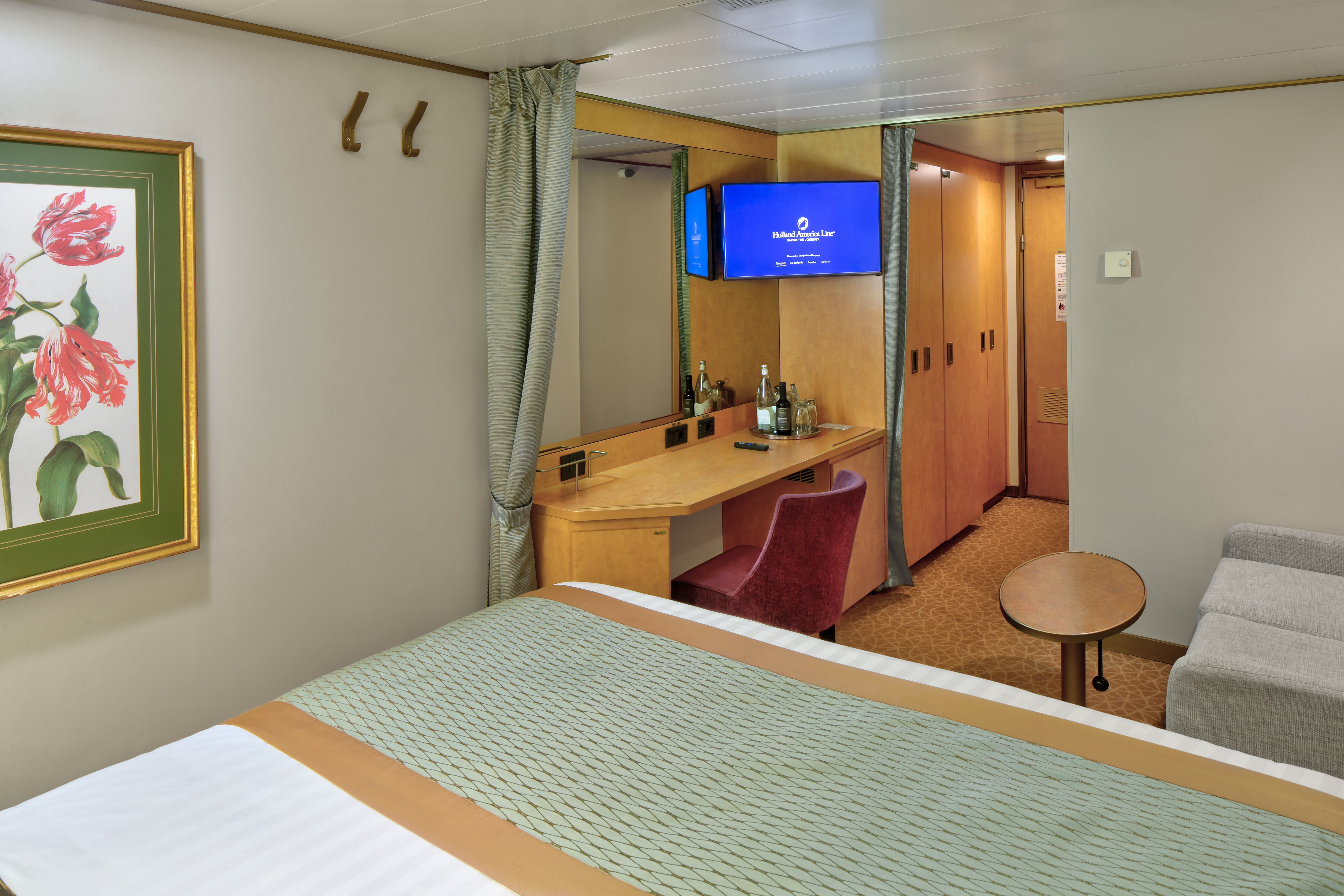
Floor-to-ceiling glass doors lead to your private balcony, infusing these coveted 228–405 sq. ft. staterooms with natural light. Enjoy a private verandah overlooking the ocean, a spacious sitting area for unwinding, and our signature Mariner’s Dream™ bed that can convert from one queen to two beds.
Outside

Ocean View

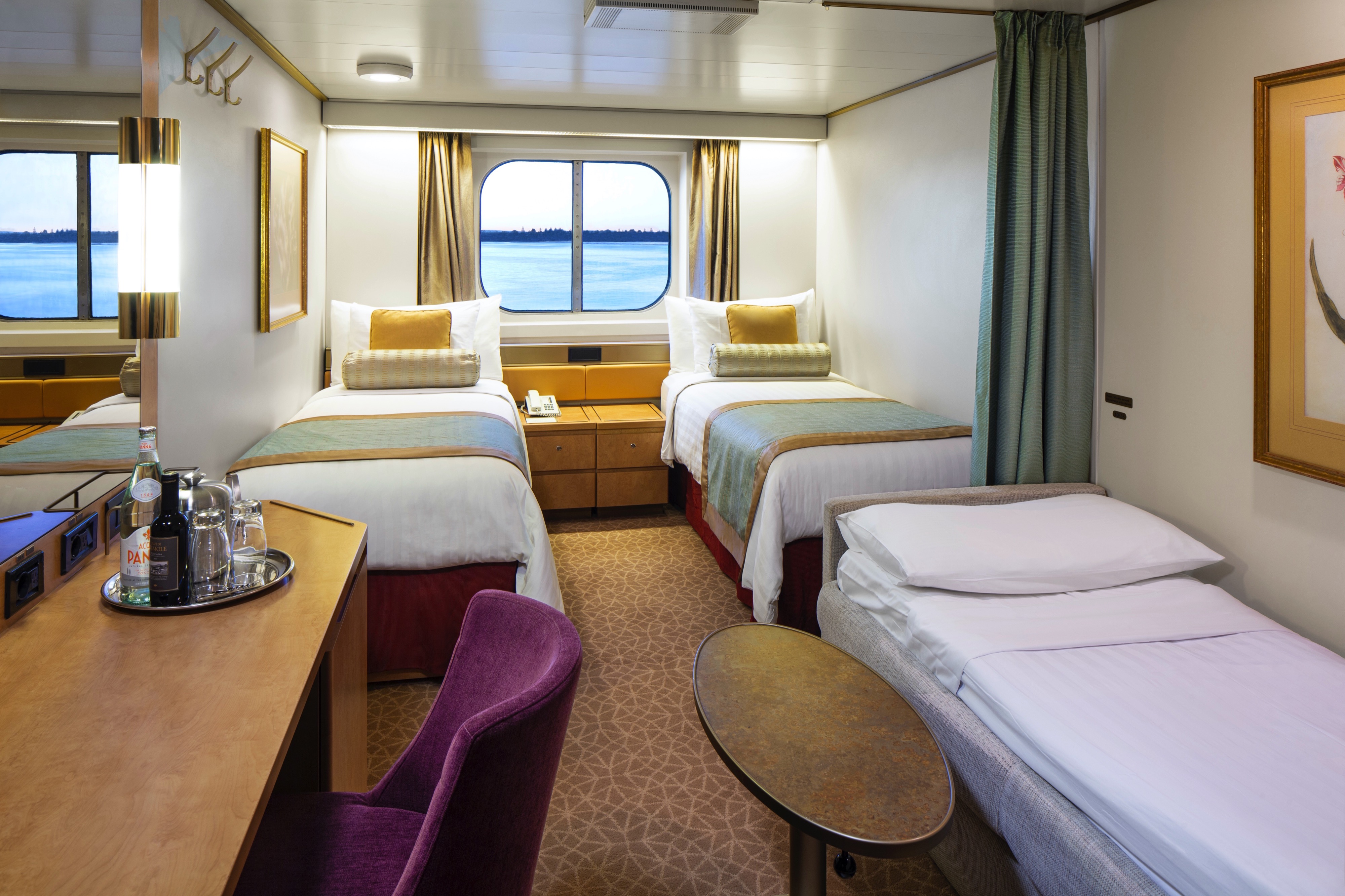
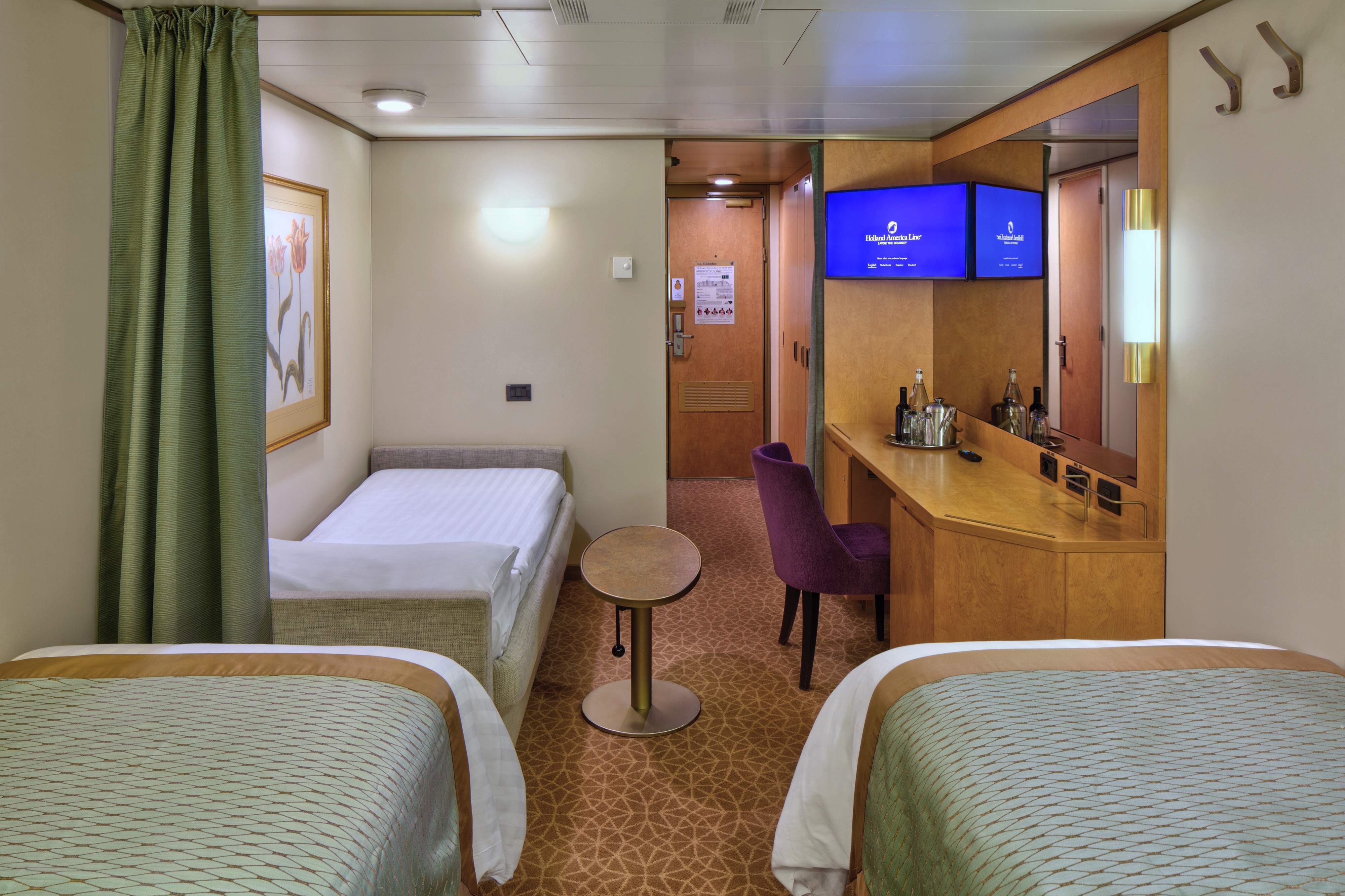
With a view of the ocean through a window or porthole, these expansive staterooms include a sitting area, two beds that convert to one queen-size bed — our signature Mariner's Dream™ bed with plush euro-top mattress — premium massage showerheads, and a host of amenities.
Outside

Partial Sea View

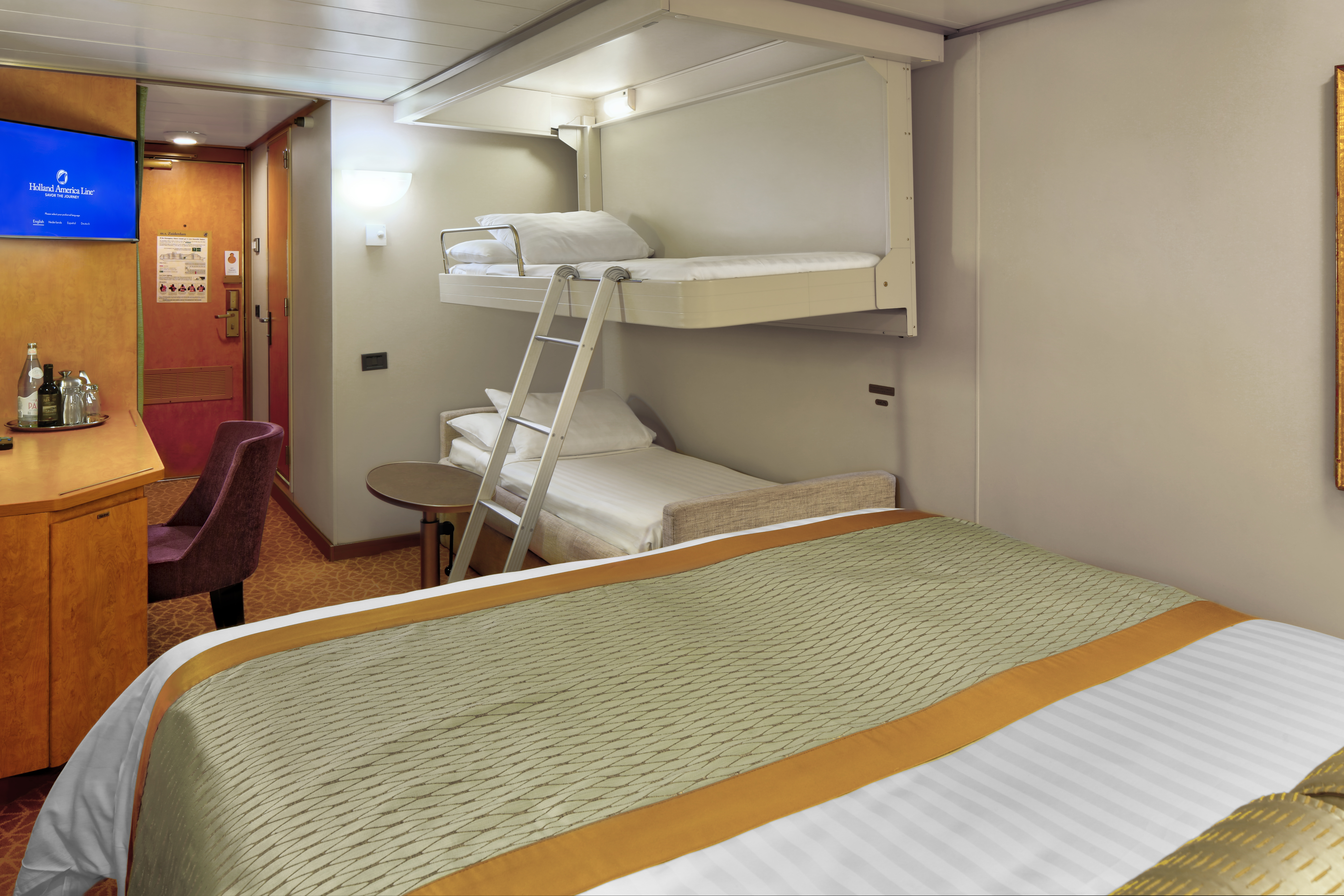
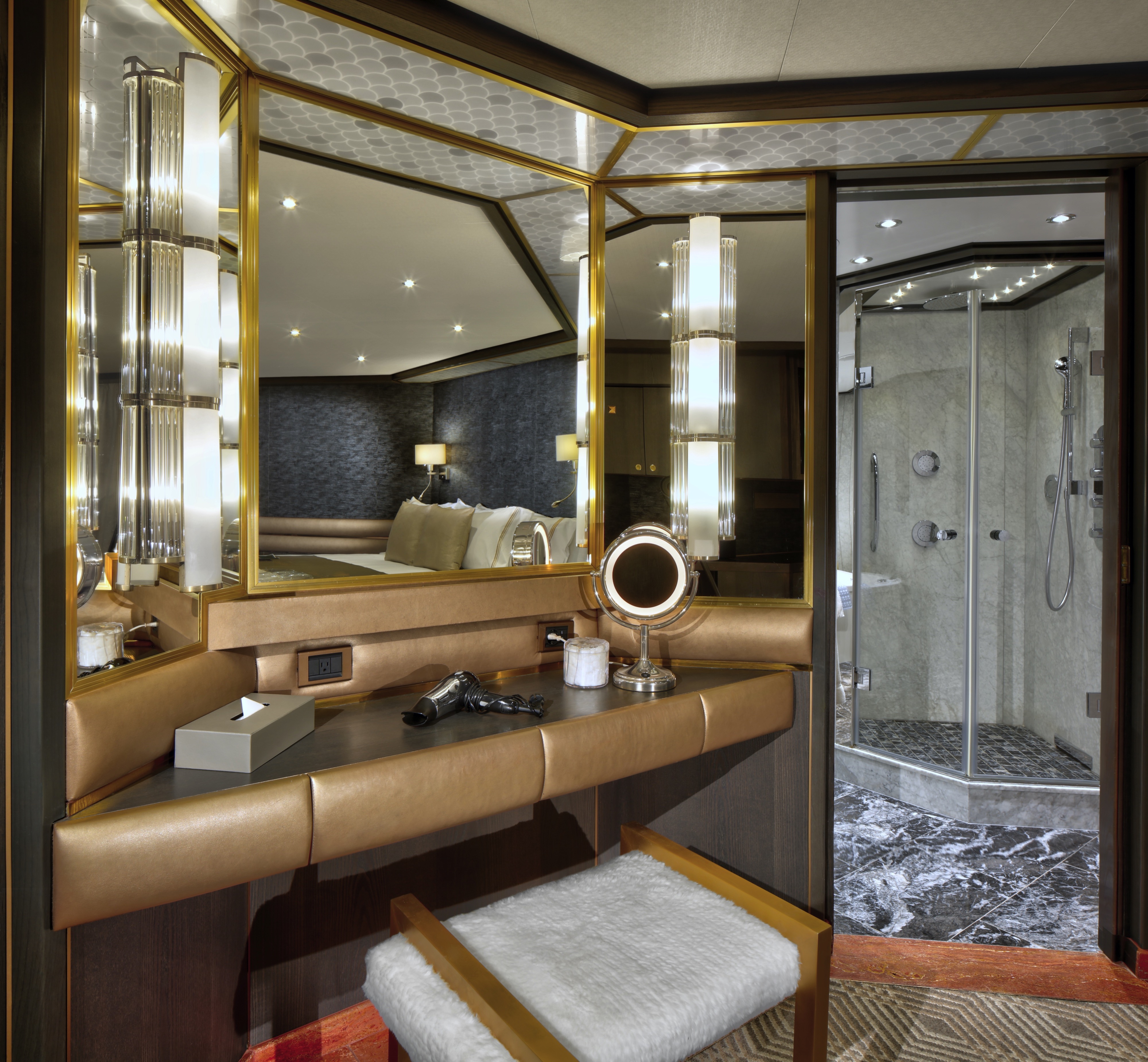
These 175–282 sq. ft. staterooms have a partially obstructed view through a window or porthole and include a sitting area, ample storage space, two beds that convert to one queen-size bed — our signature Mariner's Dream™ bed with plush euro-top mattress. Additional amenities include premium massage showerheads and a variety of tasteful touches.
Outside

Fully Obstructed Ocean View

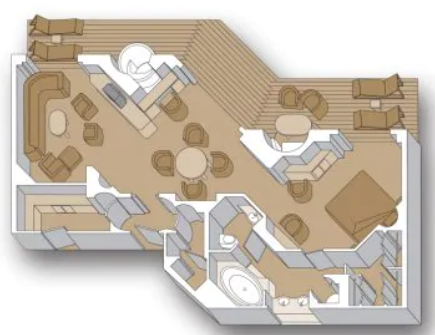
These 175–282 sq. ft. staterooms have a fully obstructed view through a window or porthole and include a sitting area, ample storage space, two beds that convert to one queen-size bed — our signature Mariner's Dream™ bed with plush euro-top mattress. Additional amenities include premium massage showerheads and a variety of tasteful touches.
Inside

Large Inside

Offering 222–231 square feet of space, these staterooms are designed for up to five guests and include extra closet storage and one bathroom. Each stateroom features amenities such as daily housekeeping, generous storage, deluxe bathrobes, and in-room safes for valuables.
Inside

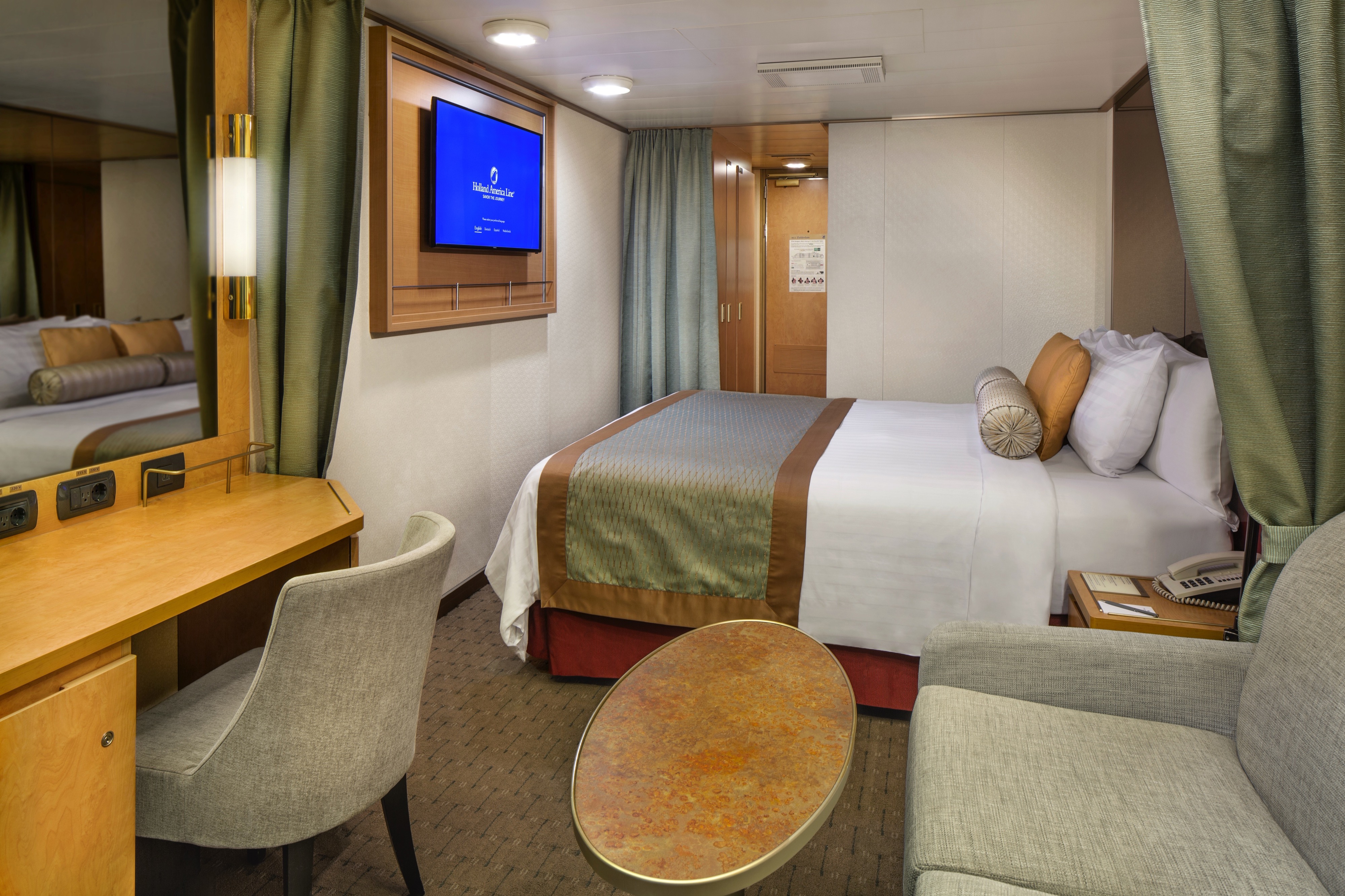
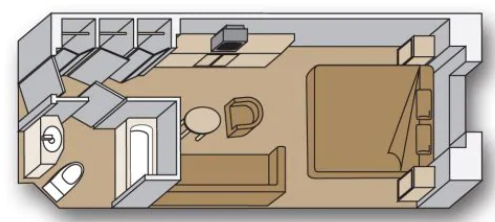
Inside

These comfortable 143–225 sq. ft. staterooms feature ample storage space and two beds that convert to one queen-size bed — our signature Mariner's Dream™ bed with plush euro-top mattress — premium massage showerheads and a host of amenities.
steakhouse

Pinnacle Grill

Welcome to Pinnacle Grill, our signature chophouse featuring Wagyu, seafood, regional specialties, sides, wines & desserts.
italian

Canaletto

In Italy, there’s nothing more important than coming together to celebrate the joy of great food. Canaletto's crafted menu is inspired by the simplicity of Italian food and its rich, robust flavors. And at Canaletto, our pasta is made from scratch each and every day. Buon Appetito!
classic

The Dining Room

Multi-course dining with fresh seafood, global flavors, and flexible options daily, all included in your cruise fare.

varies

Lido Market

Enjoy food stations featuring classic favorites, regional specialties, and made-to-order entrées.
fast

Dive-In

Dive-In offers a variety of casual culinary classics, using the highest quality ingredients. Enjoy a burger, grilled to perfection and served on a toasted brioche with our own trade-marked secret sauce. Savor a succulent Nathan’s Famous gourmet hot dog with golden French fries. Or choose a grilled chicken breast sandwich or juicy portabella mushroom stack. Dive-In is the perfect spot to dine poolside on the best burgers at sea.

room

24-Hour In-Room Dining

Freshly prepared breakfast, lunch, dinner, and late-night favorites delivered right to your door.
Bar

Ocean Bar

Taste handcrafted cocktails and dance the night away at Ocean Bar - a lively lounge perched above the atrium.
Nightclub

Crow's Nest

Relax in the Crow's Nest, a panoramic lounge high above the sea. Sip your favorite drink and soak in stunning views.
Bar

Explorer's Lounge

Relax in an elegant and refined space on board where you can enjoy a glass of wine, a cocktail, or your favorite liqueur.

Theatre, Musicians

Billboard Onboard

Join the biggest sing-along at sea, test your music trivia skills, and enjoy “All Request” performances featuring classics, and crowd favorites.

Cinema

World Stage

Bold visuals, dynamic choreography, dazzling costumes, and unforgettable music unite in spectacular shows spanning genres and generations.

Casino

Casino Action

Your Holland America Line ship’s Casino offers a wide array of gaming options. Whether you prefer slot machines or want to try your hand at blackjack or poker, our dealers and staff are available to provide complimentary instruction — and we offer many engaging tournament options. The Casino is only open at sea.
Shop

The Signature Shops

Shop duty-free for designer watches and Effy jewelry, then capture memories with expertly crafted photo keepsakes.
Spa

Greenhouse Spa & Salon

Spa and Wellness Facilities
Experience rejuvenation with hydrotherapy pools, heated loungers, serene steam and sauna rooms, tranquil massage spaces, and a fully equipped fitness center for energizing, instructor‑led workouts. Amenities and facilities vary by ship.
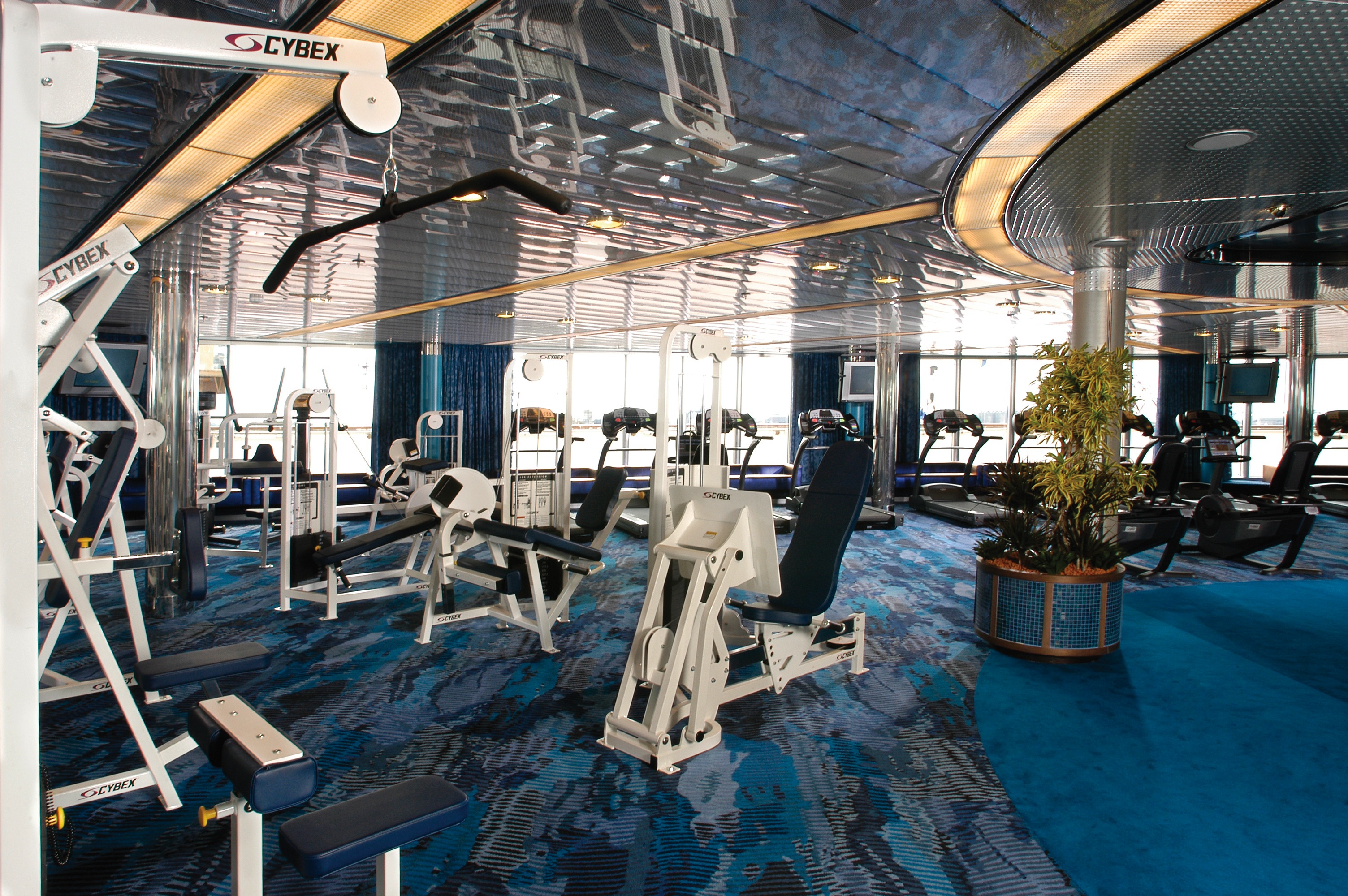
Gym, Exercise Class, Sports Court

Fitness Centre

All Holland America ships have a Fitness Center featuring the latest in workout equipment as well as free weights, instructor led classes, and optional personal training.
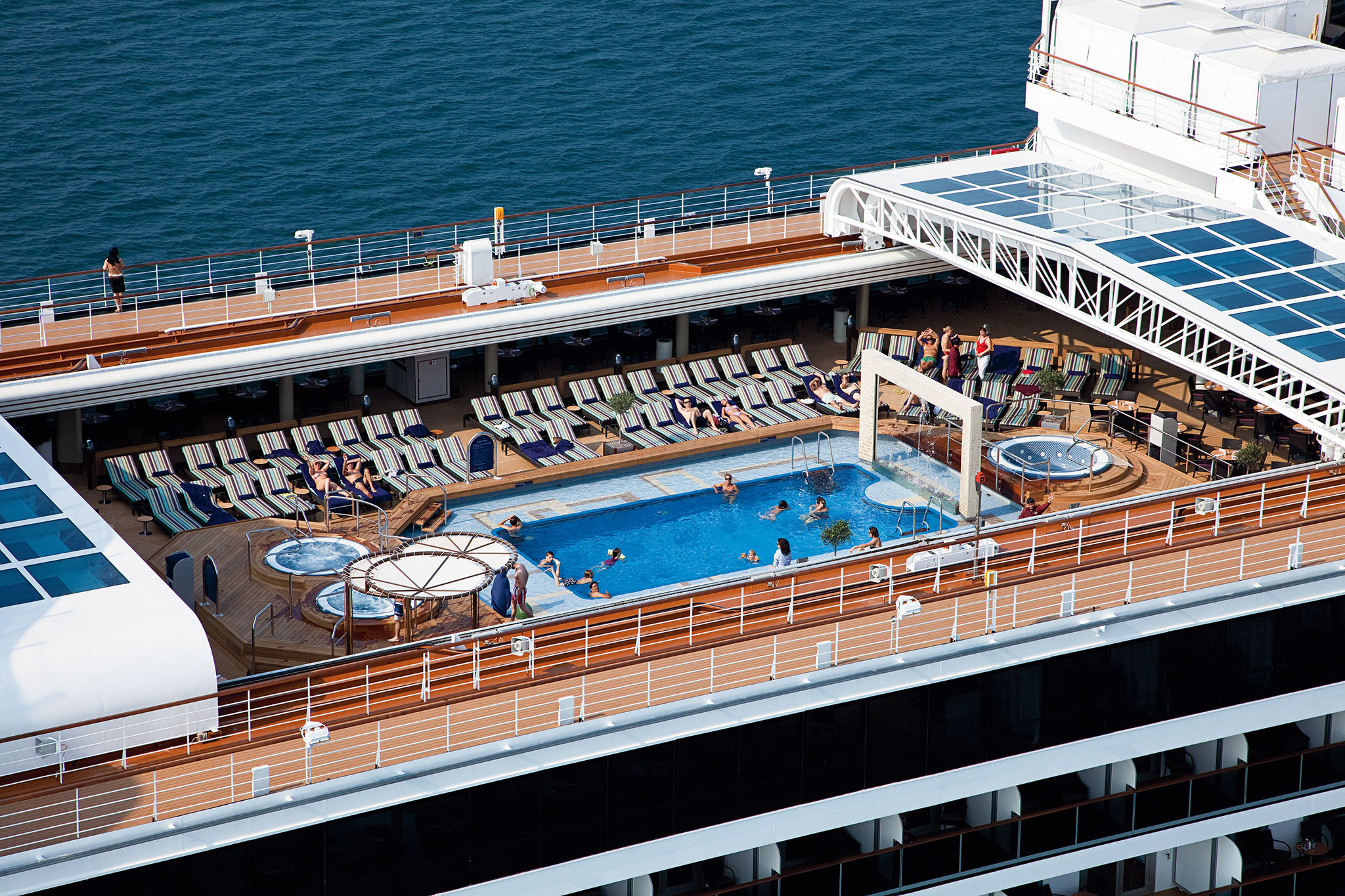
Pool

Lido & Sea View Pool

The Sea View Pool aft of deck 9 is the ship's open air pool featuring two whirlpools and served by the Sea View Bar and Slice the pizzeria.

The pool itself has a shallow area around the edge of it for sitting in to cool down. This pool is designated for adults only.

The Lido Pool is also located midship on deck 9. It has 3 hot tubs and is protected by a retractable glass dome cover during inclement weather. It is served by the Lido Bar and Trident Grill for light meals and has a bandstand for live entertainment. 

Sports Court

Pickleball At Sea

Whether you're new to the game or a pro, each Holland America ship offers one or two ocean-view courts, so you can serve, volley, and score while sailing the world.

Kids Programs (Ages 3-6)


A world of supervised fun awaits — arts & crafts, sports, and games — all designed to spark creativity and help kids build real friendships at sea.
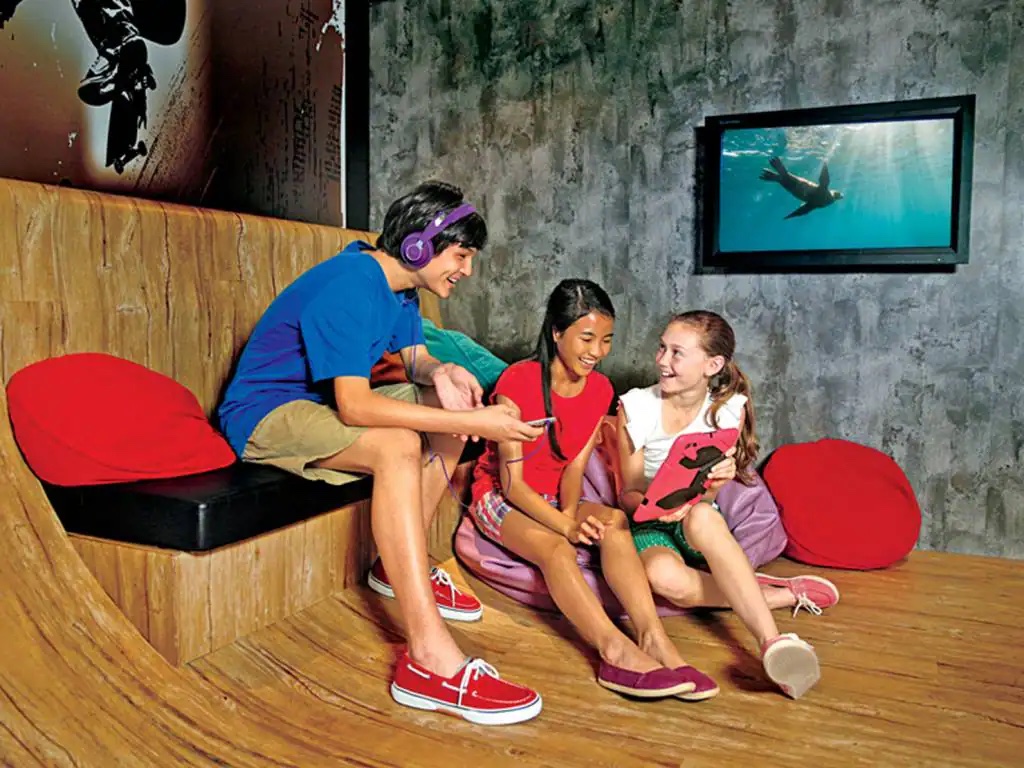
Tweens Programs (Ages 7-11)

From arts & crafts and sporting events to video gaming tournaments and movie nights, there's plenty to keep tweens engaged.

Teens Programs (Ages 12-17)

Teens connect through sports, group games, movie nights, and dedicated hangouts, plus exclusive evening events like video game tournaments.

Special Needs

Children with special needs are welcome in Kids Club by age. Some activities may require parental support — please share needs at booking.

Port Day Activities

Kids Club activities are available from 9 a.m. to 12 p.m. and 1 p.m. to 4 p.m. on port days*. Lunch is not offered as part of this service. Children must be registered and signed into and out of programming by a parent or guardian.

*Hours of operation may change to better serve our guests.