Croatia, Under Sail Aboard Le Ponant

Croatia, Under Sail Aboard Le Ponant

About This Cruise

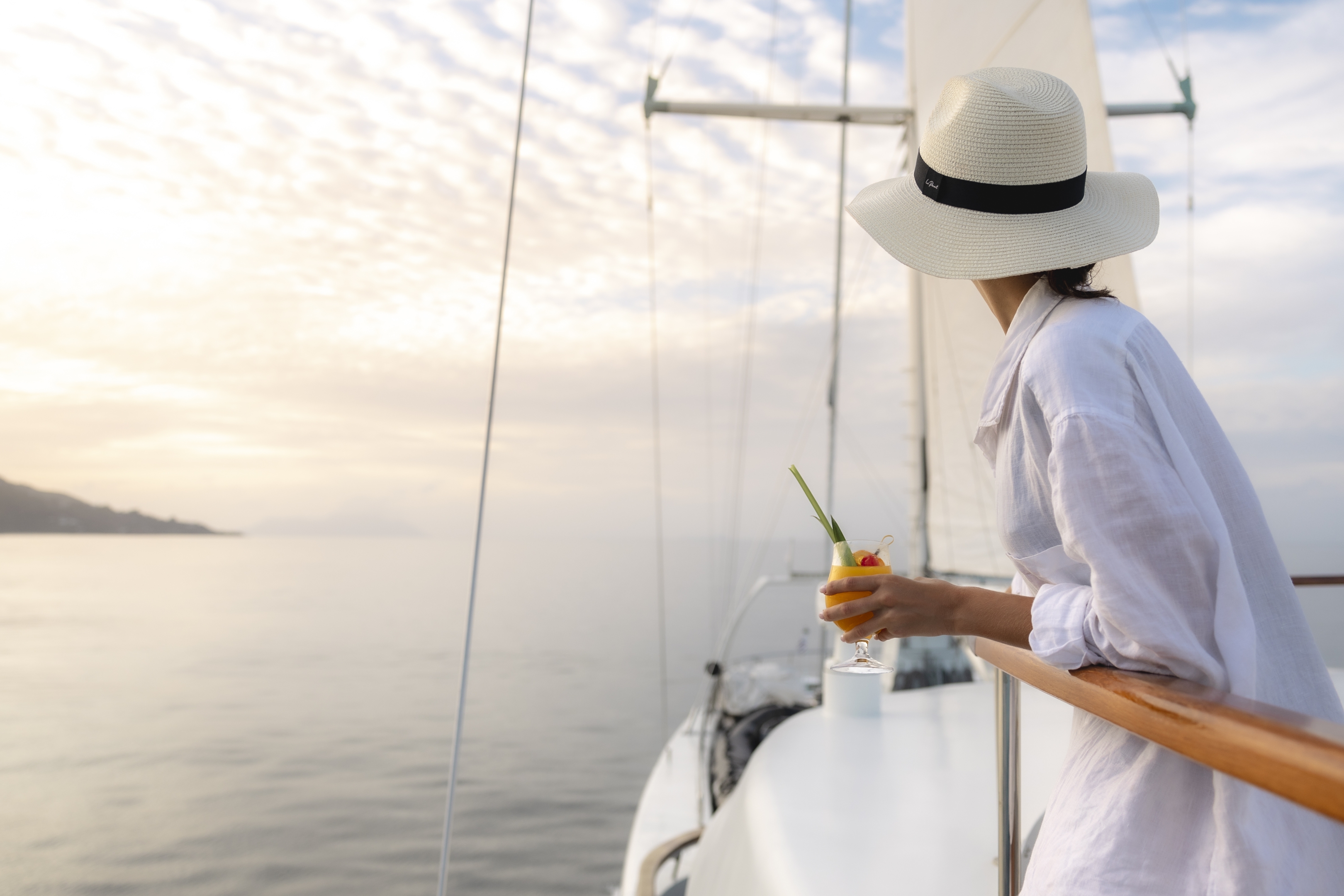
Aboard Le Ponant, the first Relais & Châteaux sailing yacht, navigate off the beaten path and discover a luminous Adriatic, with its historic cities and preserved Dalmatian islands.Here, old white stones and azure blue coves are imbued with the scents of flowers and olive trees warmed by the sun. Radiant Dubrovnik, stunning Vis and Korcula: each port of call invites you to harmonise your rhythm to pomalo, meaning “to take it easy” in Croatian.Traditional singing and dancing, tastings, cultural discoveries and infinite sunsets will pace this journey, featuring stunning panoramas and summer adventures.

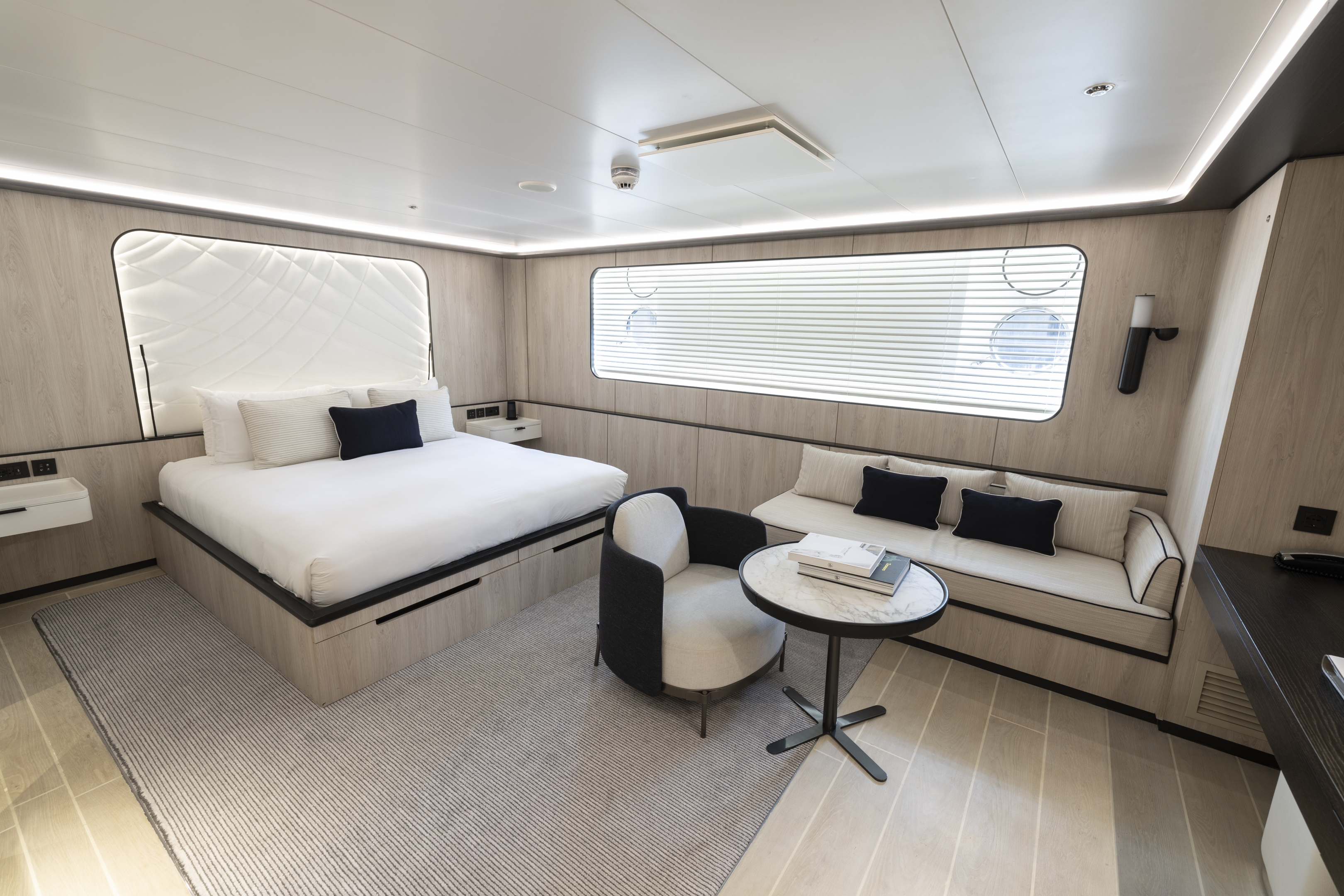
Whether you are a lover of the sea or a curious traveller, experience once again the indescribable joy of navigating under sail surrounded by the elements. Take your place aboard Le Ponant, a majestic three-mast yacht with elegant lines and an interior designed by the Jean-Philippe Nuel studio to be a warm and intimate setting with a highly distinctive character. As if on your very own yacht, savour the freedom of living in the moment.

Who Is This Cruise For?

  • Adults only

    Le Ponant is an adults-only ship

  • Couples

    An adults-only atmosphere made for two

  • Over 50s

    Refined, unhurried cruising with enrichment on board

  • Solo travellers

    Low or no single supplement on selected cabins

Type

Ocean, Luxury

Ship

Le Ponant

Departure Date

27 July 2027

Cruise Line

PONANT EXPLORATIONS

Duration

7 Nights

Select Your Cabin Type
Select your cabin type
Call Us at (01) 554 1010

Itinerary

Croatia

Dubrovnik

Nothing can prepare you for your first sight of Dubrovnik. Lying 216 km (135 miles) southeast of Split and commanding a jaw-dropping coastal location, it is one of the world's most beautiful fortified cities. Its massive stone ramparts and fortress towers curve around a tiny harbor, enclosing graduated ridges of sun-bleached orange-tiled roofs, copper domes, and elegant bell towers. Your imagination will run wild picturing what it looked like seven centuries ago when the walls were built, without any suburbs or highways around it, just this magnificent stone city rising out of the sea.In the 7th century AD, residents of the Roman city Epidaurum (now Cavtat) fled the Avars and Slavs of the north and founded a new settlement on a small rocky island, which they named Laus, and later Ragusa. On the mainland hillside opposite the island, the Slav settlement called Dubrovnik grew up. In the 12th century the narrow channel separating the two settlements was filled in (now the main street through the Old Town, called Stradun), and Ragusa and Dubrovnik became one. The city was surrounded by defensive walls during the 13th century, and these were reinforced with towers and bastions in the late 15th century.From 1358 to 1808 the city thrived as a powerful and remarkably sophisticated independent republic, reaching its golden age during the 16th century. In 1667 many of its splendid Gothic and Renaissance buildings were destroyed by an earthquake. The defensive walls survived the disaster, and the city was rebuilt in baroque style.Dubrovnik lost its independence to Napoléon in 1808, and in 1815 passed to Austria-Hungary. During the 20th century, as part of Yugoslavia, the city became a popular tourist destination, and in 1979 it was listed as a UNESCO World Heritage Site. During the war for independence, it came under heavy siege. Thanks to careful restoration, few traces of damage remain; however, there are maps inside the Pile and Ploče Gates illustrating the points around the city where damage was done. It’s only when you experience Dubrovnik yourself that you can understand what a treasure the world nearly lost

Croatia

Mljet Island

No summary for this day yet.

Croatia

Komiza

No summary for this day yet.

Croatia

Vis Island

No summary for this day yet.

Croatia

Hvar Island

The Croatian island of Hvar bills itself as the "sunniest island in the Adriatic." Not only does it have the figures to back up this claim—an annual average of 2,724 hours of sunshine—but it also makes visitors a sporting proposition, offering them a money-back guarantee if there are seven consecutive days of snow (snow has been known to fall here; the last time being February 2012).

Croatia

Korčula

Off the coast of Croatia in the southern Adriatic Sea lie some thousand islands and the largest of them, Korçula, is considered the most beautiful. With an average of 3,000 hours of sunshine per annum, which guarantees a wide assortment of Mediterranean vegetation, it is not difficult to understand why seasoned travelers compare Korçula to a latter-day Eden. Separated from the mainland by a channel of only one mile, Korçula's main town, named the same as the island, ranks among the best preserved medieval towns in the Mediterranean. It is the island's main tourist, economic and cultural center. Thanks to its strategic location along the sea trade routes, Korçula has always attracted travelers and settlers. Korcula was founded by Greek colonists, who were followed by Illyrians, Romans and finally the Croats. The Korçula Statute of 1214 is one of the oldest legal documents to have been adopted in this part of Europe. The same century saw the birth of the famous world traveler, Marco Polo. The house said to be his birthplace can be seen in town. Korçulans have always been known as keen seafarers, excellent shipbuilders, stonemasons and artists. From their many voyages, sailors brought back new ideas, which eventually mixed with local customs. To this day, Korçula has maintained the tradition of performing knightly games such as the chivalrous Moreska dance, which has been in existence for more than 400 years. Visitors to Korçula enjoy its stunning location, natural beauty and medieval ambiance. And if that's not enough, the town offers numerous attractions that are within walking distance from the pier, including the City Museum and the Bishop's Treasury.

Croatia

Dubrovnik

Nothing can prepare you for your first sight of Dubrovnik. Lying 216 km (135 miles) southeast of Split and commanding a jaw-dropping coastal location, it is one of the world's most beautiful fortified cities. Its massive stone ramparts and fortress towers curve around a tiny harbor, enclosing graduated ridges of sun-bleached orange-tiled roofs, copper domes, and elegant bell towers. Your imagination will run wild picturing what it looked like seven centuries ago when the walls were built, without any suburbs or highways around it, just this magnificent stone city rising out of the sea.In the 7th century AD, residents of the Roman city Epidaurum (now Cavtat) fled the Avars and Slavs of the north and founded a new settlement on a small rocky island, which they named Laus, and later Ragusa. On the mainland hillside opposite the island, the Slav settlement called Dubrovnik grew up. In the 12th century the narrow channel separating the two settlements was filled in (now the main street through the Old Town, called Stradun), and Ragusa and Dubrovnik became one. The city was surrounded by defensive walls during the 13th century, and these were reinforced with towers and bastions in the late 15th century.From 1358 to 1808 the city thrived as a powerful and remarkably sophisticated independent republic, reaching its golden age during the 16th century. In 1667 many of its splendid Gothic and Renaissance buildings were destroyed by an earthquake. The defensive walls survived the disaster, and the city was rebuilt in baroque style.Dubrovnik lost its independence to Napoléon in 1808, and in 1815 passed to Austria-Hungary. During the 20th century, as part of Yugoslavia, the city became a popular tourist destination, and in 1979 it was listed as a UNESCO World Heritage Site. During the war for independence, it came under heavy siege. Thanks to careful restoration, few traces of damage remain; however, there are maps inside the Pile and Ploče Gates illustrating the points around the city where damage was done. It’s only when you experience Dubrovnik yourself that you can understand what a treasure the world nearly lost

Croatia

Sipan Island

Lush, relaxed island resort with beaches, water sports, wine-making, bike rentals & hotels.

No summary for this day yet.

Montenegro

Kotor

Backed by imposing mountains, tiny Kotor lies hidden from the open sea, tucked into the deepest channel of the Bokor Kotorska (Kotor Bay), which is Europe's most southerly fjord. To many, this town is more charming than its sister UNESCO World Heritage Site, Dubrovnik, retaining more authenticity, but with fewer tourists and spared the war damage and subsequent rebuilding which has given Dubrovnik something of a Disney feel.Kotor's medieval Stari Grad (Old Town) is enclosed within well-preserved defensive walls built between the 9th and 18th centuries and is presided over by a proud hilltop fortress. Within the walls, a labyrinth of winding cobbled streets leads through a series of splendid paved piazzas, rimmed by centuries-old stone buildings. The squares are now haunted by strains from buskers but although many now house trendy cafés and chic boutiques, directions are still given medieval-style by reference to the town’s landmark churches.In the Middle Ages, as Serbia's chief port, Kotor was an important economic and cultural center with its own highly regarded schools of stonemasonry and iconography. From 1391 to 1420 it was an independent city-republic and later, it spent periods under Venetian, Austrian, and French rule, though it was undoubtedly the Venetians who left the strongest impression on the city's architecture. Since the breakup of Yugoslavia, some 70% of the stone buildings in the romantic Old Town have been snapped up by foreigners, mostly Brits and Russians. Porto Montenegro, a new marina designed to accommodate some of the world’s largest super yachts, opened in nearby Tivat in 2011, and along the bay are other charming seaside villages, all with better views of the bay than the vista from Kotor itself where the waterside is congested with cruise ships and yachts. Try sleepy Muo or the settlement of Prčanj in one direction around the bay, or Perast and the Roman mosaics of Risan in the other direction.

Croatia

Dubrovnik

Nothing can prepare you for your first sight of Dubrovnik. Lying 216 km (135 miles) southeast of Split and commanding a jaw-dropping coastal location, it is one of the world's most beautiful fortified cities. Its massive stone ramparts and fortress towers curve around a tiny harbor, enclosing graduated ridges of sun-bleached orange-tiled roofs, copper domes, and elegant bell towers. Your imagination will run wild picturing what it looked like seven centuries ago when the walls were built, without any suburbs or highways around it, just this magnificent stone city rising out of the sea.In the 7th century AD, residents of the Roman city Epidaurum (now Cavtat) fled the Avars and Slavs of the north and founded a new settlement on a small rocky island, which they named Laus, and later Ragusa. On the mainland hillside opposite the island, the Slav settlement called Dubrovnik grew up. In the 12th century the narrow channel separating the two settlements was filled in (now the main street through the Old Town, called Stradun), and Ragusa and Dubrovnik became one. The city was surrounded by defensive walls during the 13th century, and these were reinforced with towers and bastions in the late 15th century.From 1358 to 1808 the city thrived as a powerful and remarkably sophisticated independent republic, reaching its golden age during the 16th century. In 1667 many of its splendid Gothic and Renaissance buildings were destroyed by an earthquake. The defensive walls survived the disaster, and the city was rebuilt in baroque style.Dubrovnik lost its independence to Napoléon in 1808, and in 1815 passed to Austria-Hungary. During the 20th century, as part of Yugoslavia, the city became a popular tourist destination, and in 1979 it was listed as a UNESCO World Heritage Site. During the war for independence, it came under heavy siege. Thanks to careful restoration, few traces of damage remain; however, there are maps inside the Pile and Ploče Gates illustrating the points around the city where damage was done. It’s only when you experience Dubrovnik yourself that you can understand what a treasure the world nearly lost

Overview

Aboard Le Ponant, the first Relais & Châteaux sailing yacht, navigate off the beaten path and discover a luminous Adriatic, with its historic cities and preserved Dalmatian islands.Here, old white stones and azure blue coves are imbued with the scents of flowers and olive trees warmed by the sun. Radiant Dubrovnik, stunning Vis and Korcula: each port of call invites you to harmonise your rhythm to pomalo, meaning “to take it easy” in Croatian.Traditional singing and dancing, tastings, cultural discoveries and infinite sunsets will pace this journey, featuring stunning panoramas and summer adventures.

Whether you are a lover of the sea or a curious traveller, experience once again the indescribable joy of navigating under sail surrounded by the elements. Take your place aboard Le Ponant, a majestic three-mast yacht with elegant lines and an interior designed by the Jean-Philippe Nuel studio to be a warm and intimate setting with a highly distinctive character. As if on your very own yacht, savour the freedom of living in the moment.
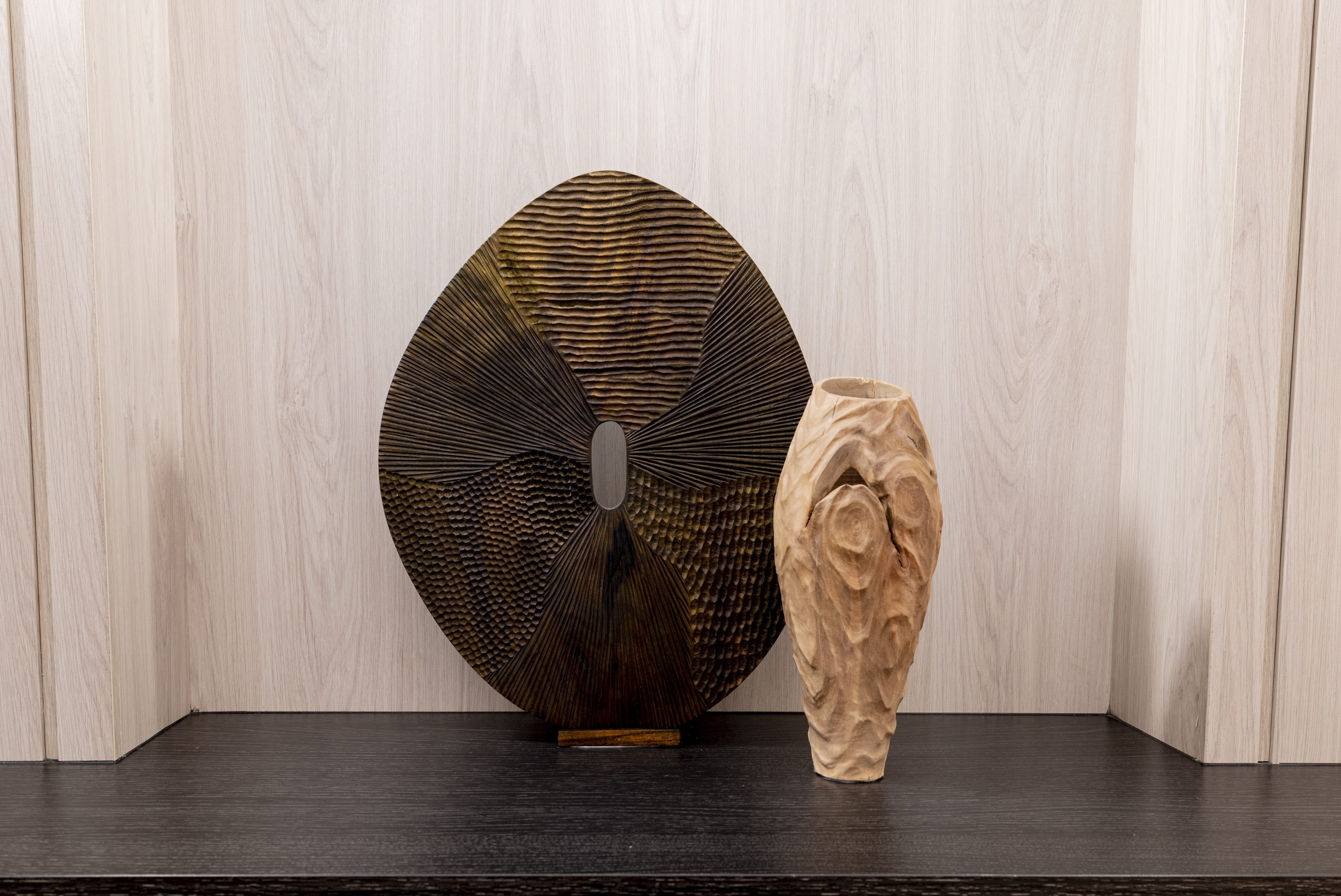
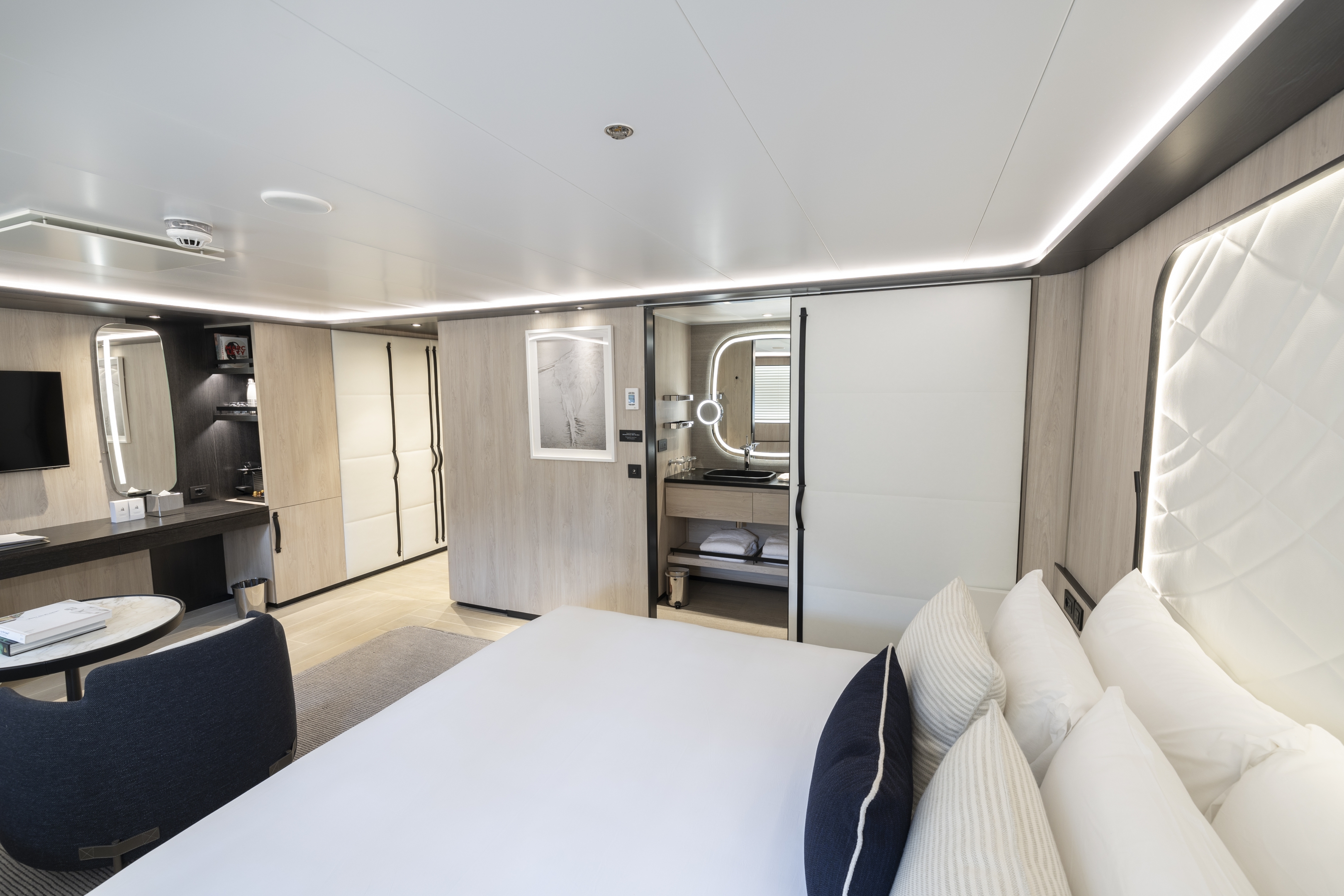
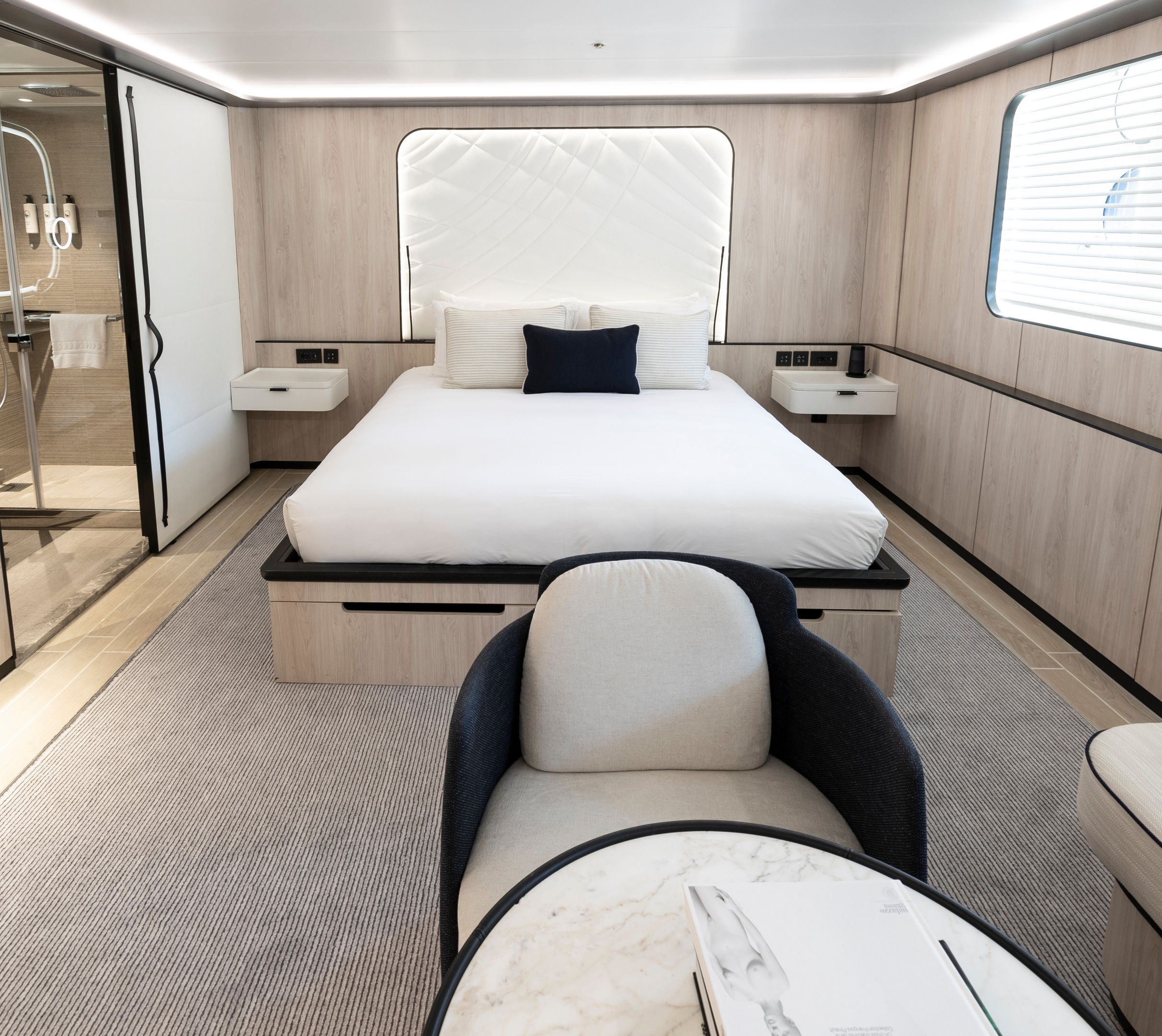
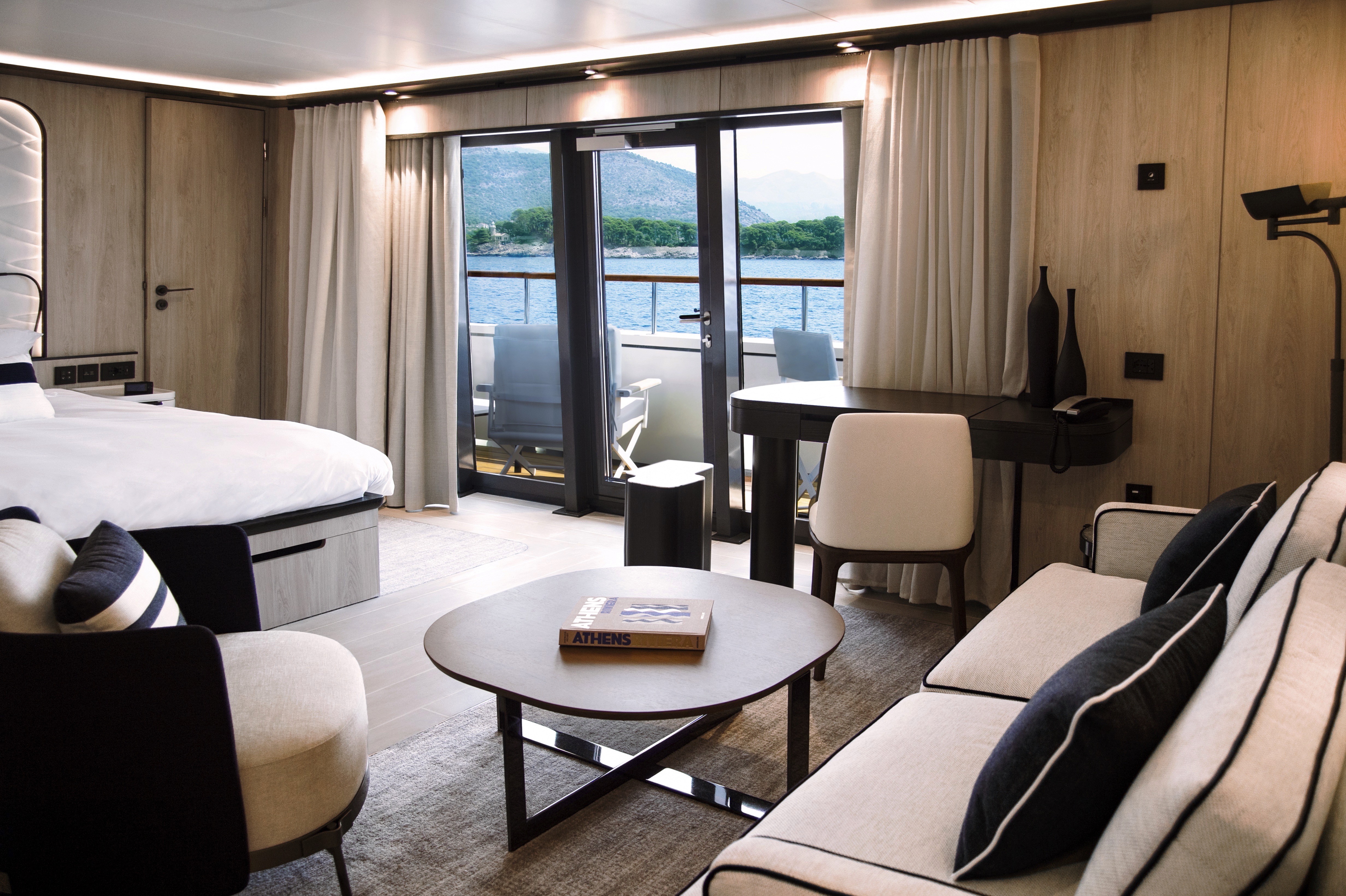
Suite

Owner's Suite

In addition to the common services provided to all our suites and staterooms:

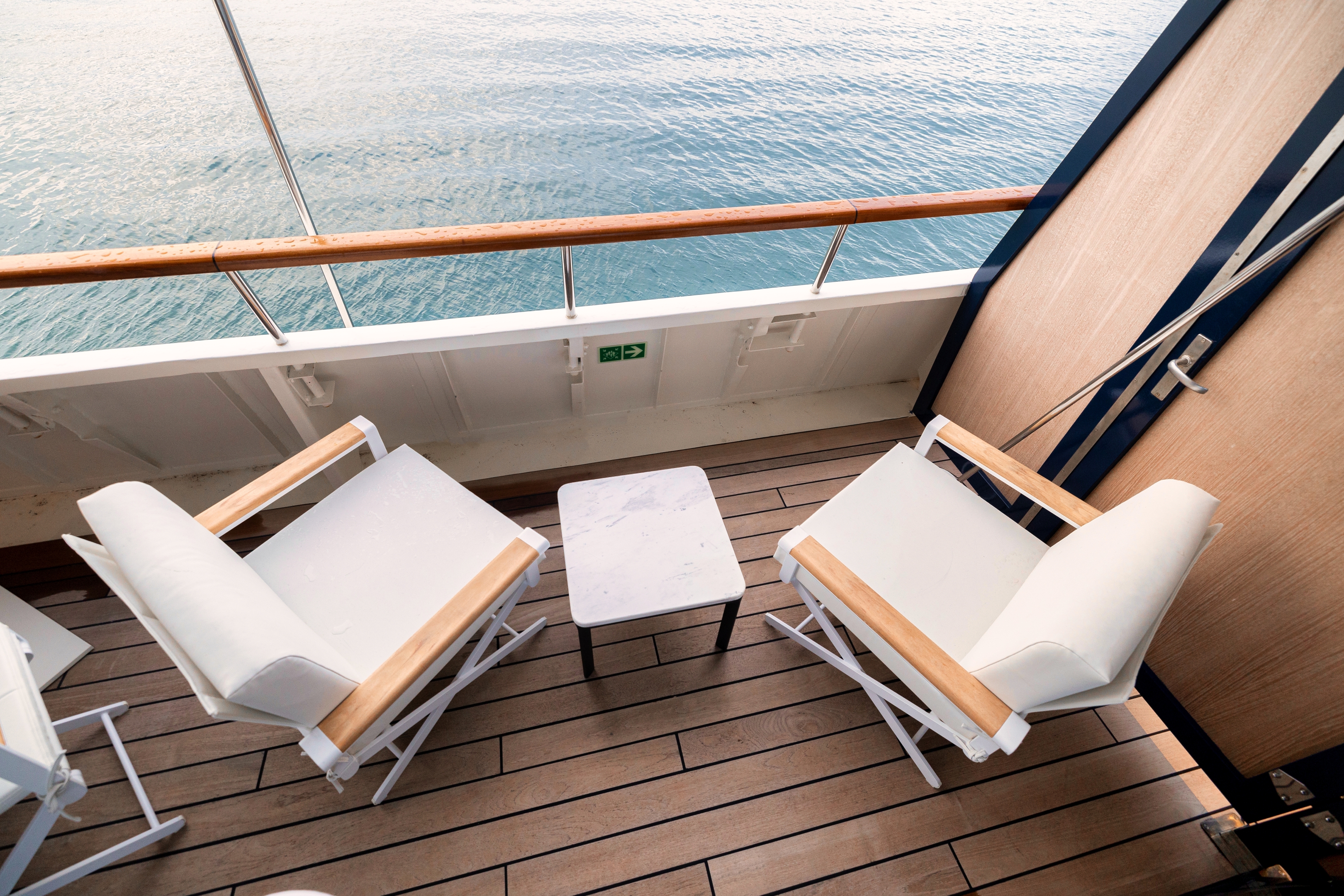
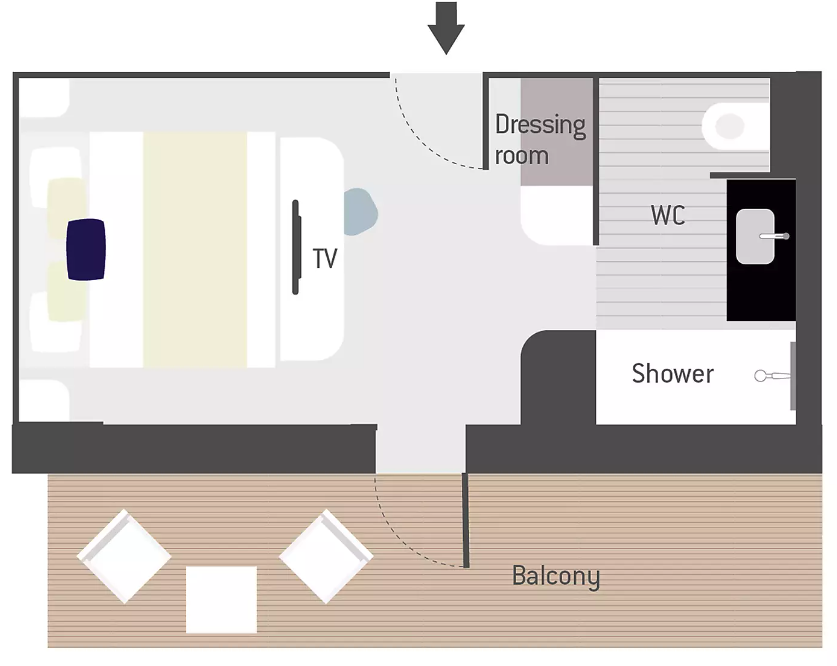
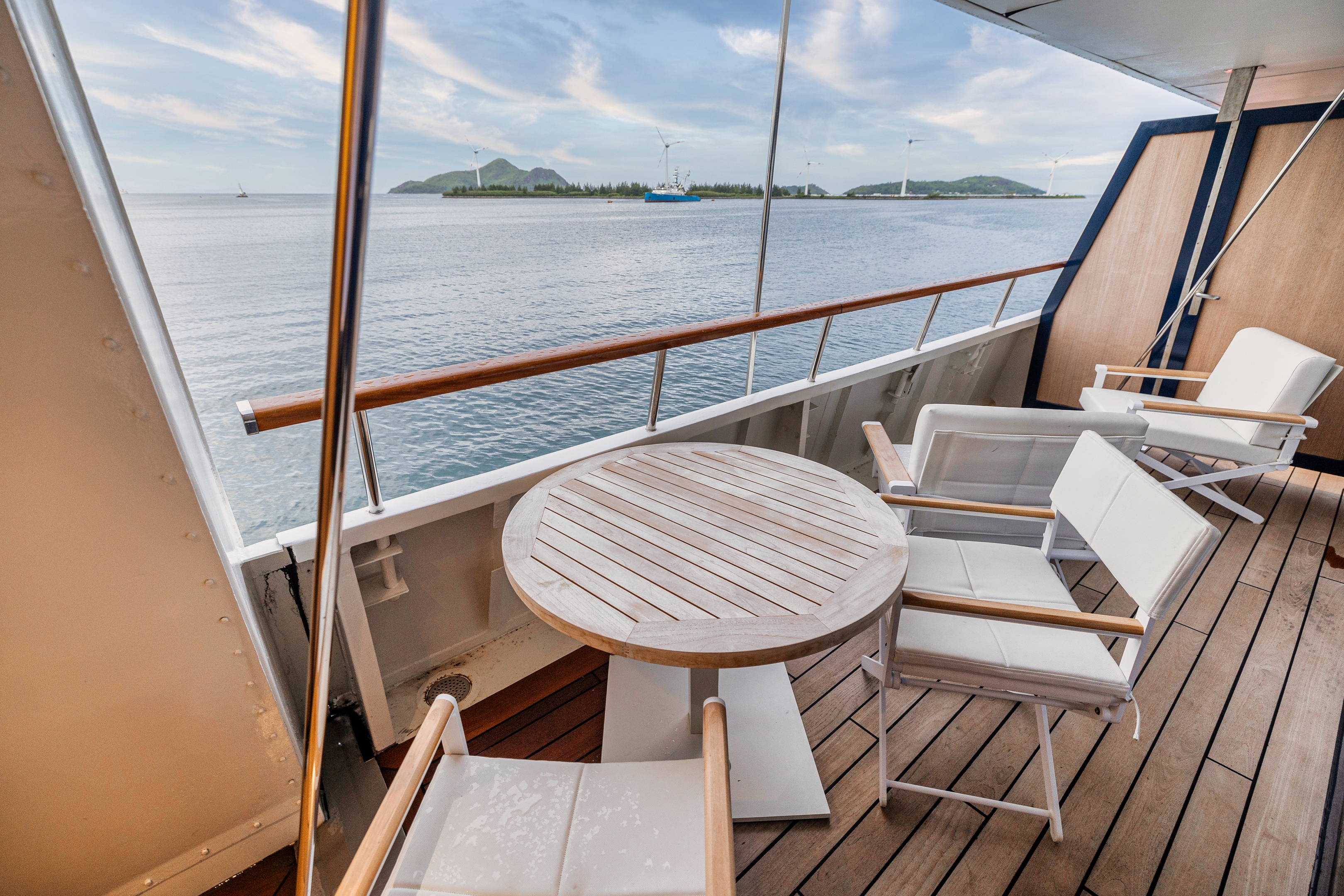
  • A private 96 ft² balcony with 2 armchairs
  • Room service is available for breakfast, lunch, and dinner
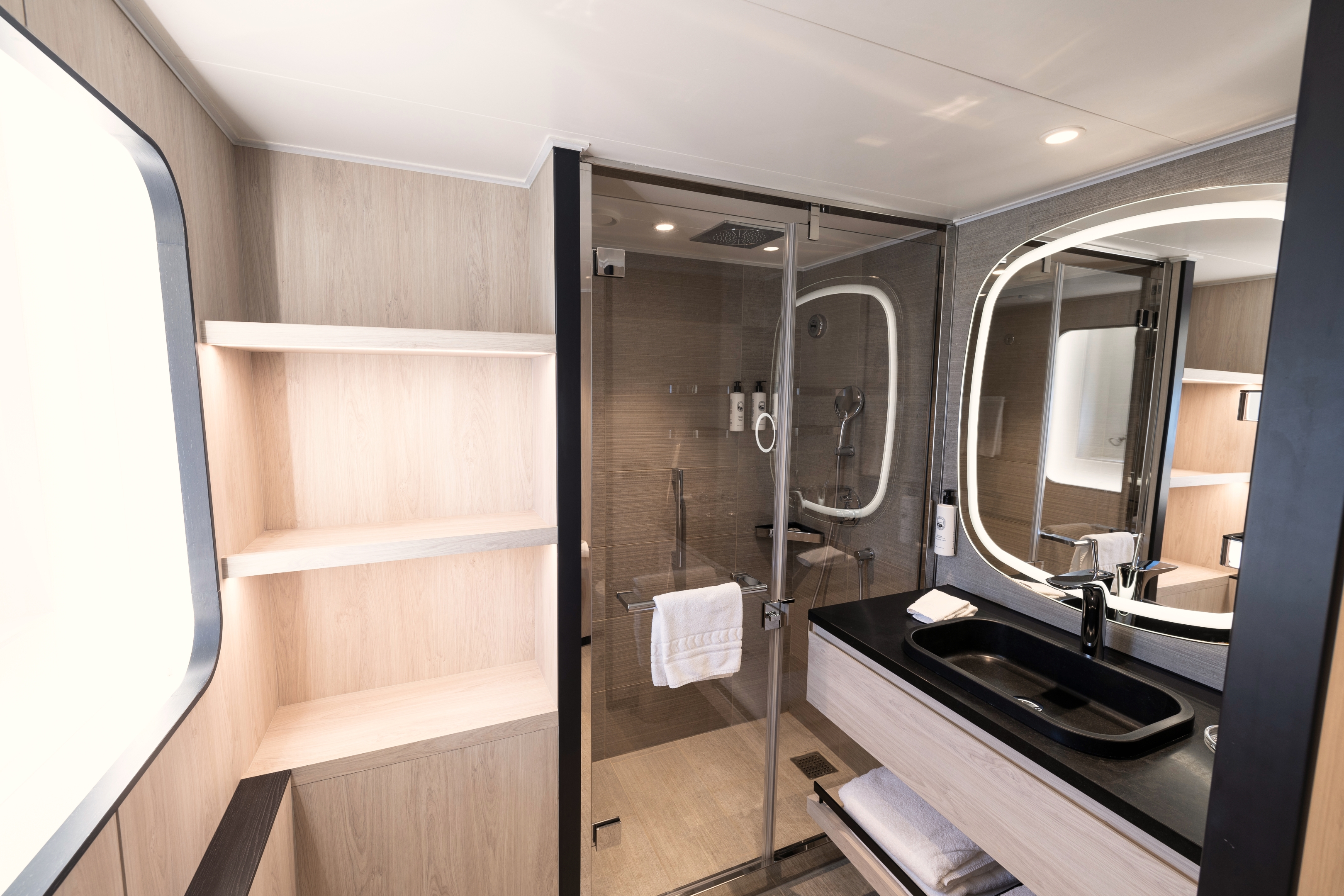
  • A bathroom with double shower
  • A one-hour treatment per person (for 2 people) in the wellness area, including body and facial treatments
  • A private return transfer
  • Three portholes and glass door
  • Champagne and fruit on arrival
  • A daily selection of sweet and savoury canapés and a fruit basket
  • One bedroom with king-size bed (180 x 190 cm) or two single beds (90 x 190 cm)
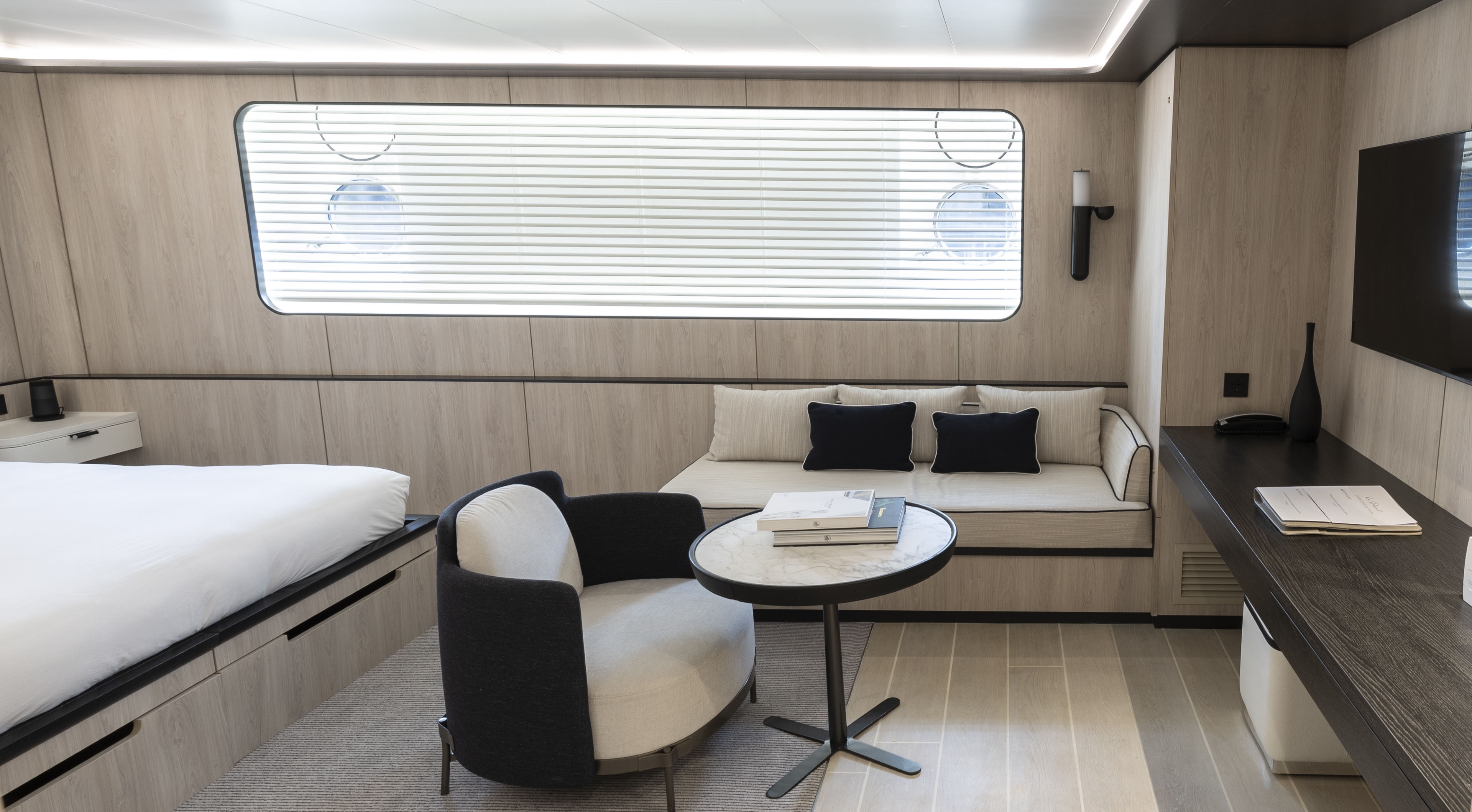
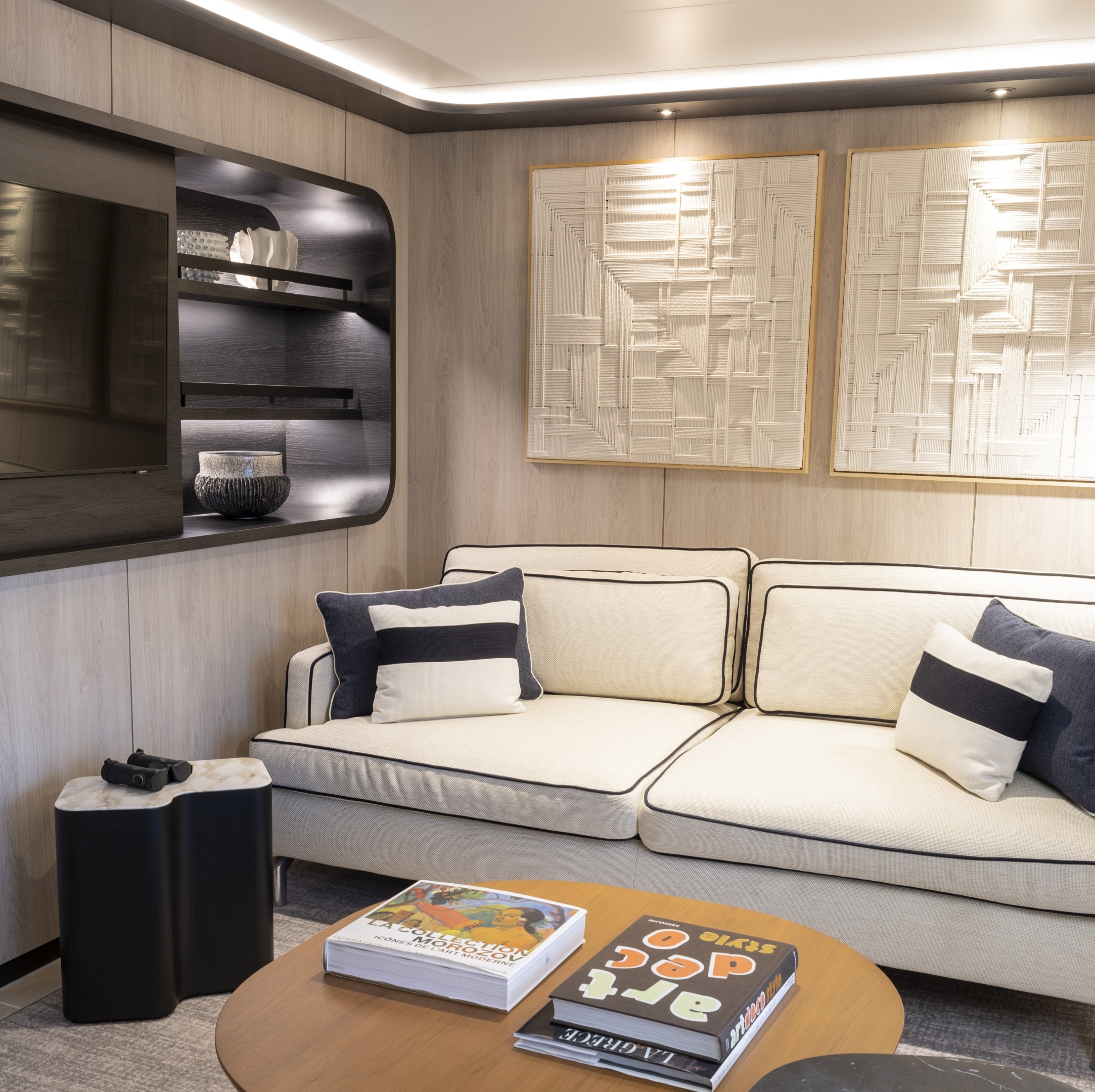
  • A living room with a convertible sofa and armchair
  • Dining area for 4 people 

Included in all staterooms

  • Minibar
  • Diptyque Paris top-of-the-line bath products
  • Nespresso coffee maker and boiler
  • Dressing room with shelves and closet
  • 110V American / 220V European
  • Dressing table and hairdryer
  • No lift, not suitable for people with reduced mobility
  • Direct line telephone
  • Electronic safe
  • Flat screen TV, international channels and videos on demand
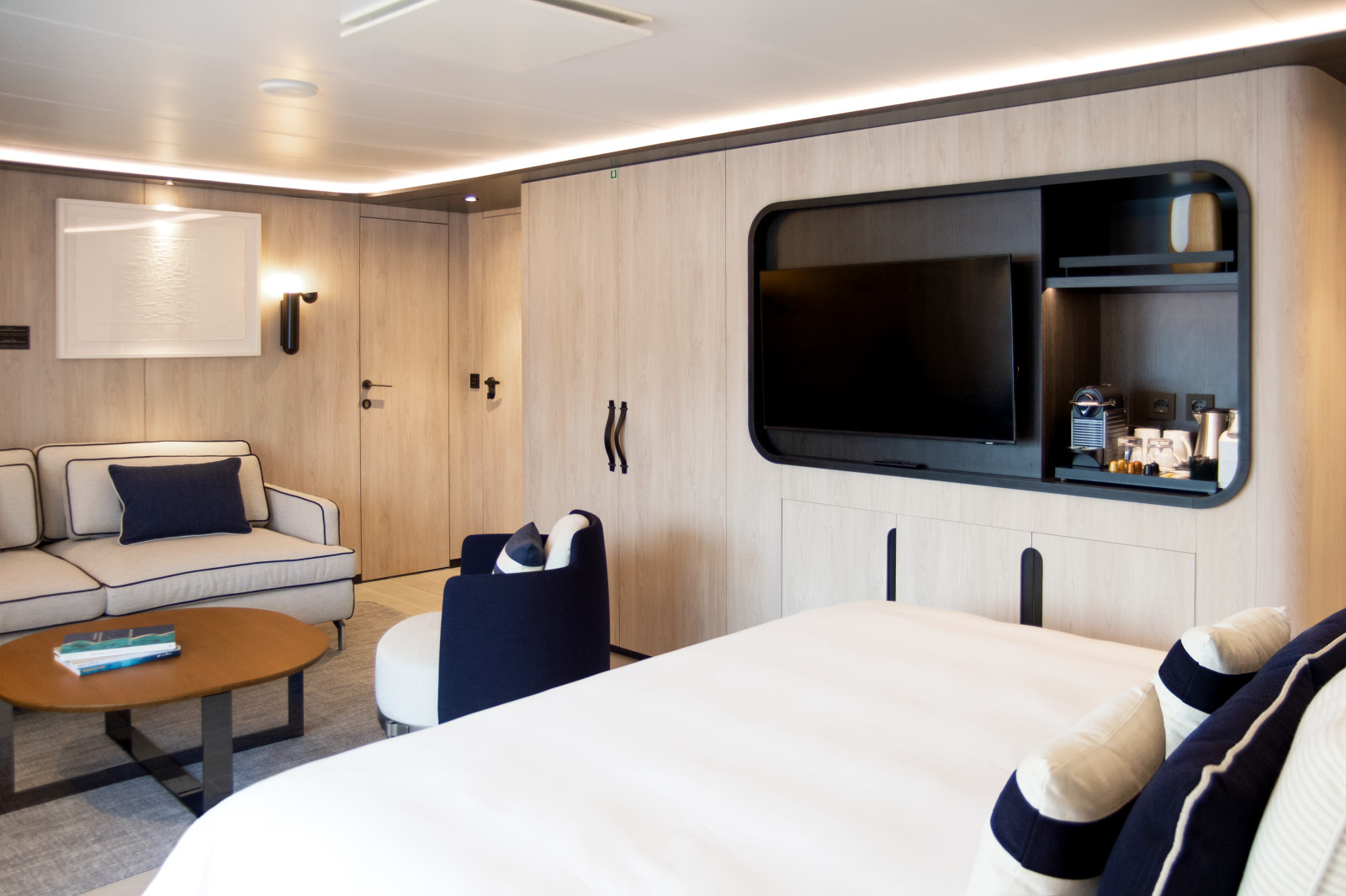
Suite

Grand Privilege Suite

In addition to the common services provided to all our suites and staterooms:

  • A private 139 ft² balcony with four armchairs
  • Double dressing rooms
  • Two panoramic portholes and two hinged windows
  • Two bathrooms with shower
  • Two one-hour treatments per person (for 2 people) in the wellness area, including body and facial treatments
  • A daily selection of sweet and savoury canapés and a fruit basket
  • Two king-size beds (180 x 190 cm) or four single beds (90 x 190 cm)
  • A lounge area with convertible sofa, two armchairs, and TV
  • Champagne and fruit on arrival

Included in all staterooms

  • Minibar
  • Diptyque Paris top-of-the-line bath products
  • Nespresso coffee maker and boiler
  • Dressing room with shelves and closet
  • 110V American / 220V European
  • Dressing table and hairdryer
  • No lift, not suitable for people with reduced mobility
  • Direct line telephone
  • Electronic safe
  • Flat screen TV, international channels and videos on demand
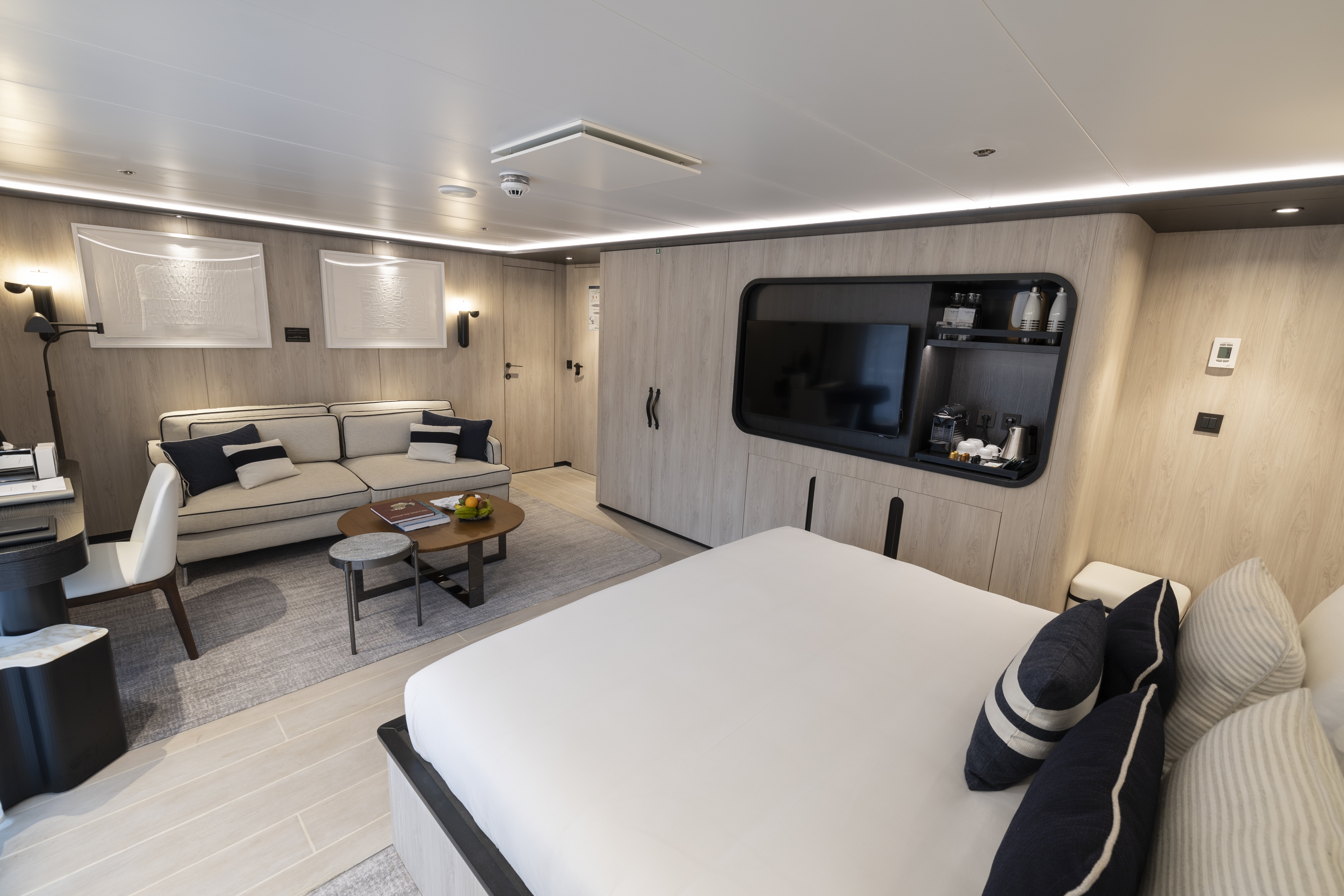
Suite

Privilege suite

In addition to the common services provided to all our suites and staterooms:

  • A private 96 ft² balcony with four armchairs
  • Panoramic window and panoramic hinged window
  • Champagne and fruit on arrival
  • A daily selection of sweet and savoury canapés and a fruit basket
  • One king-size bed (180 x 190 cm) or two single beds (90 x 190 cm)
  • A lounge area with convertible sofa and two armchairs
  • A bathroom with shower

Included in all staterooms

  • Minibar
  • Diptyque Paris top-of-the-line bath products
  • Nespresso coffee maker and boiler
  • Dressing room with shelves and closet
  • 110V American / 220V European
  • Dressing table and hairdryer
  • No lift, not suitable for people with reduced mobility
  • Direct line telephone
  • Electronic safe
  • Flat screen TV, international channels and videos on demand
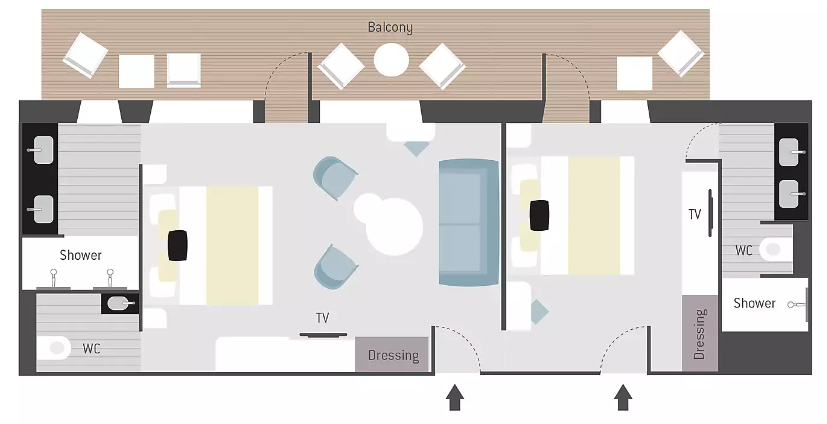

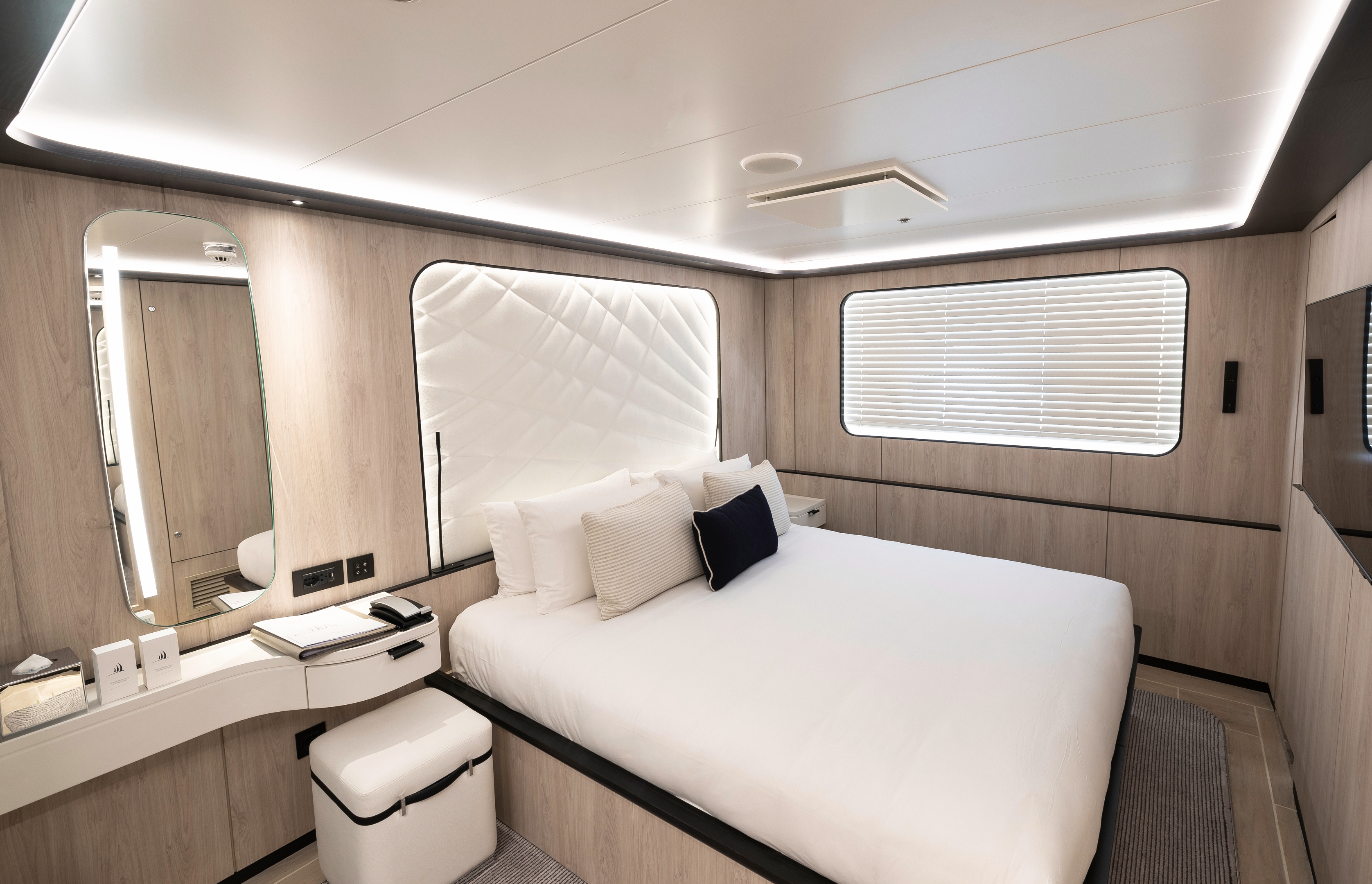
Suite

Prestige Suite

In addition to the common services provided to all our suites and staterooms:

  • Two portholes
  • One king-size bed (180 x 190 cm) or two single beds (90 x 190 cm)
  • A bathroom with shower
  • A lounge area with convertible sofa and an armchair

Included in all staterooms

  • Minibar
  • Diptyque Paris top-of-the-line bath products
  • Nespresso coffee maker and boiler
  • Dressing room with shelves and closet
  • 110V American / 220V European
  • Dressing table and hairdryer
  • No lift, not suitable for people with reduced mobility
  • Direct line telephone
  • Electronic safe
  • Flat screen TV, international channels and videos on demand
Suite

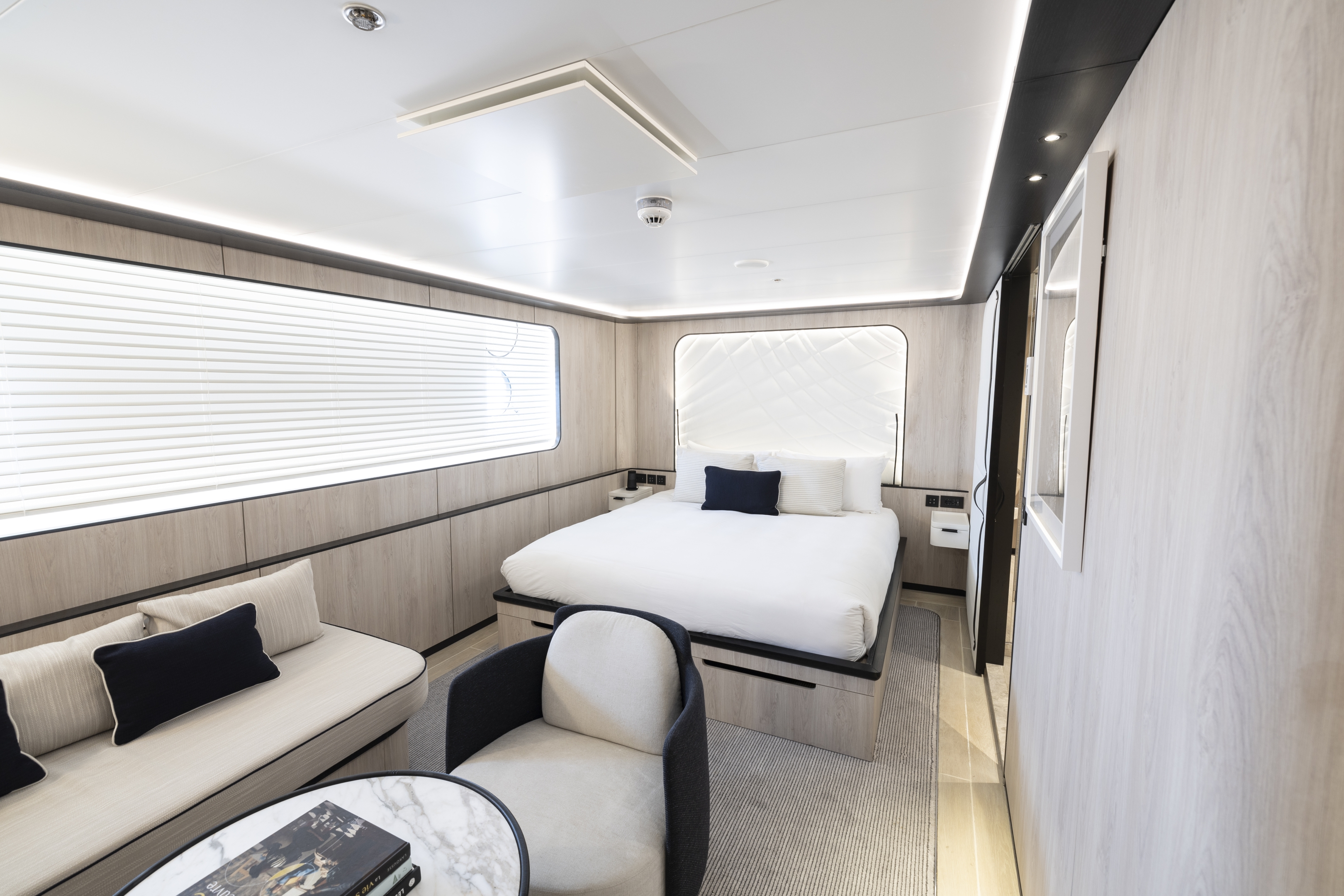
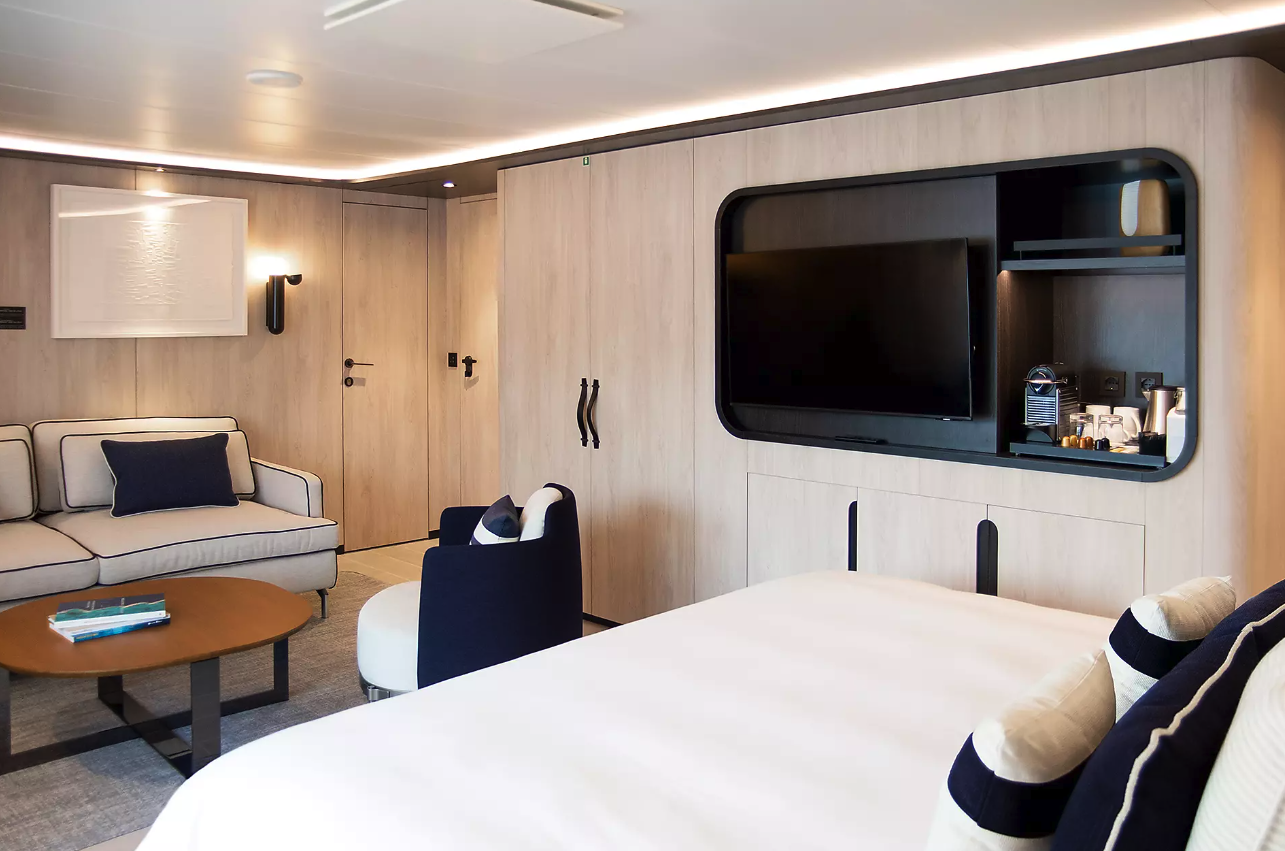
Junior Suite

In addition to the common services provided to all our suites and staterooms:

  • Two portholes
  • One king-size bed (180 x 190 cm) or two single beds (90 x 190 cm)
  • A bathroom with shower
  • A lounge area with convertible sofa and an armchair

Included in all staterooms

  • Minibar
  • Diptyque Paris top-of-the-line bath products
  • Nespresso coffee maker and boiler
  • Dressing room with shelves and closet
  • 110V American / 220V European
  • Dressing table and hairdryer
  • No lift, not suitable for people with reduced mobility
  • Direct line telephone
  • Electronic safe
  • Flat screen TV, international channels and videos on demand
Balcony

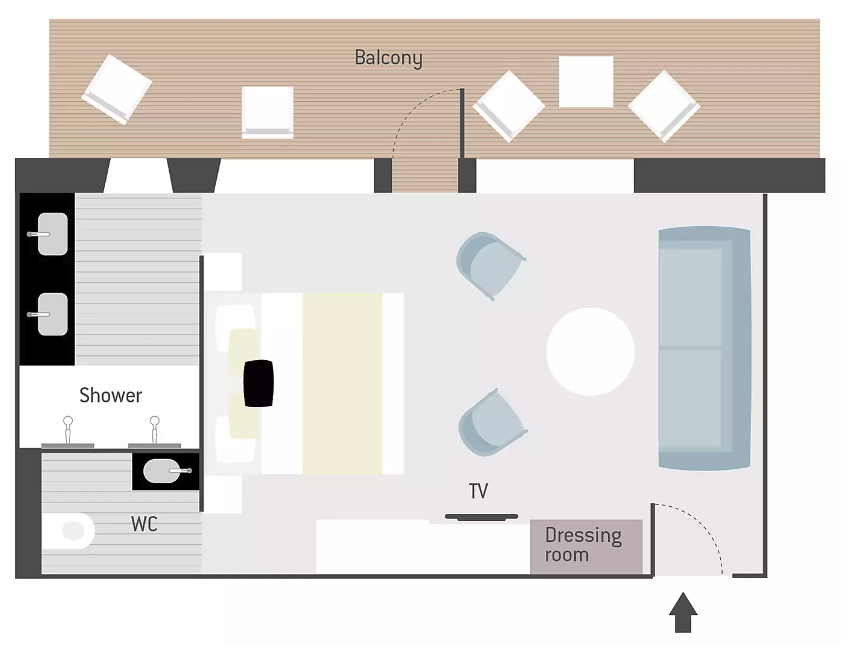
Upper decks balcony stateroom

In addition to the common services provided to all our suites and staterooms:

  • A 16 m² stateroom (Alizés Prestige Stateroom with balcony) or 19 m² stateroom (Alizés Stateroom with balcony)
  • A private 43 ft² balcony (Alizés Stateroom with balcony) or 86 ft² balcony (Alizés Prestige Stateroom with balcony)
  • A panoramic hinged glass door
  • A bathroom with shower
  • One king-size bed (180 x 190 cm) or two single beds (90 x 190 cm)

Included in all staterooms

  • Minibar
  • Diptyque Paris top-of-the-line bath products
  • Nespresso coffee maker and boiler
  • Dressing room with shelves and closet
  • 110V American / 220V European
  • Dressing table and hairdryer
  • No lift, not suitable for people with reduced mobility
  • Direct line telephone
  • Electronic safe
  • Flat screen TV, international channels and videos on demand
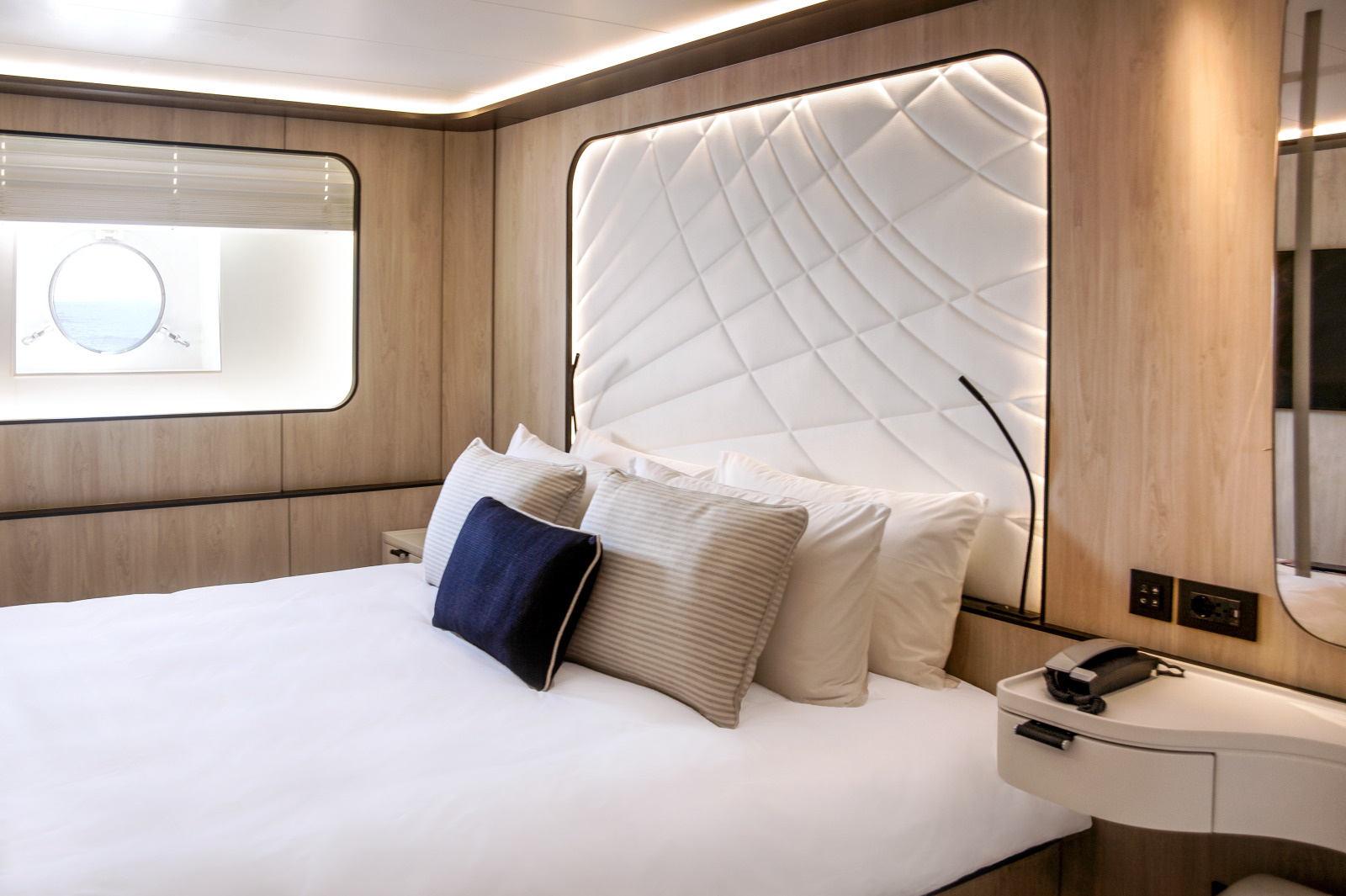
Outside

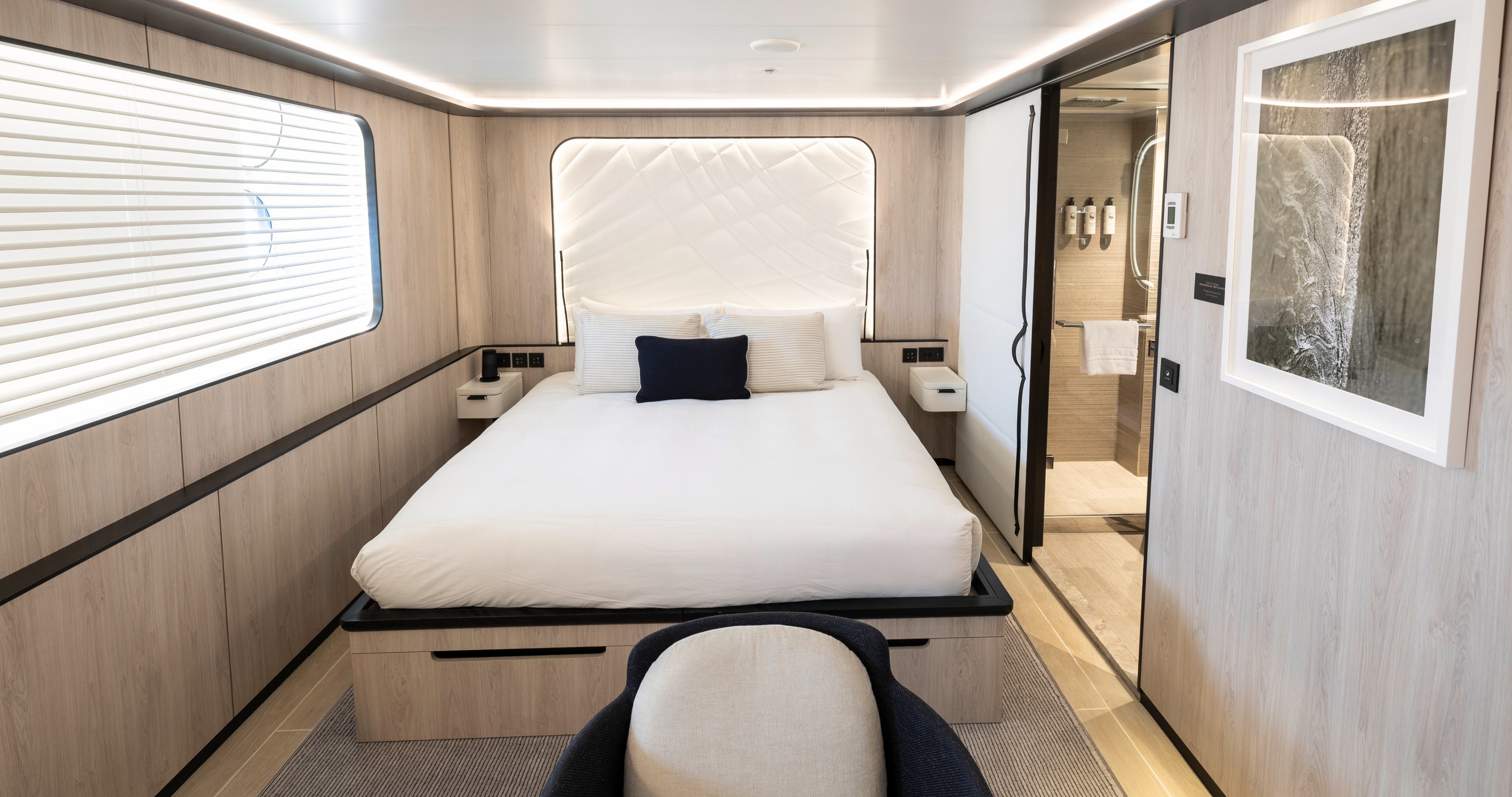
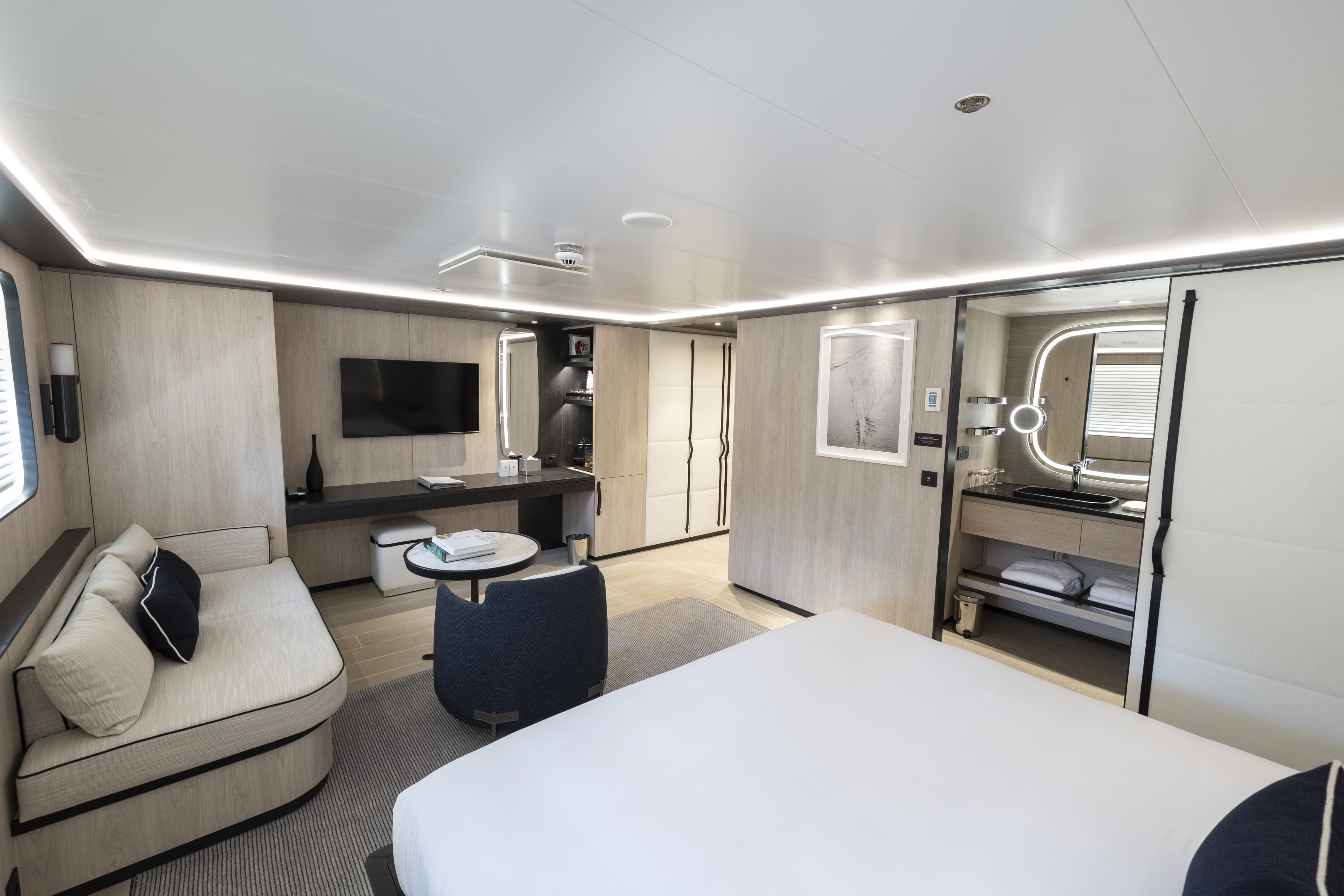
Window or Porthole Stateroom

In addition to the common services provided to all our suites and staterooms:

  • One king-size bed (180 x 200 cm) or two single beds (90 x 200 cm)
  • A bathroom with shower
  • One round porthole

Included in all staterooms

  • Minibar
  • Diptyque Paris top-of-the-line bath products
  • Nespresso coffee maker and boiler
  • Dressing room with shelves and closet
  • 110V American / 220V European
  • Dressing table and hairdryer
  • No lift, not suitable for people with reduced mobility
  • Direct line telephone
  • Electronic safe
  • Flat screen TV, international channels and videos on demand
buffet

Le Diamant

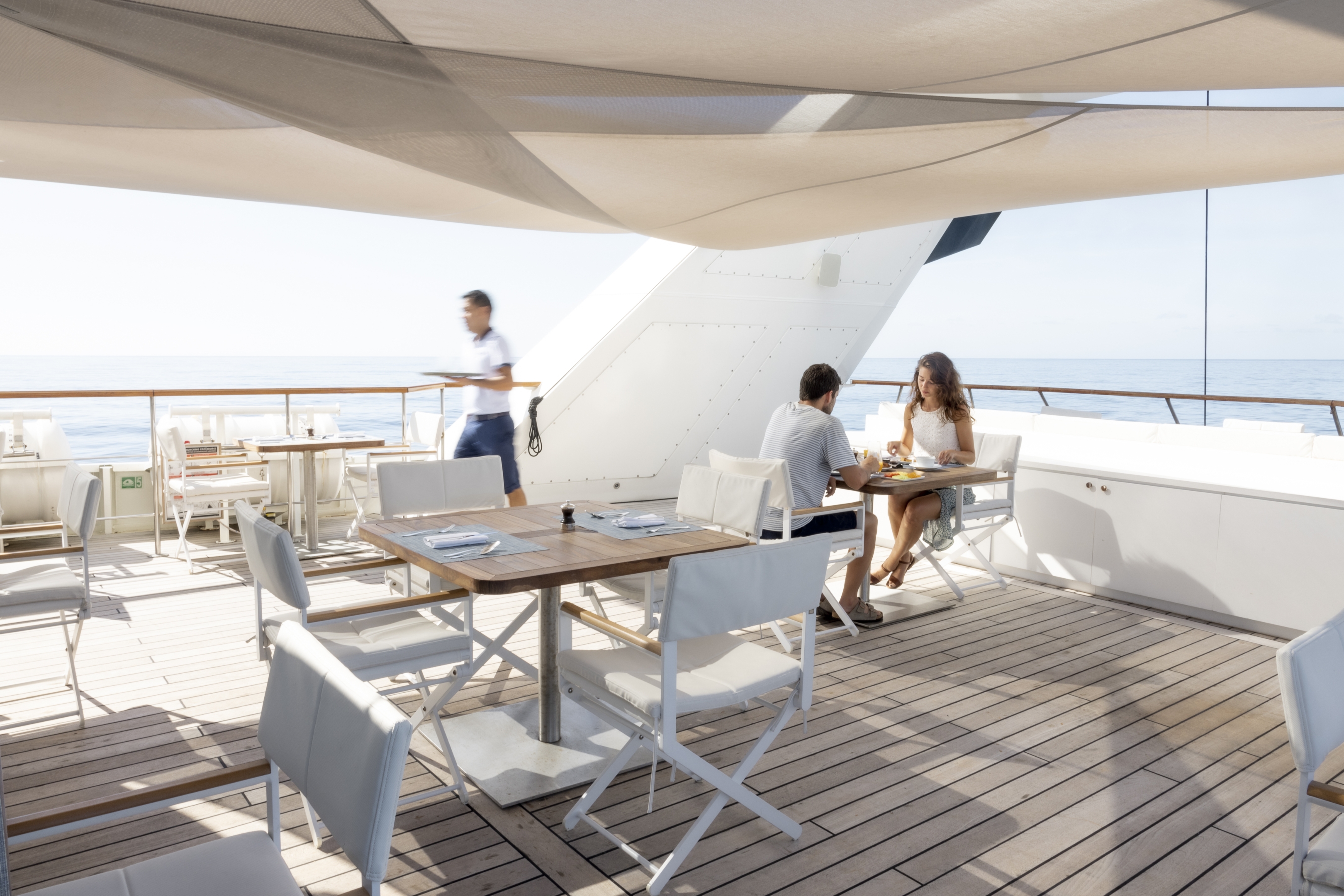
On board the Ponant, the restaurant Le Diamant celebrates the terroir of each visited coast, offering a culinary experience in perfect harmony with the itinerary of the journey. Driven by the chef's demanding standards and passion, each dish reveals the richness of local products, carefully selected from the markets along the way. This responsible and sustainable approach invites you to savor the very essence of each stop. In this exceptional setting, gastronomy extends the emotion of the journey.
Lounge, Bar

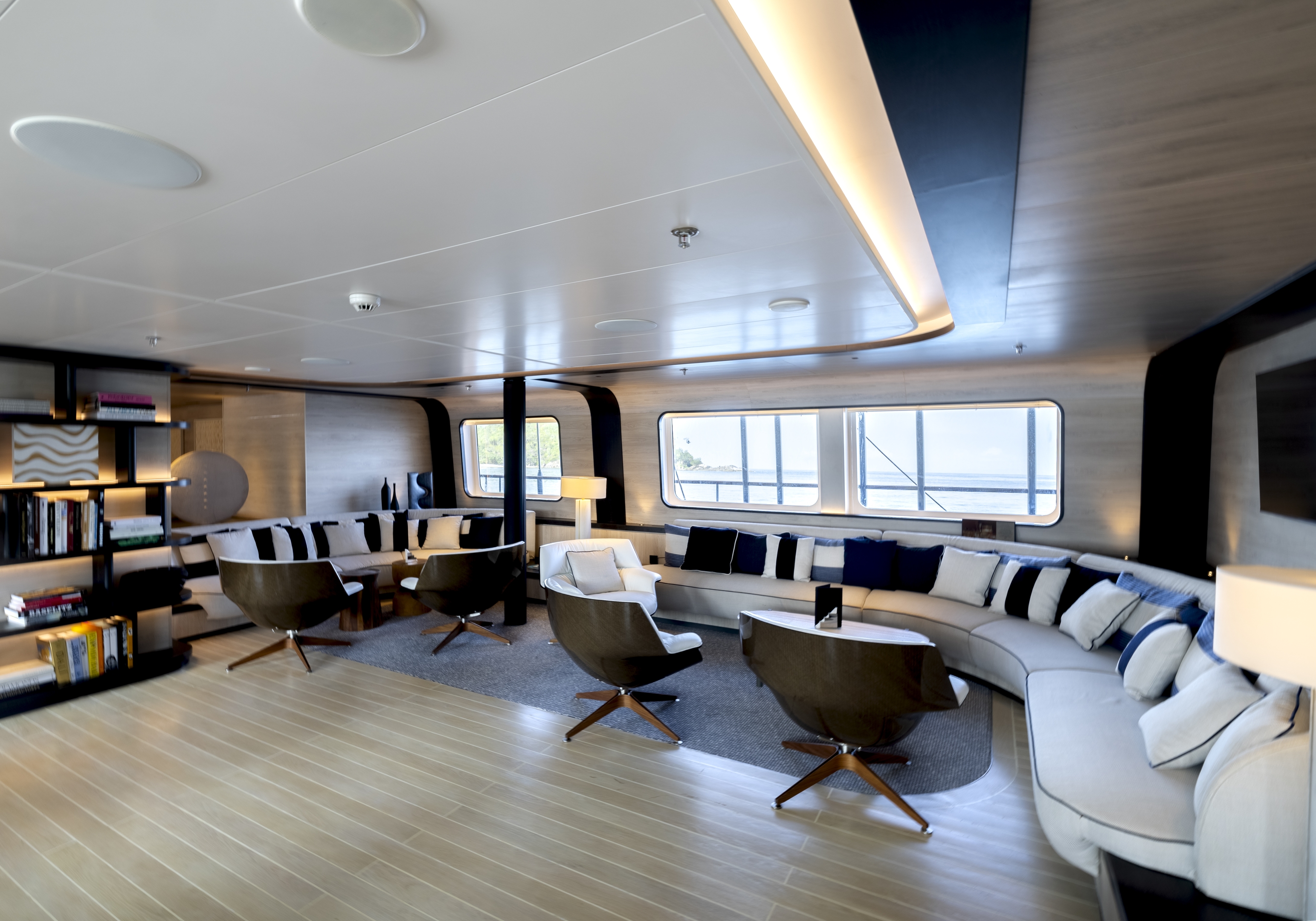
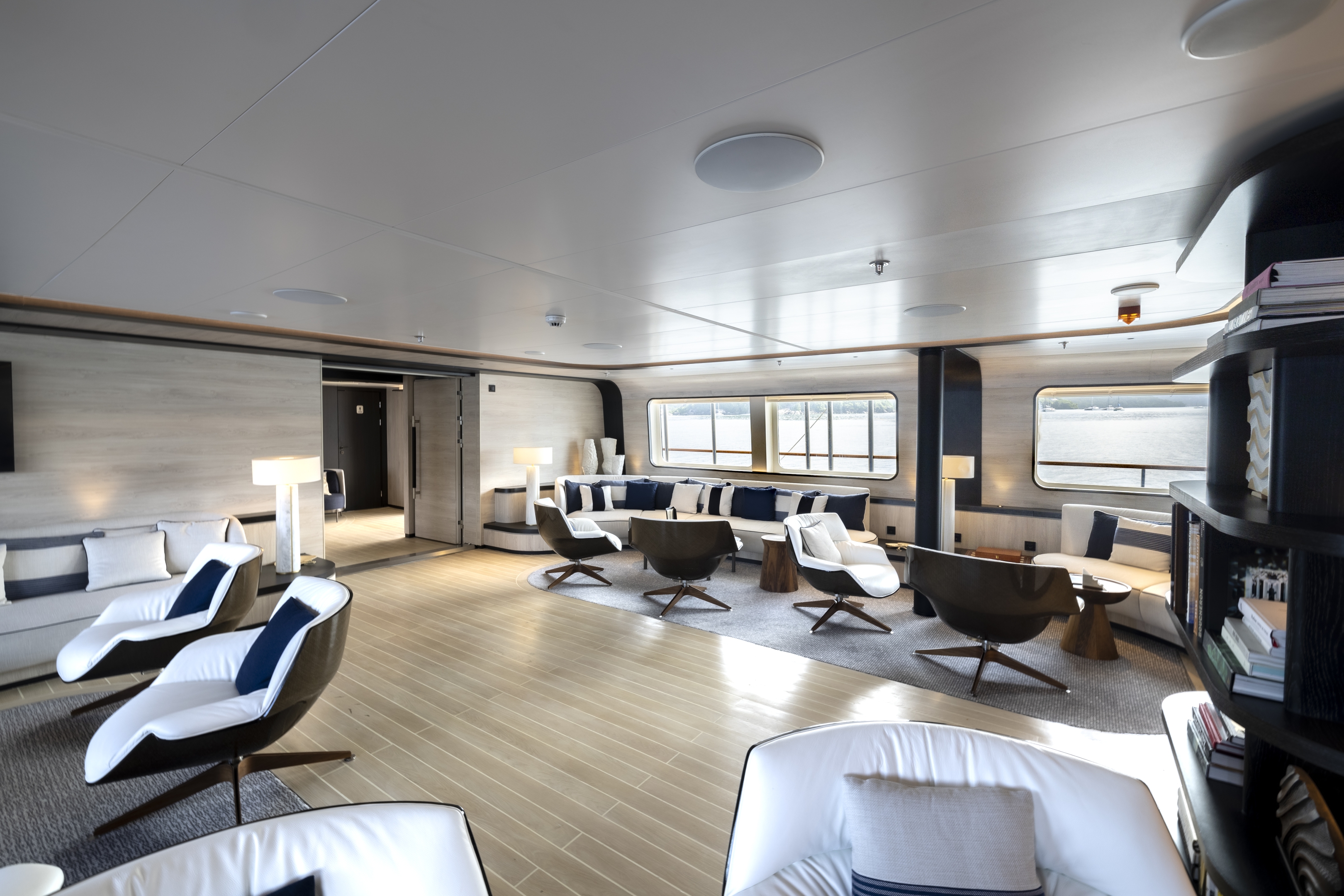
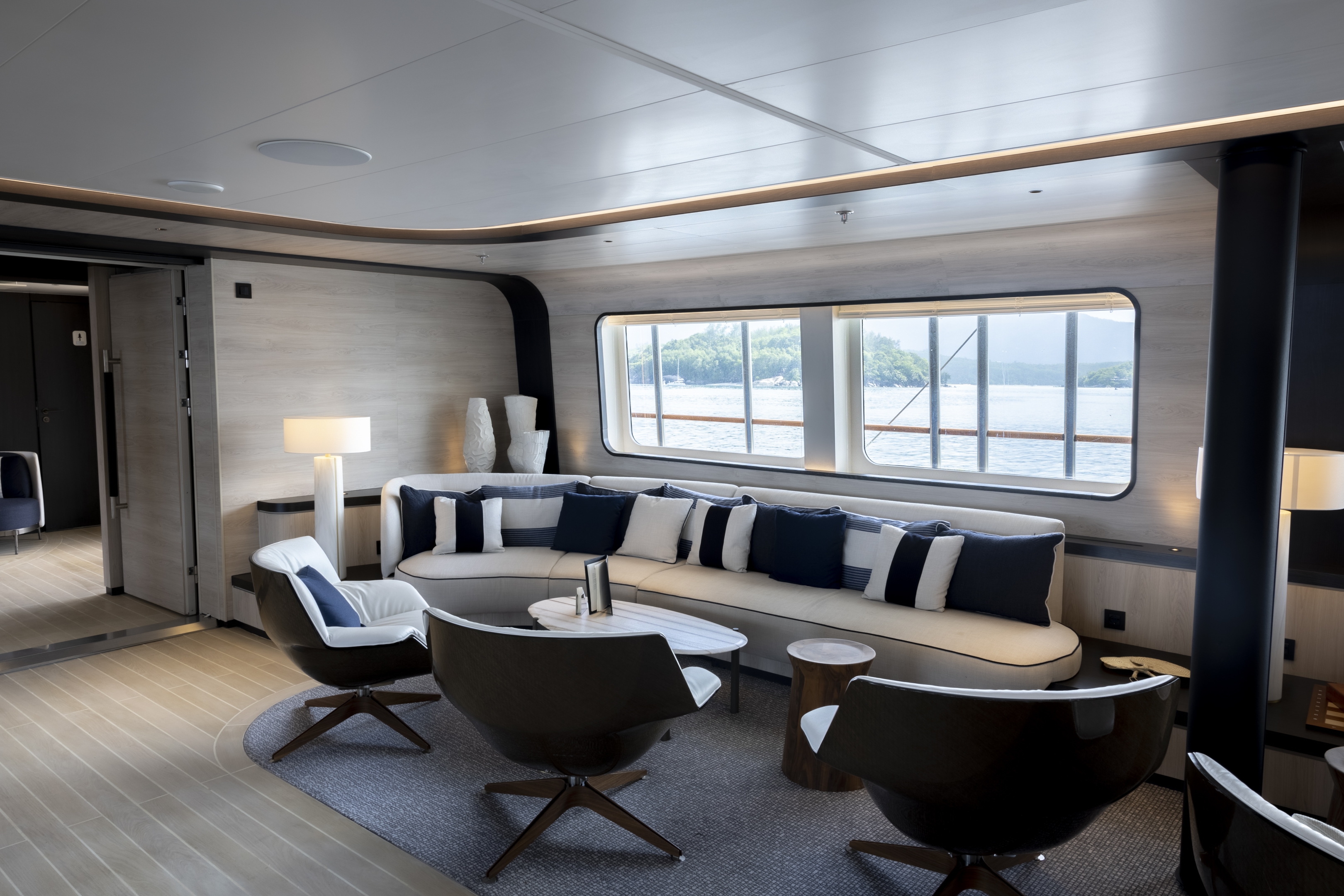
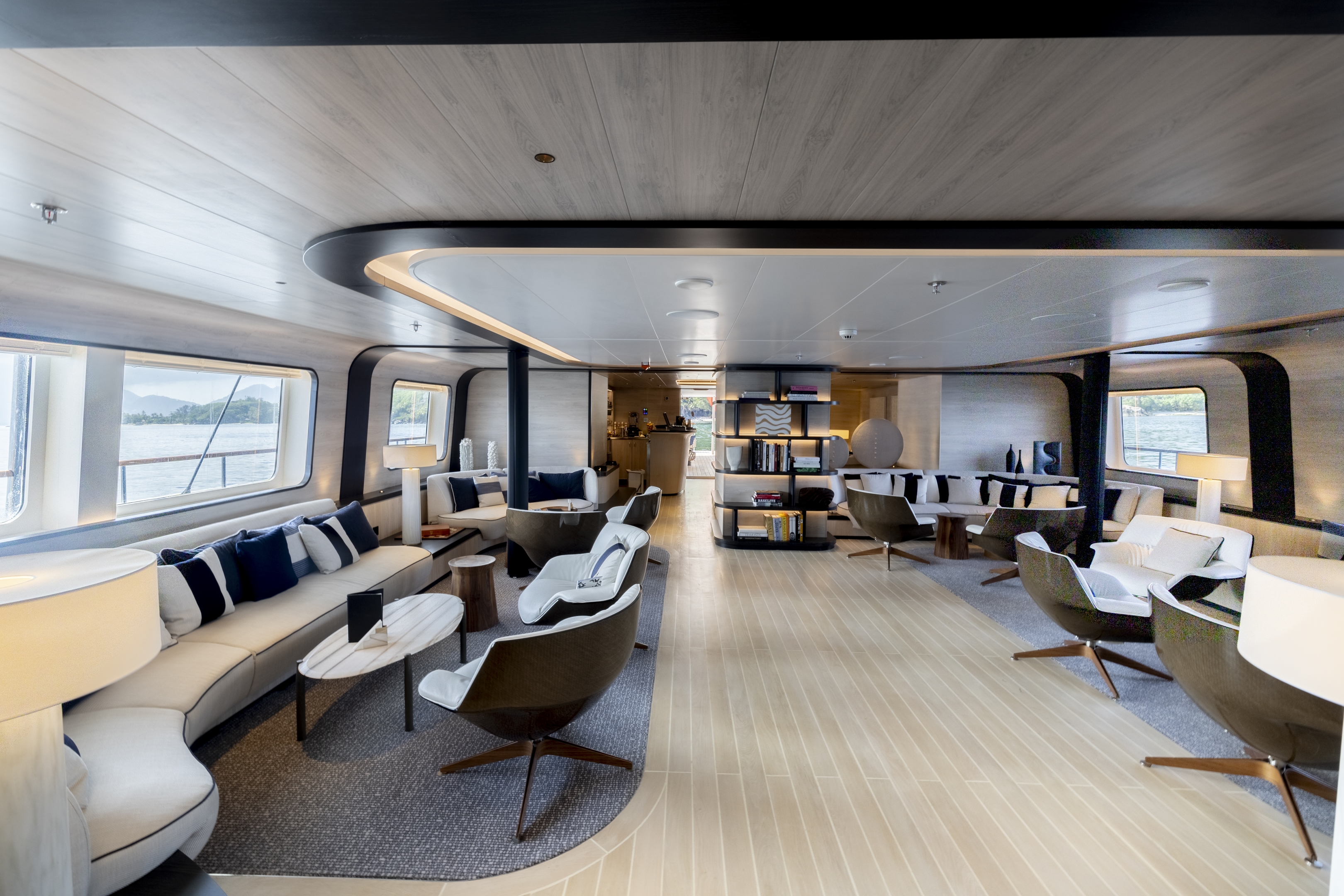
Emeraude Lounge and Bar

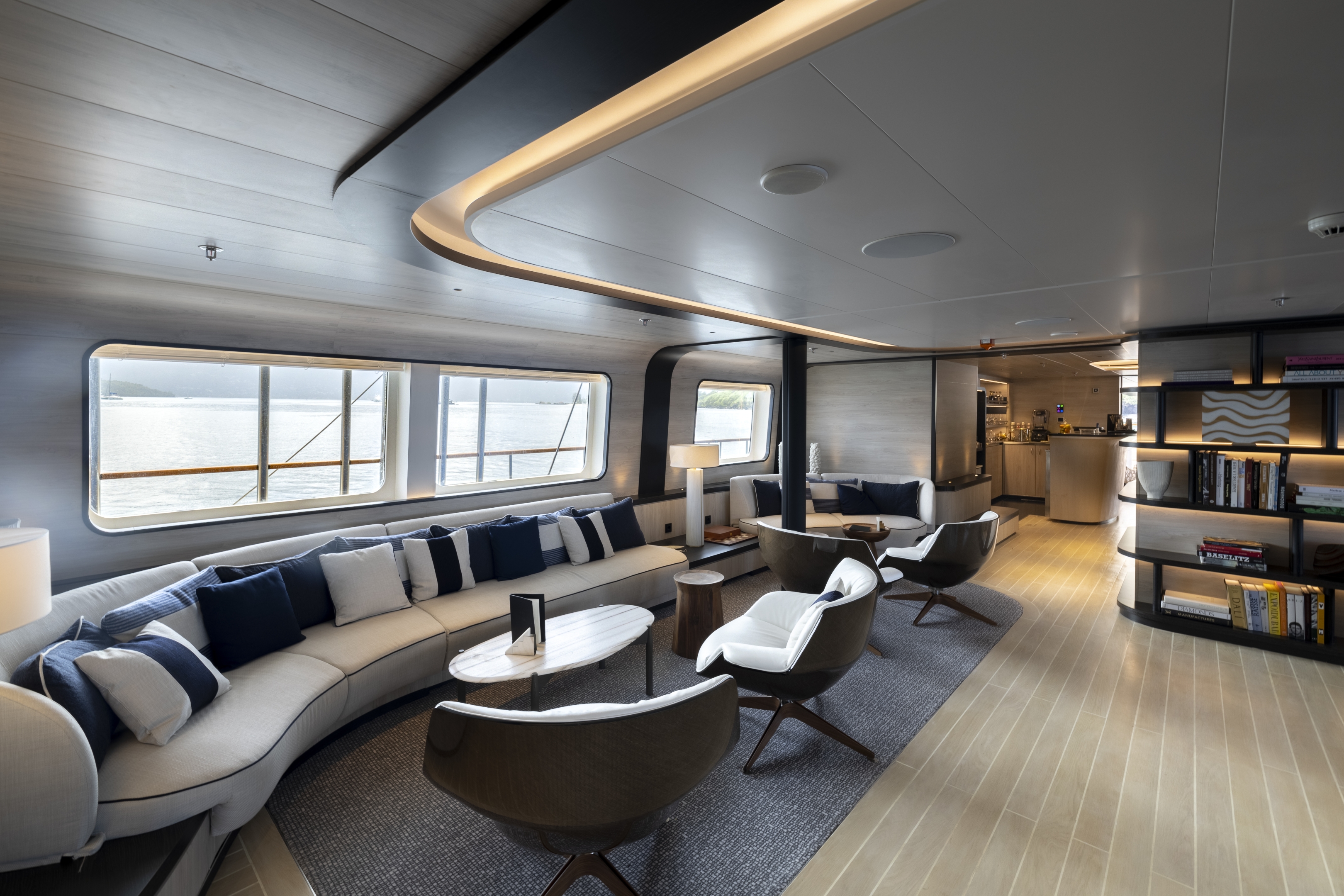
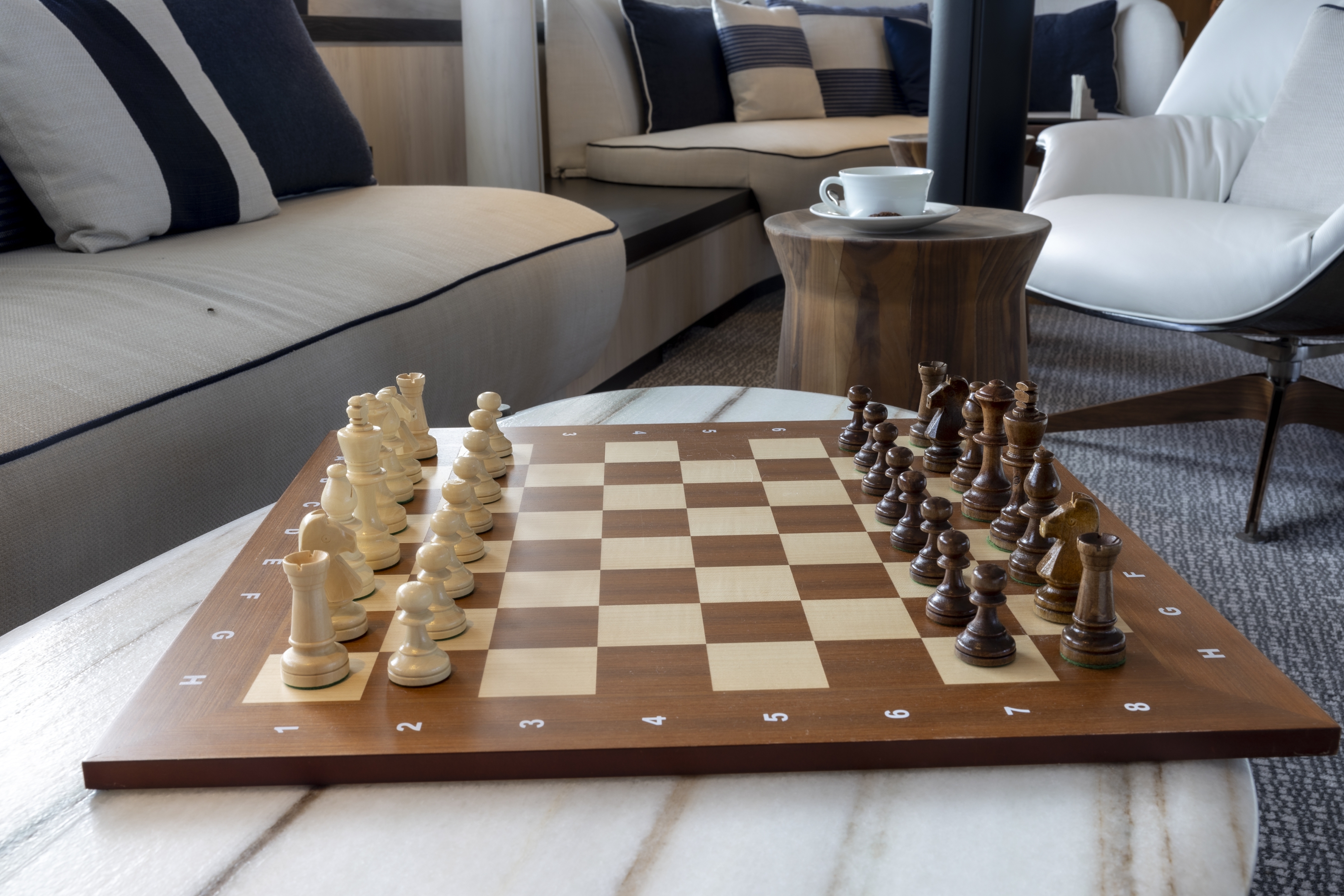
library, tearoom, bar, and live entertainment on certain evenings. Access to the outdoor terrace
Sun Deck, Bar

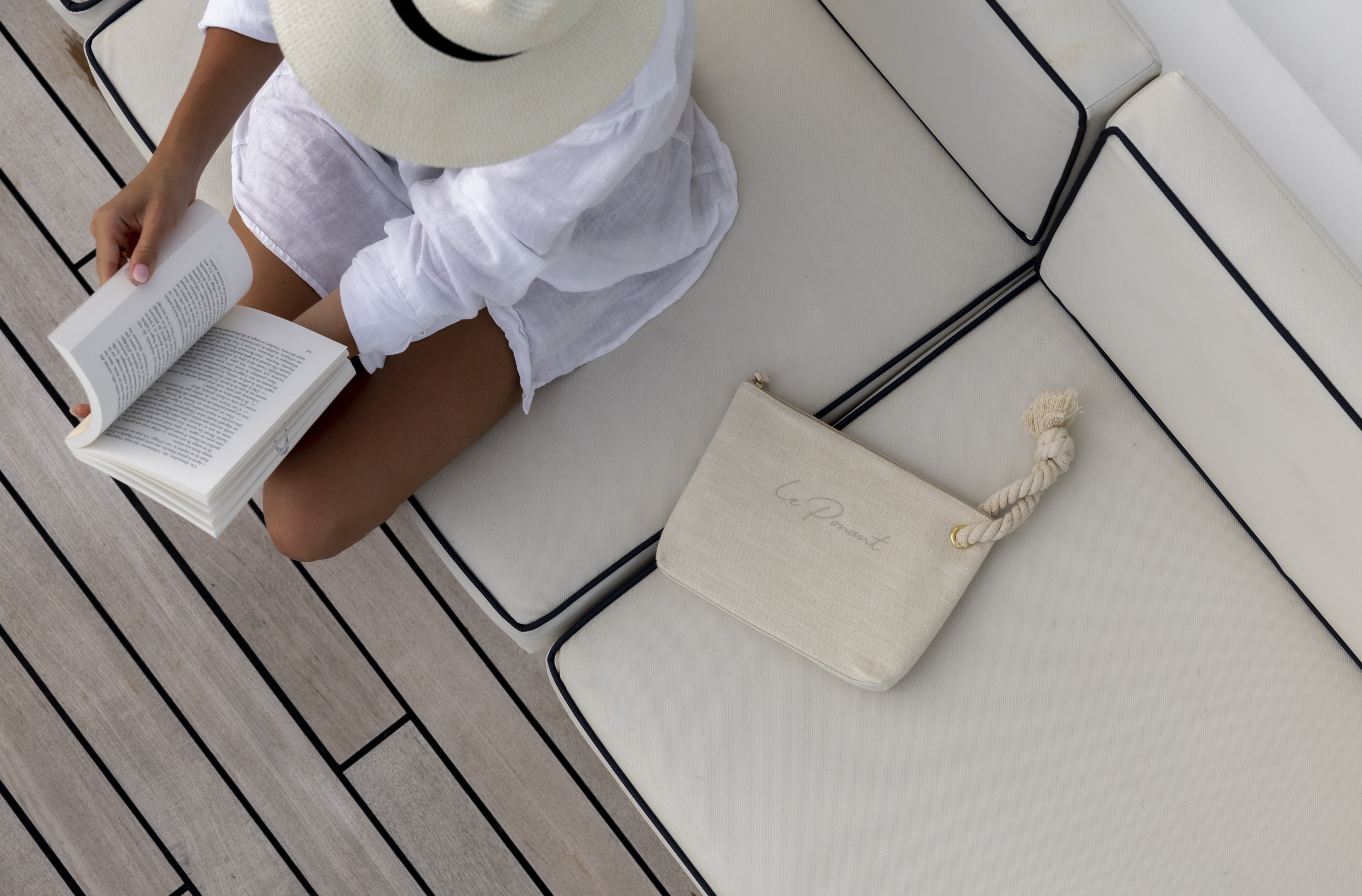
Sun Deck

  • Sun beds
  • Exterior bar 

Spa, Yoga, Gym, Wellness

The Wellness Space

Le Ponant has been designed as a cocoon dedicated to well-being and relaxation. 

  • Spa: massage cabin and Biologique Recherche care products. 
  • Fitness centre with dedicated fitness coach
  • Yoga sessions