
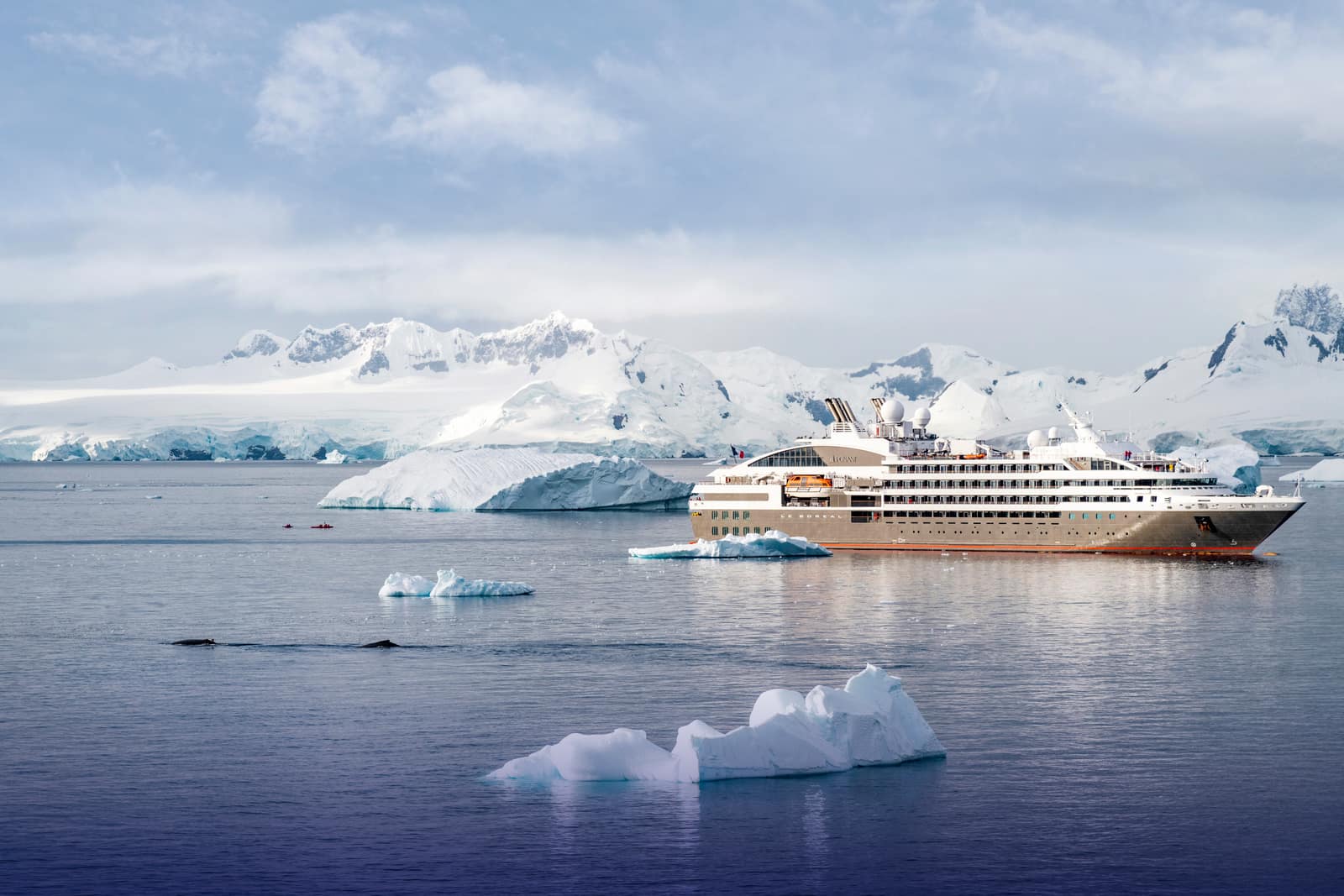
Southern France and the Italian Riviera by Sea – with Smithsonian Journeys
About This Cruise
In alliance with Smithsonian Journeys.
This cruise is part of a collection of PONANT voyages that are specially-tailored for English-speaking travelers who want to engage with the world. In addition to the usual elements of the PONANT experience, the listed price for these voyages includes transfers to and from the ship, talks and discussions aboard ship by world class experts, and a shore excursion or activity in each port of call that encourages guests to embrace the sights, sounds, tastes, and smells of the local environment and culture.Join us for this voyage along both the French and Italian Rivieras, exploring the rich history and culture of the fabled lands on the northern shores of the Mediterranean Sea.Setting sail from Barcelona, your discovery of southern France begins from Sète in the Occitanie with the hilltop city of Carcassonne and its medieval citadel, a UNESCO World Heritage site.The ancient port of Marseille is your gateway to either Aix-en-Provence, "city of a thousand fountains" and home to Paul Cézanne, or to Van Gogh's Arles and the UNESCO World Heritage "City of Popes," Avignon. The resort town of Nice, the last French mainland port on this leg of your voyage, offers a tour of nearby Monte Carlo and a trip to the medieval hilltop village of Eze, with panoramic views of the Côte d'Azur. Or enjoy a visit to St. Paul de Vence to visit the Maeght Foundation’s collection of modern and contemporary art and sculpture.The small Italian fishing village of Portofino, now a favored haunt of the rich and famous, welcomes you for a relaxing afternoon and evening of leisurely browsing through its shops and galleries and perhaps a chance to sample the local cuisine.Porto Venere can serve as your gateway to discovery of the UNESCO World Heritage Cinque Terre, the villages at the heart of the Italian Riviera. Or you may spend the day exploring Romanesque Lucca, birthplace of Giacomo Puccini, and medieval Pisa, with its magnificent Duomo, Baptistry, and Leaning Tower.Your final day of discovery from Livorno, includes a full day excursion to Florence for an introduction to the heart of the Italian Renaissance. Or if you prefer, you may explore the Etruscan ruins and museum at nearby Volterra. Alternatively, spend the day exploring Romanesque Lucca, birthplace of Giacomo Puccini, and medieval Pisa, with its magnificent Duomo, Baptistry, and Learning Tower.Who Is This Cruise For?
Adults only
Le Boréal is an adults-only ship
Couples
An adults-only atmosphere made for two
Over 50s
Refined, unhurried cruising with enrichment on board
Solo travellers
Low or no single supplement on selected cabins
Type
Ocean, Luxury
Ship
Le Boréal
Departure Date
1 September 2027
Cruise Line
PONANT EXPLORATIONS
Duration
7 Nights

Select Your Cabin Type
Call Us at (01) 554 1010Itinerary
Spain
Barcelona
France
Sète
France
Marseille
France
Nice
Italy
Portofino
Italy
Portovenere
Italy
Livorno
Italy
Livorno
Overview
In alliance with Smithsonian Journeys.
This cruise is part of a collection of PONANT voyages that are specially-tailored for English-speaking travelers who want to engage with the world. In addition to the usual elements of the PONANT experience, the listed price for these voyages includes transfers to and from the ship, talks and discussions aboard ship by world class experts, and a shore excursion or activity in each port of call that encourages guests to embrace the sights, sounds, tastes, and smells of the local environment and culture.Join us for this voyage along both the French and Italian Rivieras, exploring the rich history and culture of the fabled lands on the northern shores of the Mediterranean Sea.Setting sail from Barcelona, your discovery of southern France begins from Sète in the Occitanie with the hilltop city of Carcassonne and its medieval citadel, a UNESCO World Heritage site.The ancient port of Marseille is your gateway to either Aix-en-Provence, "city of a thousand fountains" and home to Paul Cézanne, or to Van Gogh's Arles and the UNESCO World Heritage "City of Popes," Avignon. The resort town of Nice, the last French mainland port on this leg of your voyage, offers a tour of nearby Monte Carlo and a trip to the medieval hilltop village of Eze, with panoramic views of the Côte d'Azur. Or enjoy a visit to St. Paul de Vence to visit the Maeght Foundation’s collection of modern and contemporary art and sculpture.The small Italian fishing village of Portofino, now a favored haunt of the rich and famous, welcomes you for a relaxing afternoon and evening of leisurely browsing through its shops and galleries and perhaps a chance to sample the local cuisine.Porto Venere can serve as your gateway to discovery of the UNESCO World Heritage Cinque Terre, the villages at the heart of the Italian Riviera. Or you may spend the day exploring Romanesque Lucca, birthplace of Giacomo Puccini, and medieval Pisa, with its magnificent Duomo, Baptistry, and Leaning Tower.Your final day of discovery from Livorno, includes a full day excursion to Florence for an introduction to the heart of the Italian Renaissance. Or if you prefer, you may explore the Etruscan ruins and museum at nearby Volterra. Alternatively, spend the day exploring Romanesque Lucca, birthplace of Giacomo Puccini, and medieval Pisa, with its magnificent Duomo, Baptistry, and Learning Tower.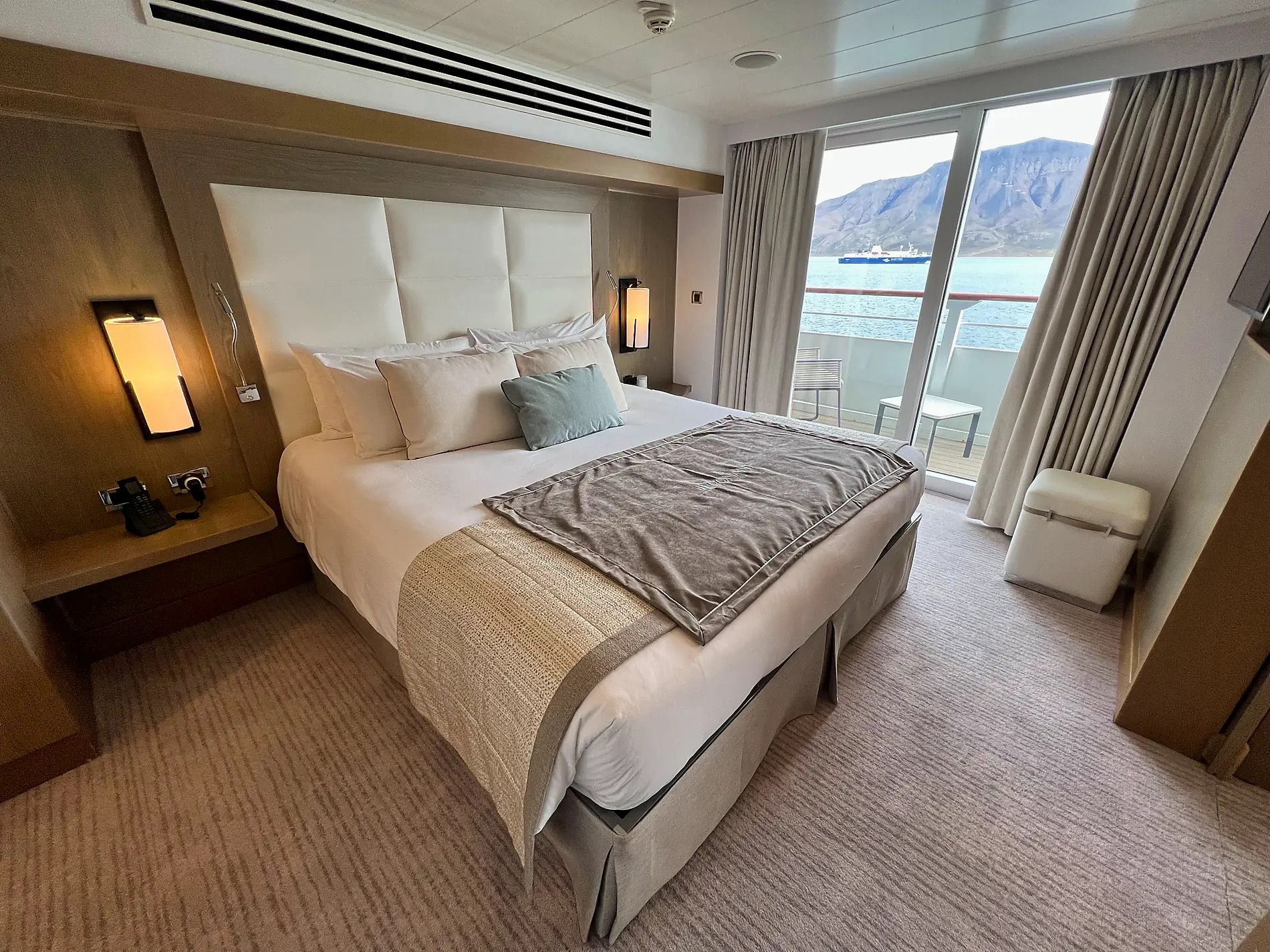
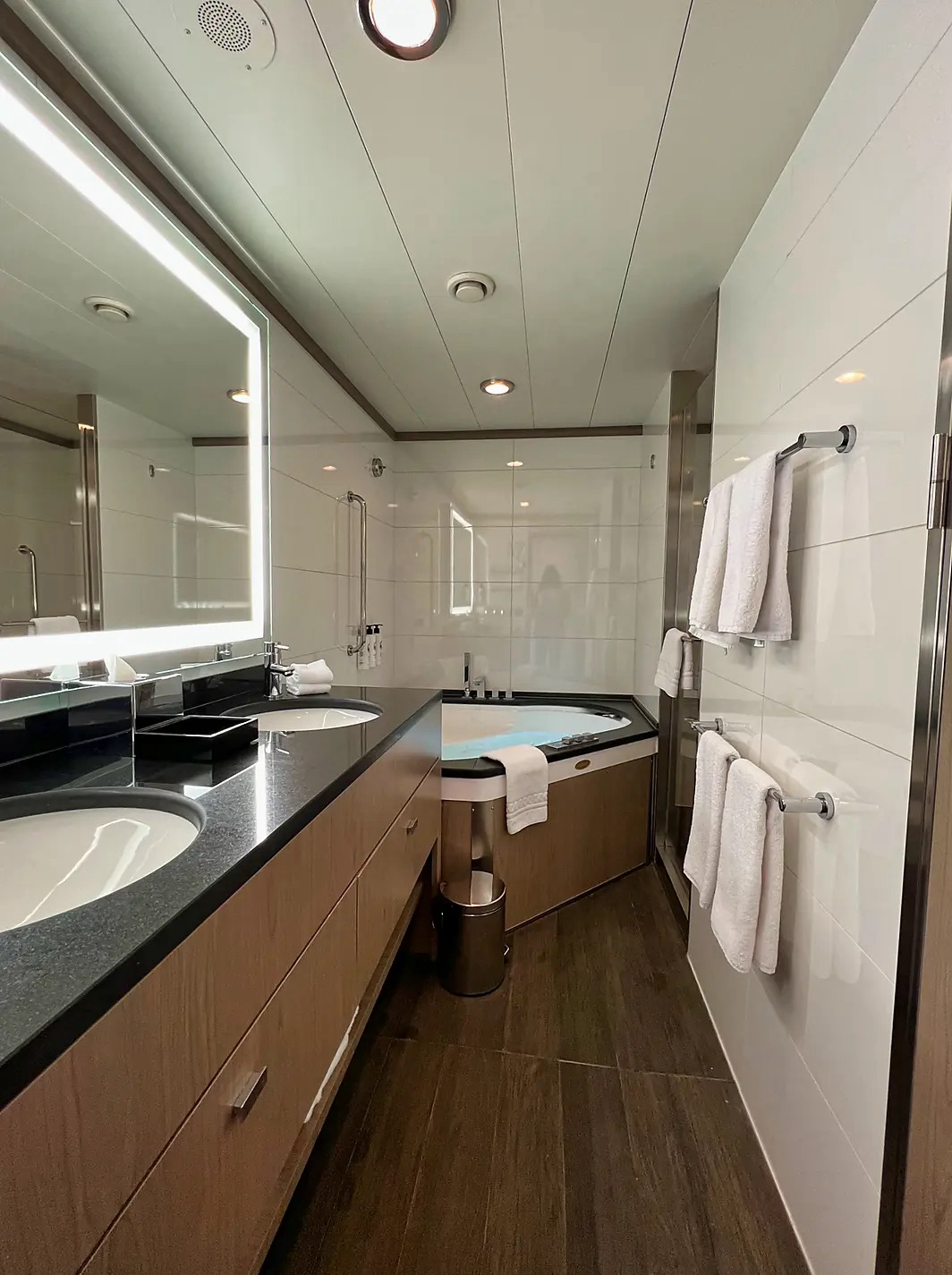
Owner's Suite
In addition to the common services provided to all our suites and staterooms:
- A private 96 ft² balcony
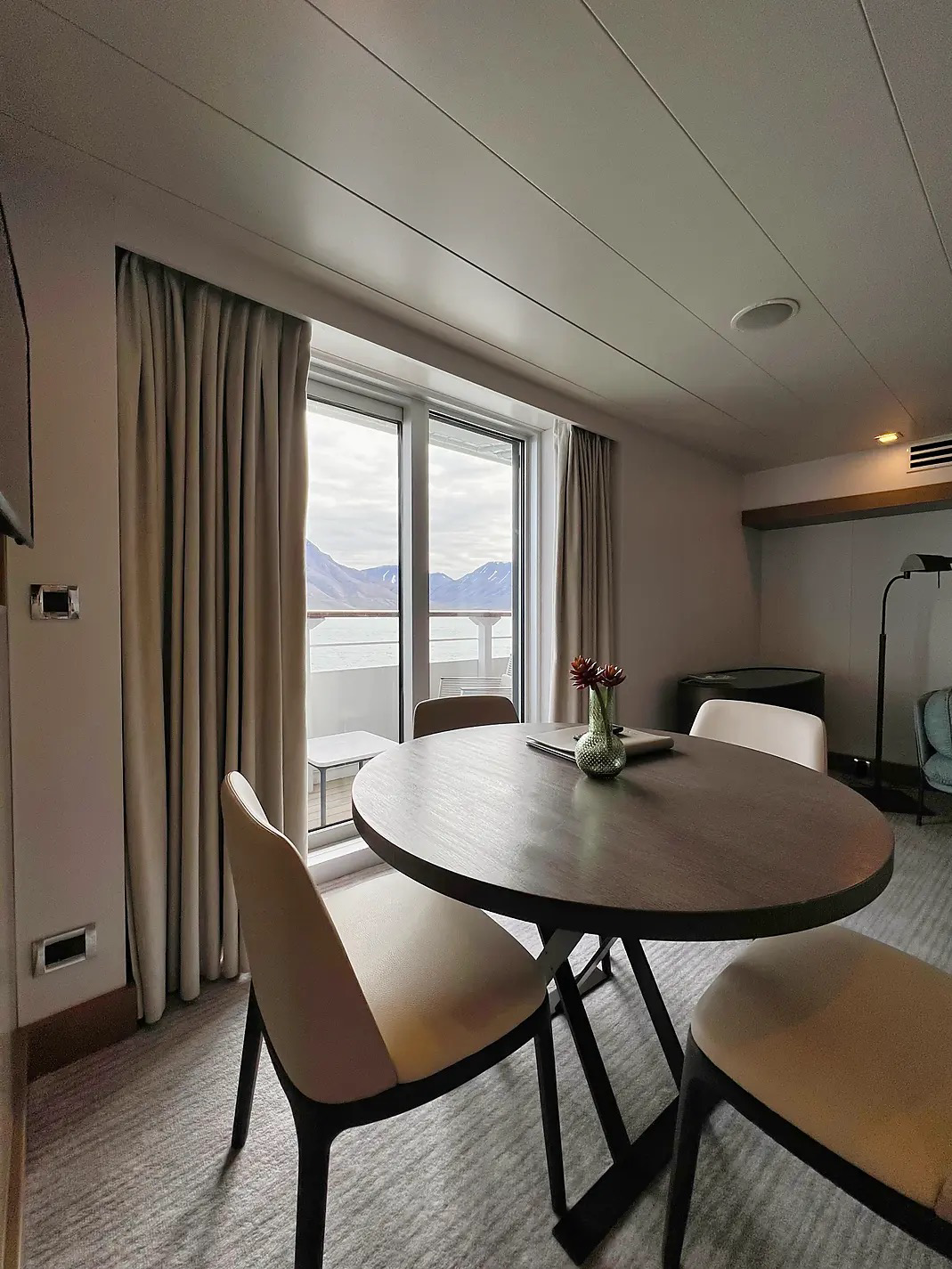
- Two sliding panoramic windows
- A bathroom with shower and spa bath
- Priority boarding (depending on port of embarkation)
- A one-hour treatment per person (for 2 people) in the wellness area, including body and facial treatments
- A private return transfer
- Butler service
- Champagne and fruit on arrival
- A fruit basket every day
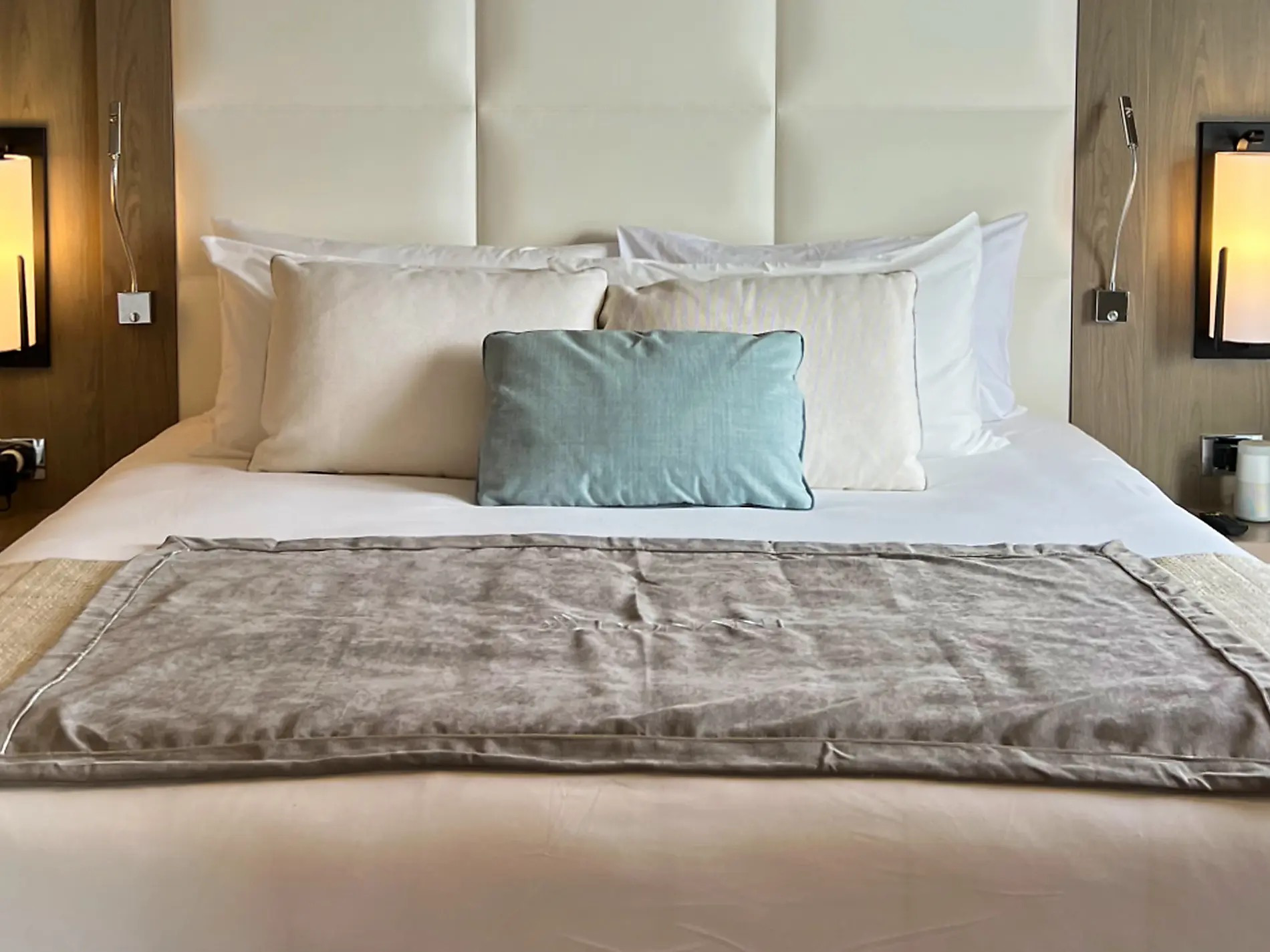
- One bedroom with king-size bed (180 x 190 cm) or two single beds (90 x 190 cm)
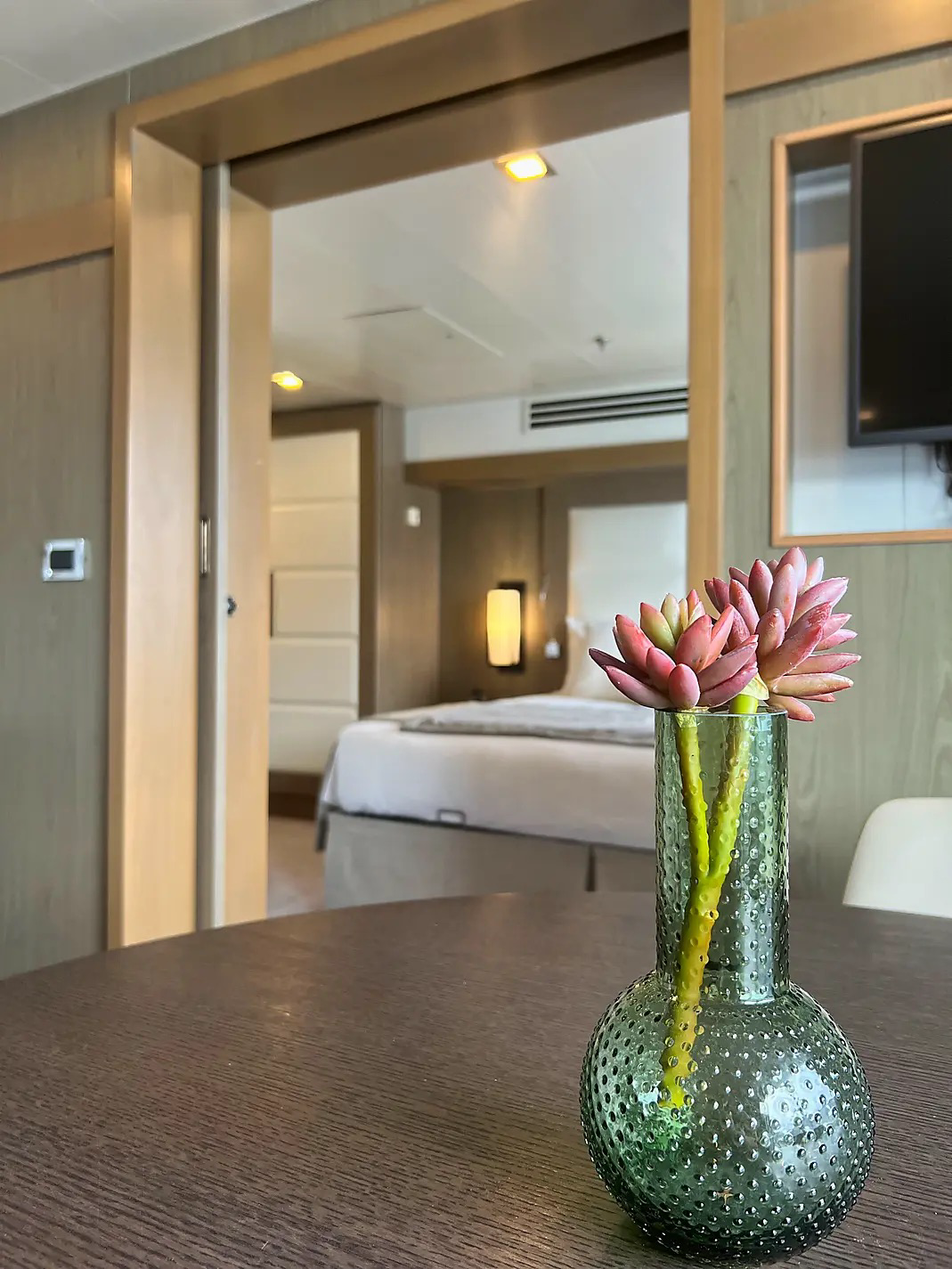
- A living-dining room with a sofa, armchair, second TV, a table for four, and a courtesy sliding door
- Included premium pass: access to a selection of premium spirits at the bar
Included in all staterooms
- Minibar
- Diptyque Paris top-of-the-line bath products
- Bose Bluetooth speaker
- Individually-controlled air conditioning
- Nespresso coffee maker and boiler
- Dressing room with shelves and closet
- 110V American / 220V European
- Dressing table and hairdryer
- Direct line telephone
- Three ADA staterooms
- 24-hour room service
- Flat screen TV, international channels and videos on demand
- Inclusive Wifi internet


Prestige Suite
In addition to the common services provided to all our suites and staterooms:
- A private 86 ft² balcony
- Two sliding panoramic windows
- Two bathrooms with showe
- Priority boarding, depending on port of embarkation (Prestige Suite Deck 6)
- Butler service (Prestige Suite Deck 6)
- Champagne and fruit on arrival and a fruit basket every day (Prestige Suite Deck 6)
- One bedroom with king-size bed (180 x 190 cm) or two single beds (90 x 190 cm)
- A living room with a convertible sofa into a king-size or two single beds, armchairs, second TV, and a courtesy sliding door
Included in all staterooms
- Minibar
- Diptyque Paris top-of-the-line bath products
- Bose Bluetooth speaker
- Individually-controlled air conditioning
- Nespresso coffee maker and boiler
- Dressing room with shelves and closet
- 110V American / 220V European
- Dressing table and hairdryer
- Direct line telephone
- Three ADA staterooms
- 24-hour room service
- Flat screen TV, international channels and videos on demand
- Inclusive Wifi internet


Deluxe Suite
In addition to the services available to all our suites and cabins :
- A private 5m2 balcony
- A bathroom with shower and small bathtub
- Butler service
- Priority boarding (depending on port of embarkation)
- Champagne and fruit on arrival
- A fruit basket every day
- One king-size bed (180 x 190 cm) or two single beds (90 x 190 cm)
- An armchair and sofa
Included in all staterooms
- Minibar
- Diptyque Paris top-of-the-line bath products
- Bose Bluetooth speaker
- Individually-controlled air conditioning
- Nespresso coffee maker and boiler
- Dressing room with shelves and closet
- 110V American / 220V European
- Dressing table and hairdryer
- Direct line telephone
- Three ADA staterooms
- 24-hour room service
- Flat screen TV, international channels and videos on demand
- Inclusive Wifi internet


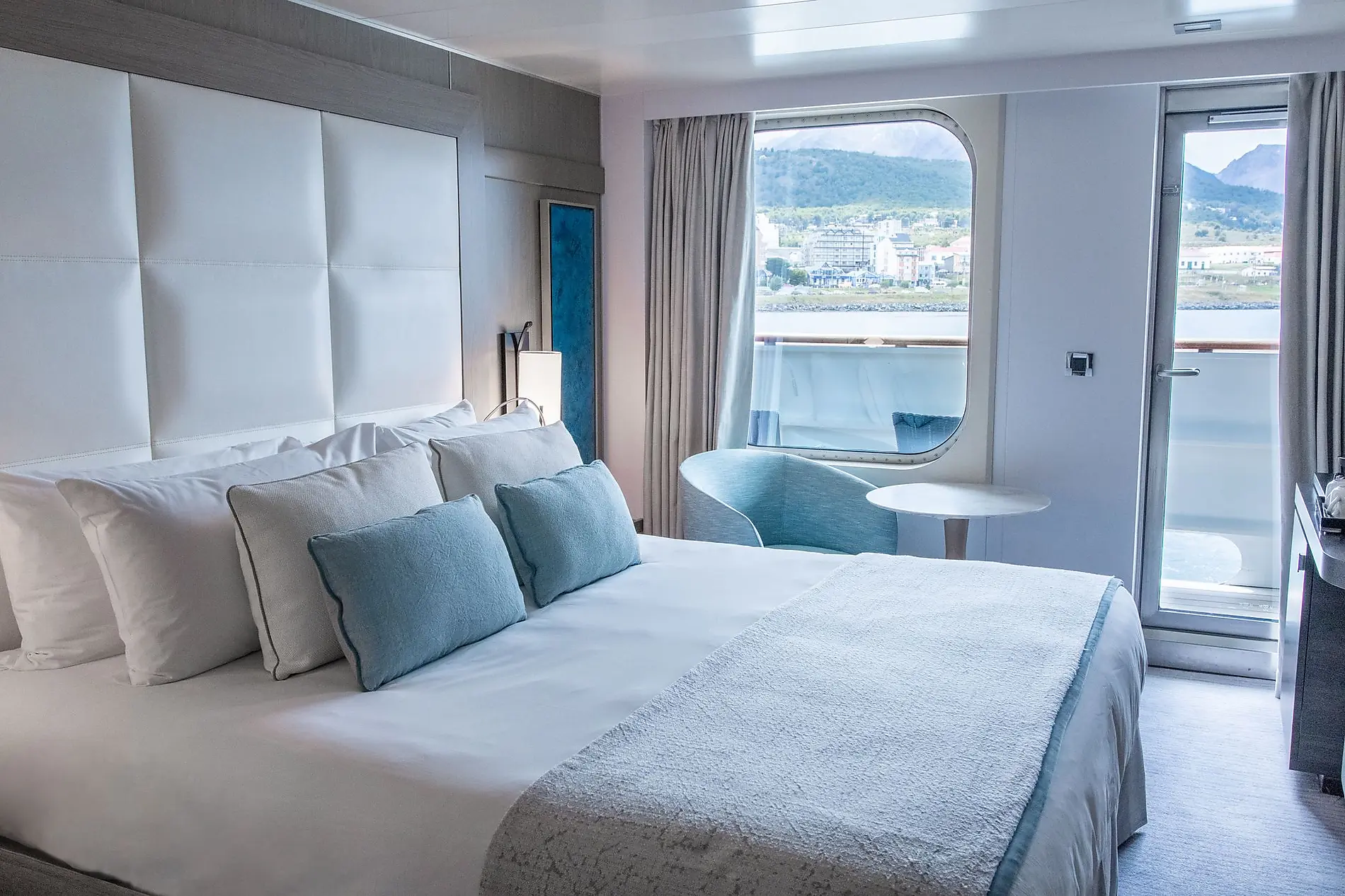
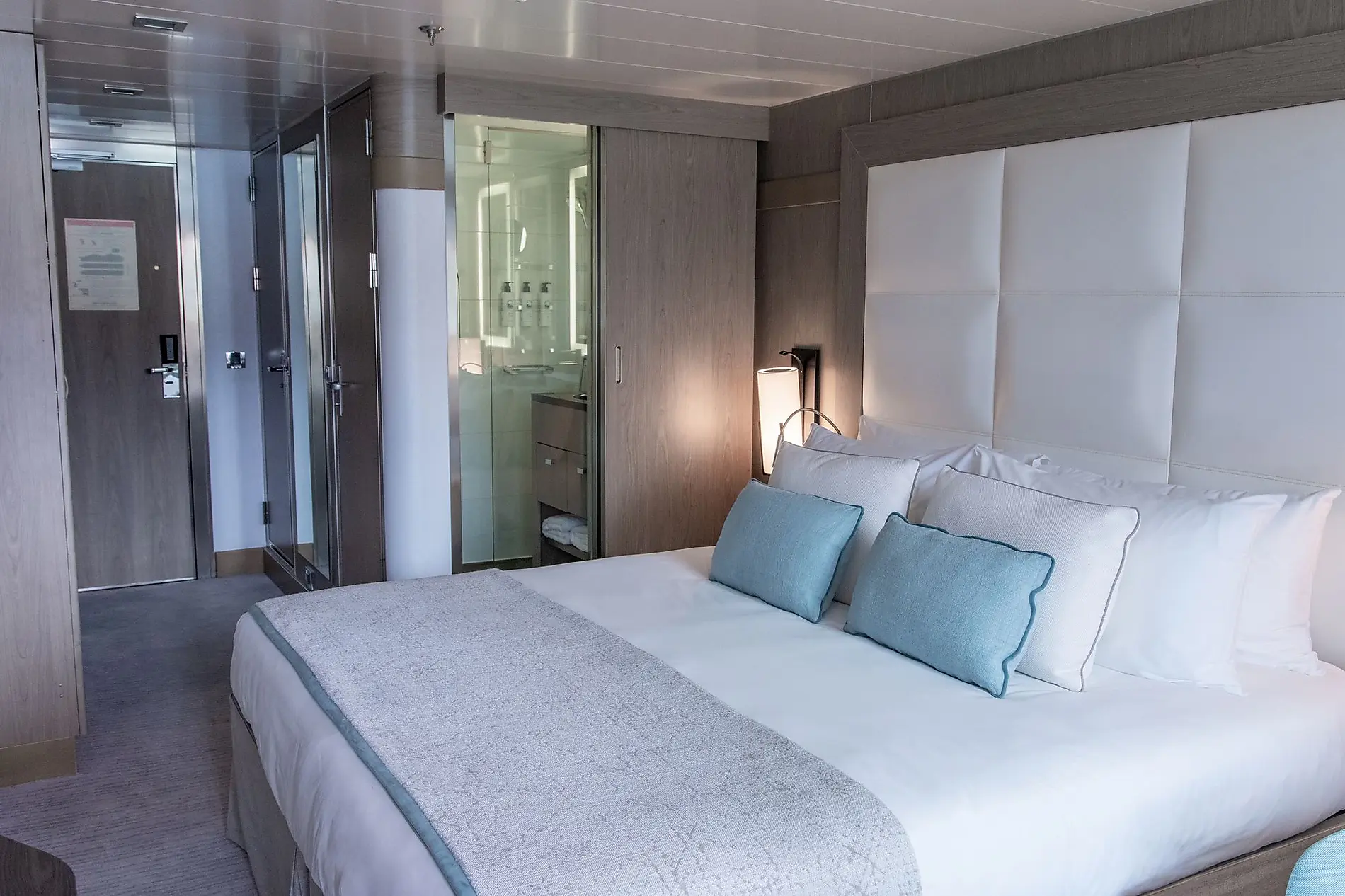
Upper Decks Balcony Stateroom
In addition to the common services provided to all our suites and staterooms:
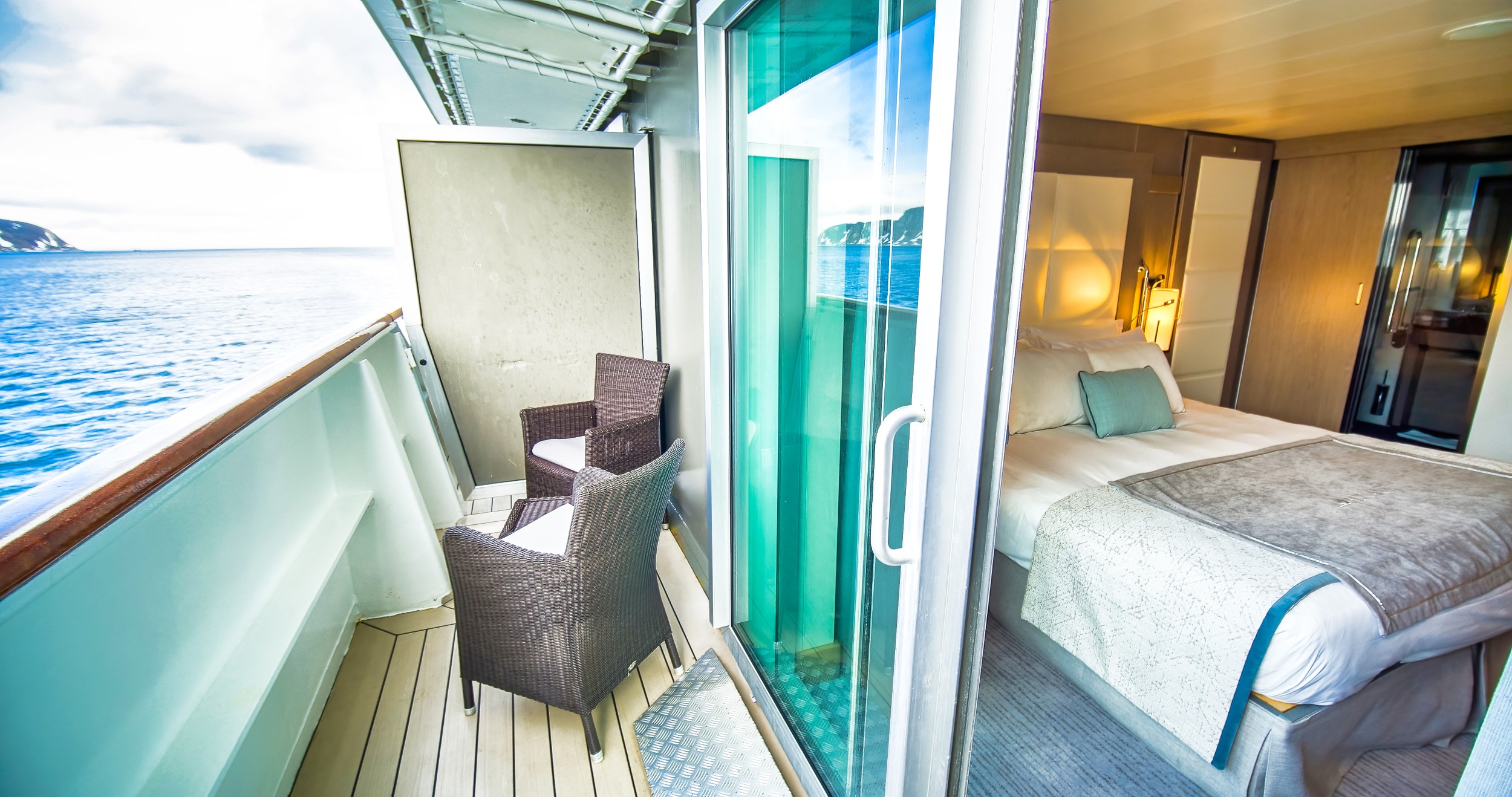
- A private 43 ft² balcony
- A sliding panoramic window
- Bathroom with shower
- One king-size bed (180 x 190 cm) or two single beds (90 x 190 cm)
Included in all staterooms
- Minibar
- Diptyque Paris top-of-the-line bath products
- Bose Bluetooth speaker
- Individually-controlled air conditioning
- Nespresso coffee maker and boiler
- Dressing room with shelves and closet
- 110V American / 220V European
- Dressing table and hairdryer
- Direct line telephone
- Three ADA staterooms
- 24-hour room service
- Flat screen TV, international channels and videos on demand
- Inclusive Wifi internet

Lower Decks Balcony Stateroom
In addition to the common services provided to all our suites and staterooms:
- A private 43 ft² balcony
- A porthole and glass door
- Bathroom with shower
- One king-size bed (180 x 190 cm) or two single beds (90 x 190 cm)
Included in all staterooms
- Minibar
- Diptyque Paris top-of-the-line bath products
- Bose Bluetooth speaker
- Individually-controlled air conditioning
- Nespresso coffee maker and boiler
- Dressing room with shelves and closet
- 110V American / 220V European
- Dressing table and hairdryer
- Direct line telephone
- Three ADA staterooms
- 24-hour room service
- Flat screen TV, international channels and videos on demand
- Inclusive Wifi internet


Window or Porthole Stateroom
In addition to the common services provided to all our suites and staterooms:
- One king-size bed or two single beds (180 x 200 cm)
- A bathroom with shower
- A window (except for stateroom 300: a round porthole only)
Included in all staterooms
- Minibar
- Diptyque Paris top-of-the-line bath products
- Bose Bluetooth speaker
- Individually-controlled air conditioning
- Nespresso coffee maker and boiler
- Dressing room with shelves and closet
- 110V American / 220V European
- Dressing table and hairdryer
- Direct line telephone
- Three ADA staterooms
- 24-hour room service
- Flat screen TV, international channels and videos on demand
- Inclusive Wifi internet
La Licorne
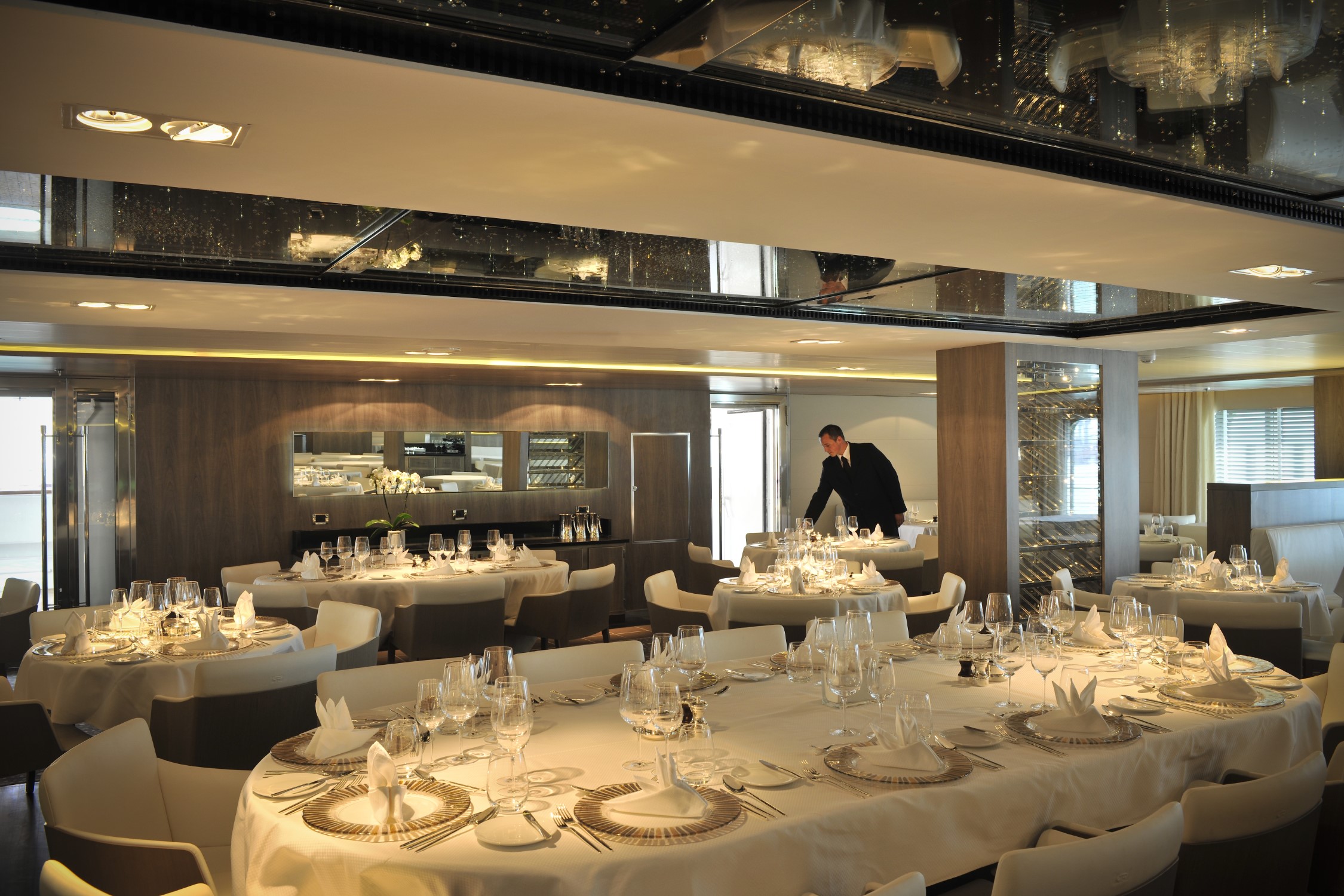
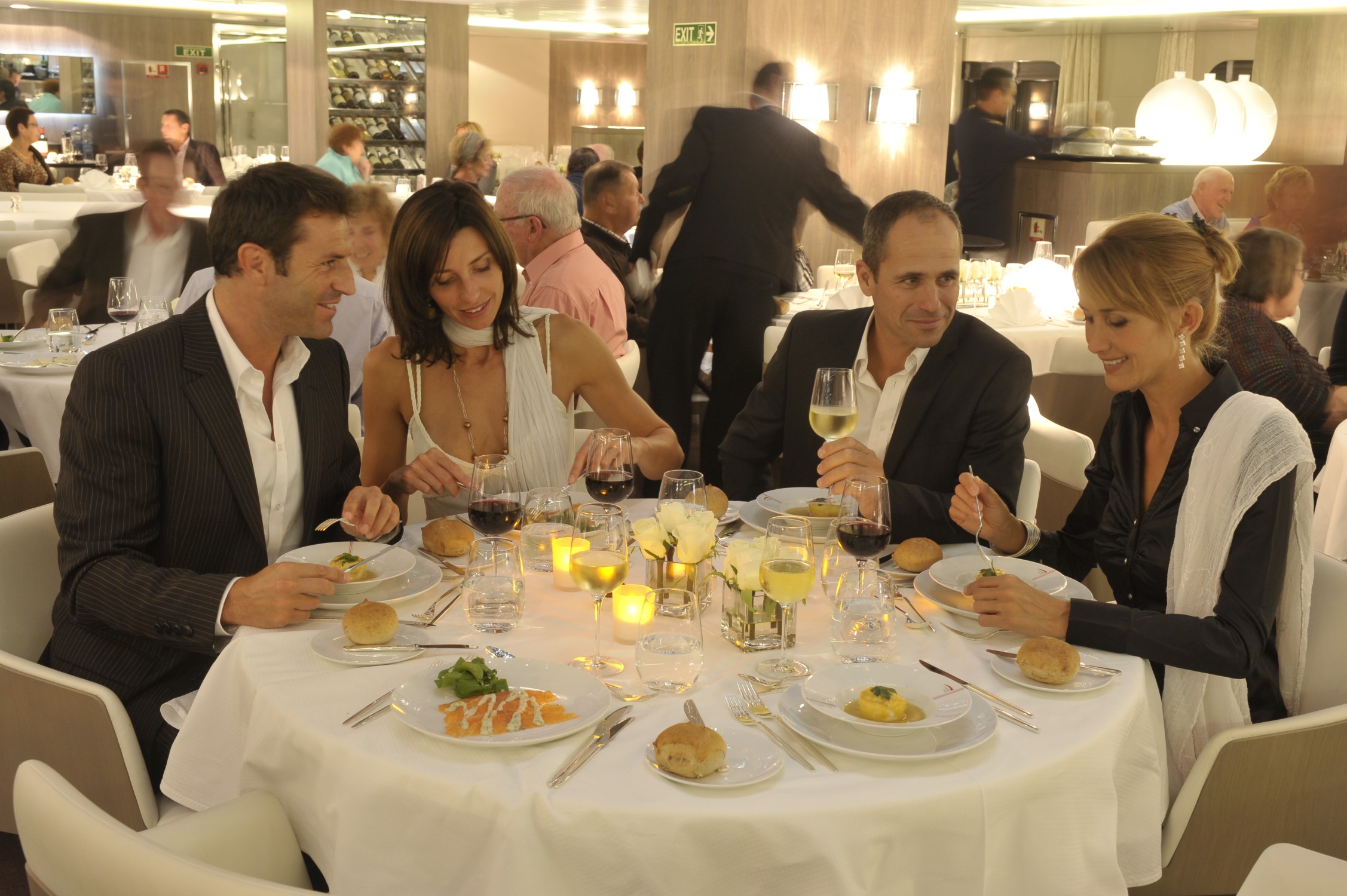
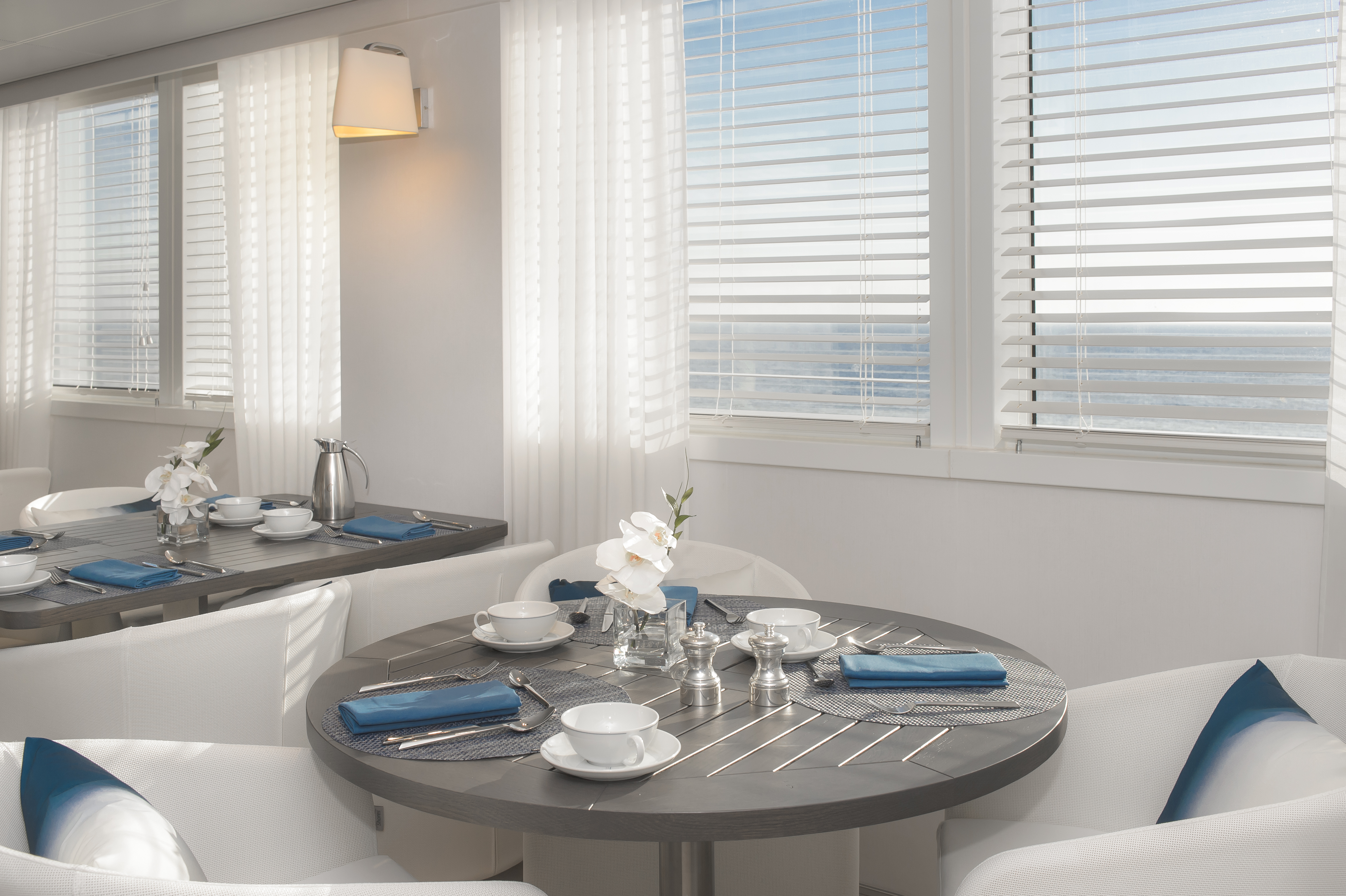
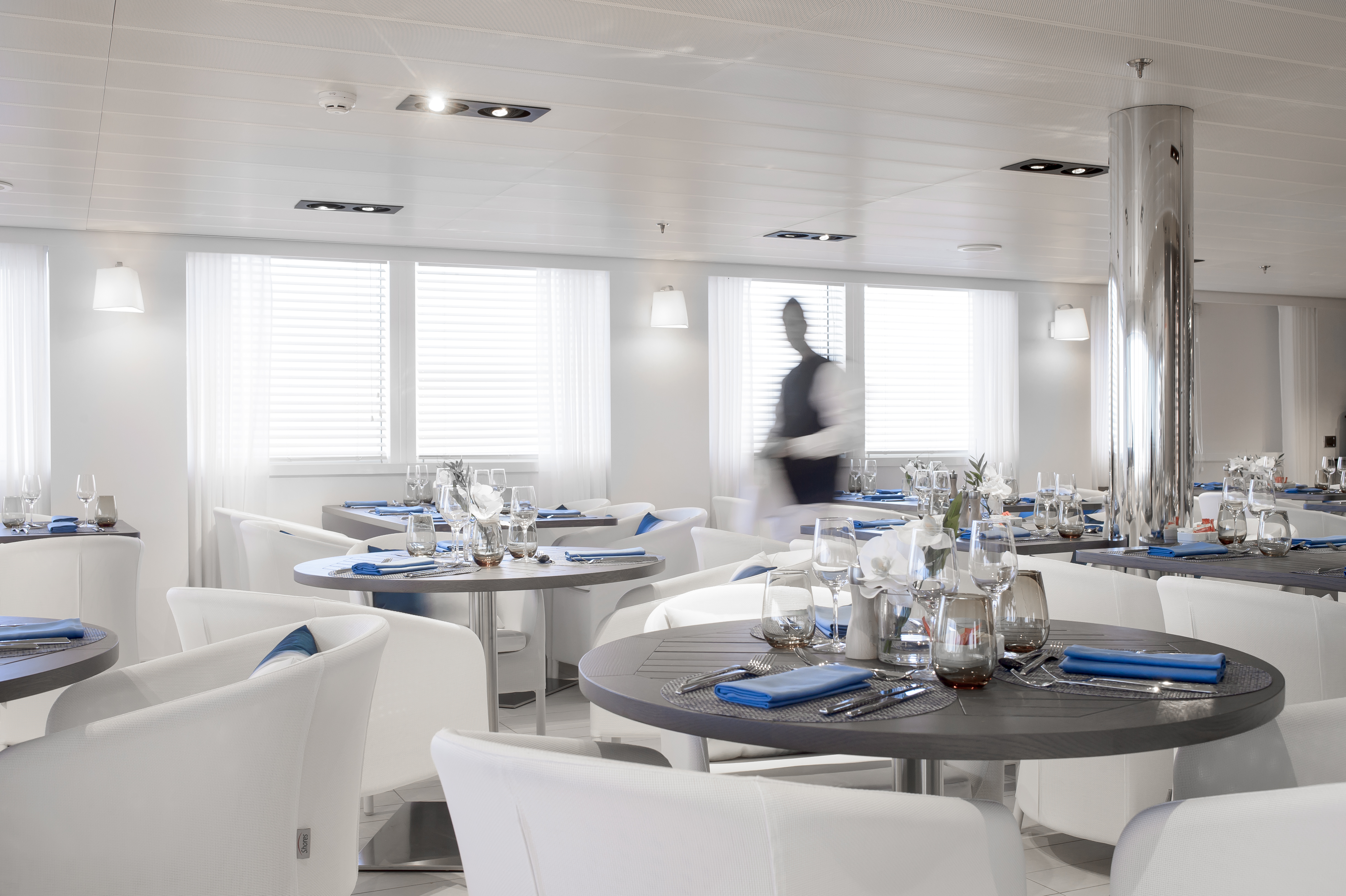
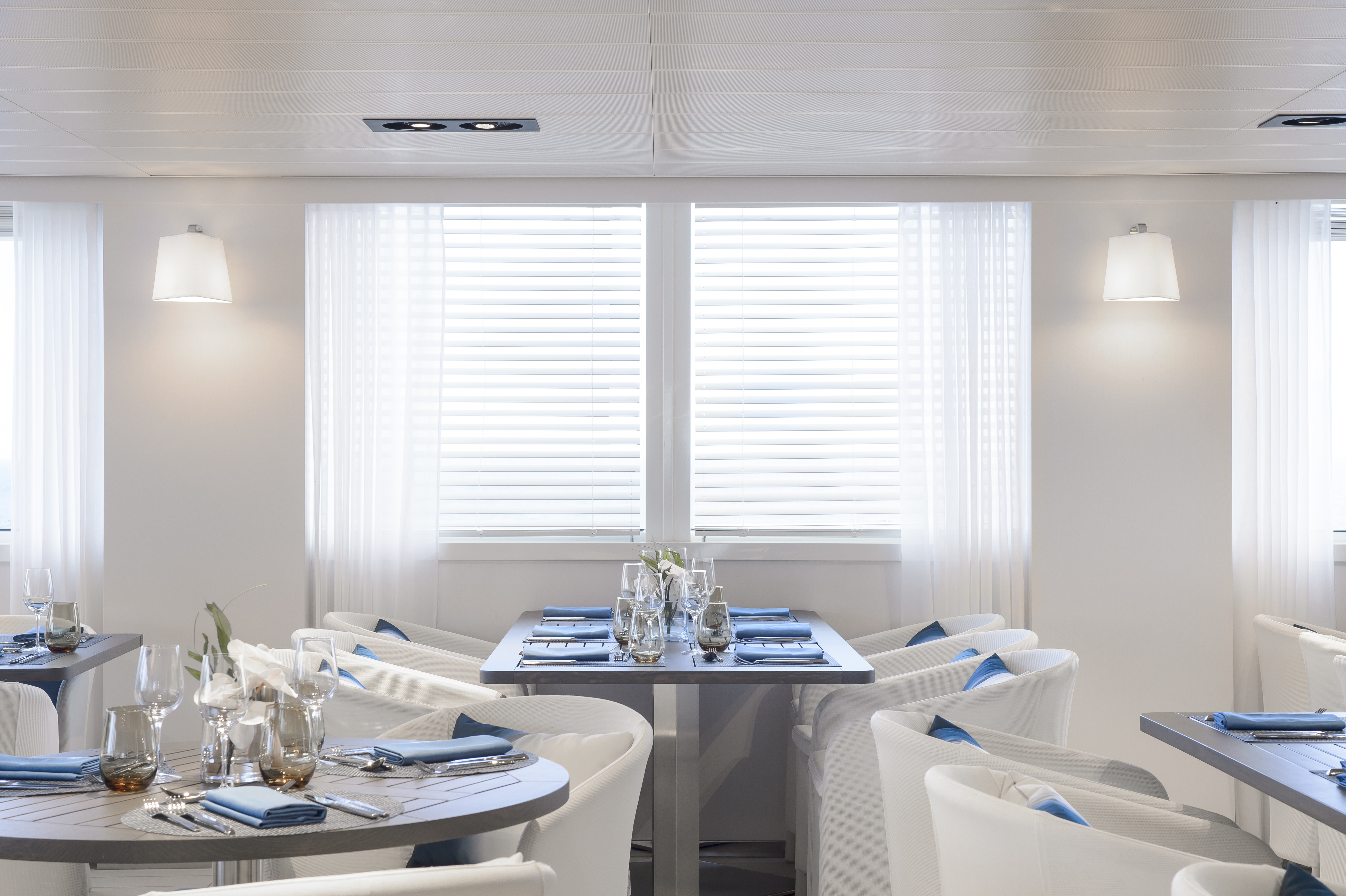
At the back of deck 2, you will find a gourmet restaurant with a wine cellar, offering French and international cuisine. It can accommodate all guests in a single service for breakfast, lunch and dinner.
La Boussole
In a relaxed atmosphere, the grill restaurant located on deck 6 welcomes you for breakfast and buffet lunches as well as themed dinners.
Room Service
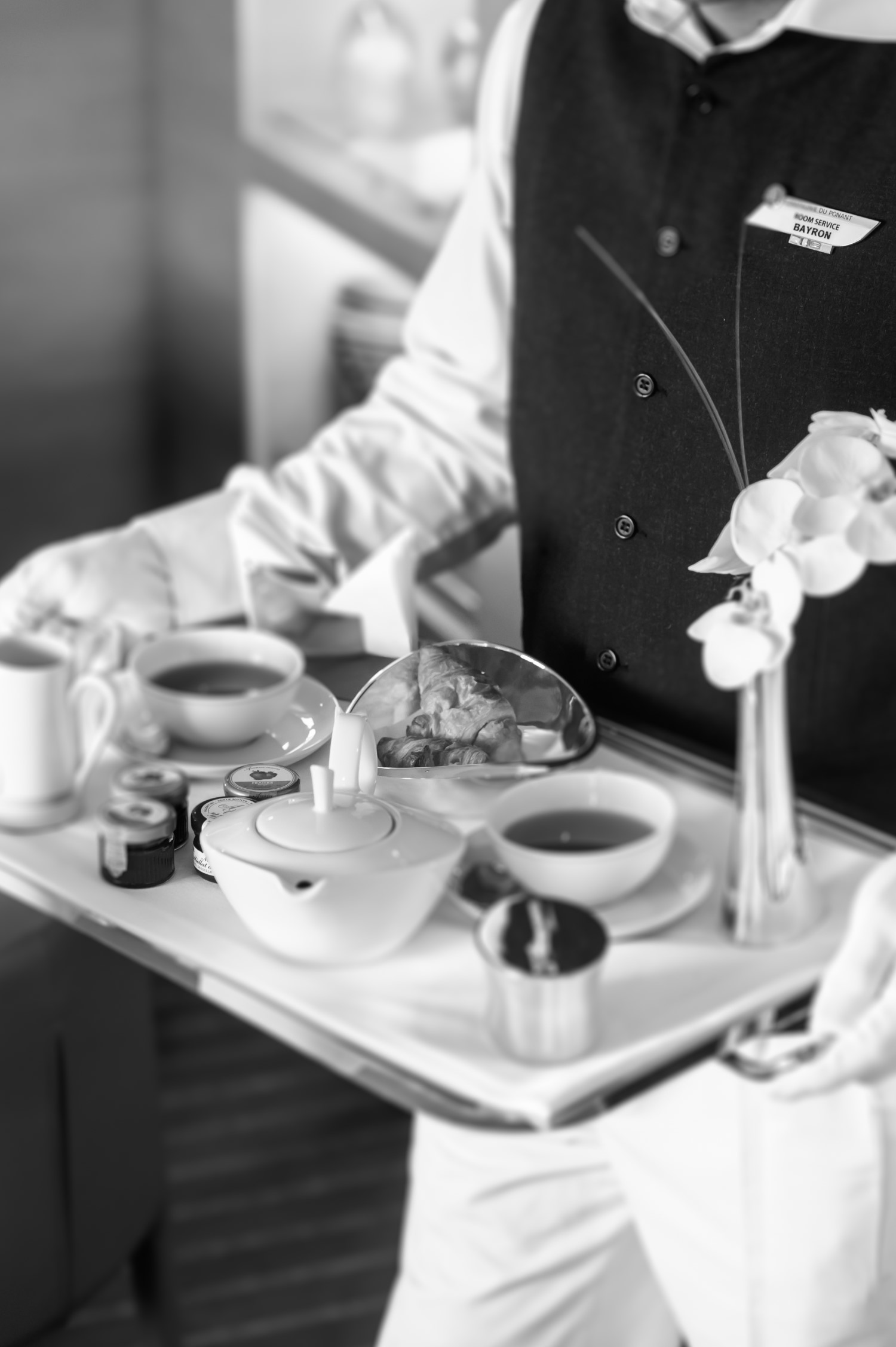
Whether you want to fully enjoy your cabin for breakfast, savor a peaceful snack in the middle of the day, or have your meal in complete privacy, room service is at your disposal. Treat yourself to a moment of indulgence and enjoy a diverse menu available at any time of day and night.


The Main Lounge Room
Tea room, bar, live music, dance floor, terrace: the main lounge is an essential meeting place throughout your journey.






The Observatory Lounge
Library, internet space, bar, occasional live entertainment, terrace: enjoy a 180° panorama of the horizon from the observatory lounge.

The Outdoor Bar
Enjoy a drink in the outdoor lounge area with 50 seats and take in the view of the sea and the pool bridge.


Theatre
Comfortably seated, you will attend the conferences given by the guests and teams of naturalists, as well as the various shows, concerts, and performances organised by professional dancers and musicians on board.
Music and dance
Opera, jazz, piano recitals, concerts or ballets at sea or on land: musical cruises and dance cruises offer privileged experiences, in small groups, alongside prestigious partners, such as Radio Classique or the Paris National Opera and talented artists of international renown.
Art and literature
Share high-quality moments and attend conferences by curators from national and international museums, women and men from the world of culture, renowned writers, actors and philosophers. They discuss their passion during conferences or private visits. Experience the opportunity to open up to new perspectives.

Swimming Pool
With its water blending into the surrounding landscapes, the pool is conducive to moments of relaxation in the sun.
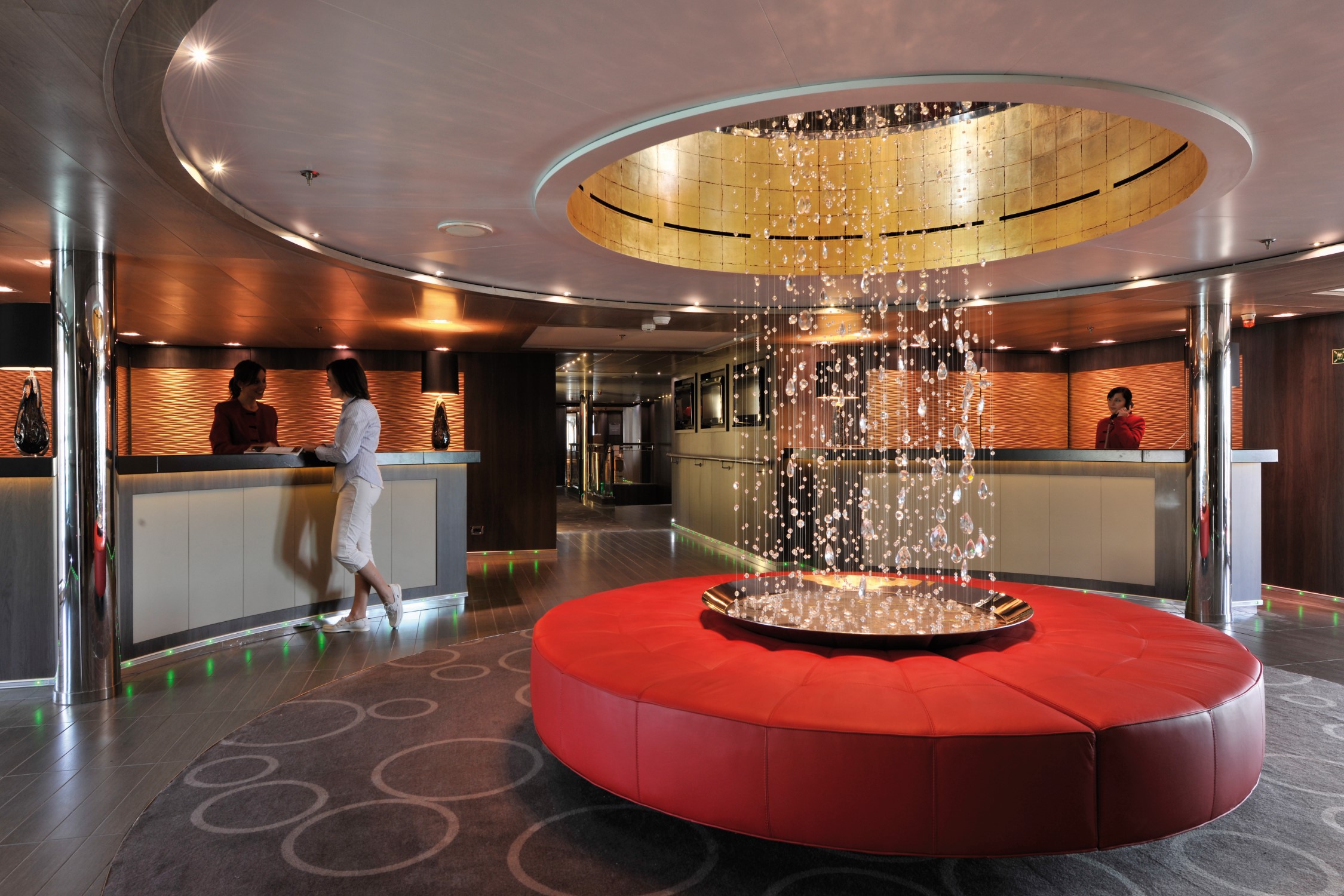
Excursion Reception and Office
If you have not made a pre-booking before your cruise, you can book your excursions on board during one of the daily opening times of the excursion desk (timetables available in your daily program). It is only possible to pre-book one excursion per port day. If you would like to book a second excursion on the same day, please contact the excursion desk to check availability.

PONANT Studio
A photography and videography team escort you throughout your trip. These professionals capture the most beautiful moments of your cruise, which you can share with family and friends upon your return. Meet them on DECK 5 (DECK 6 on the PONANT Explorers ships) at the photo/video area, where you can also order souvenir pictures and videos.
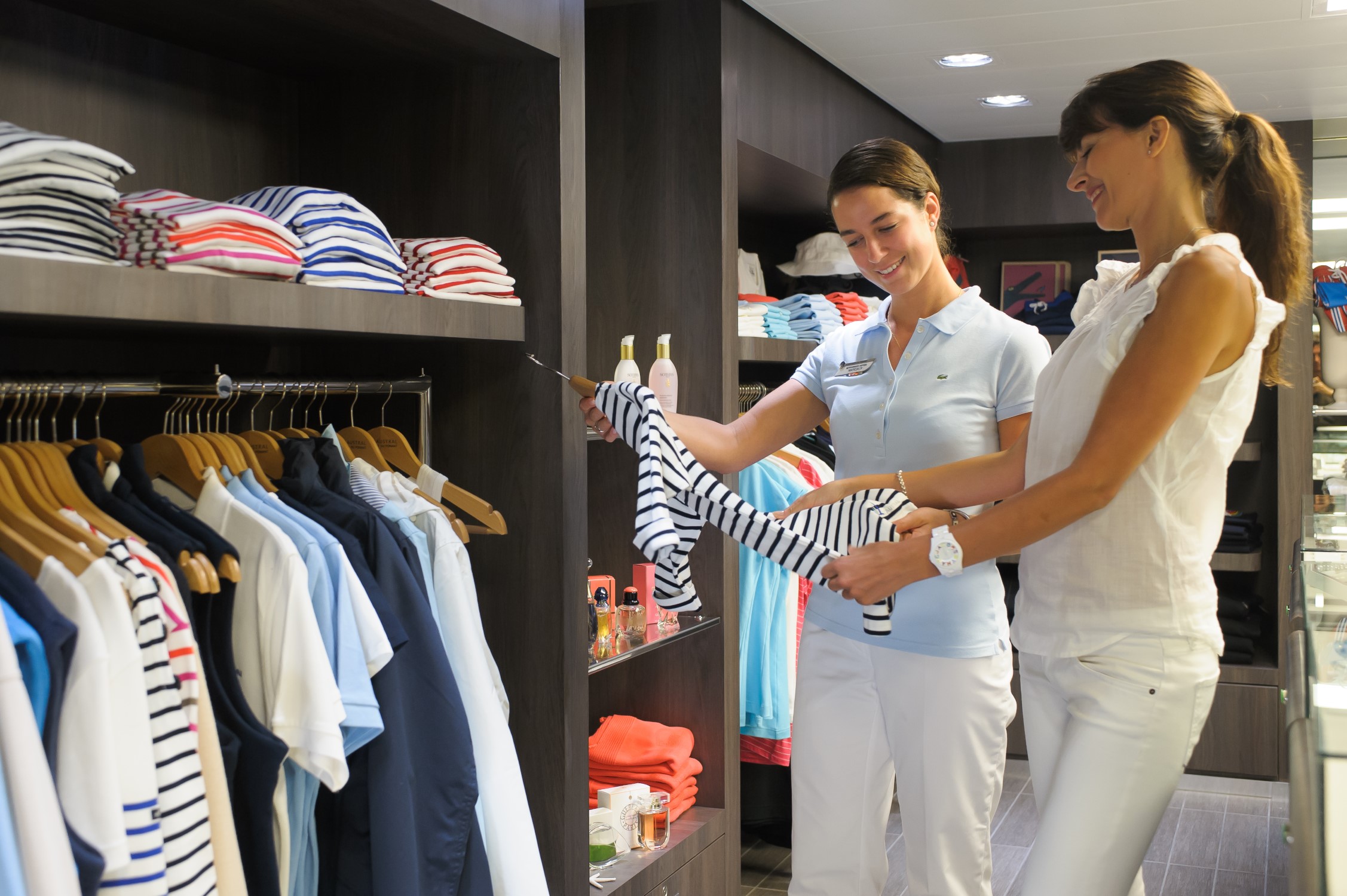
Boutique
An extension of the journey and the ship, la Boutique offers an exclusive shopping experience with a wide range of technical and casual ready-to-wear and equipment, with or without PONANT personalization. It also features unique souvenirs to extend the journey back home, as well as jewelry, accessories and luxury items. Opening hours follow the voyage schedule, including days at sea, and all purchases on board are tax-free.
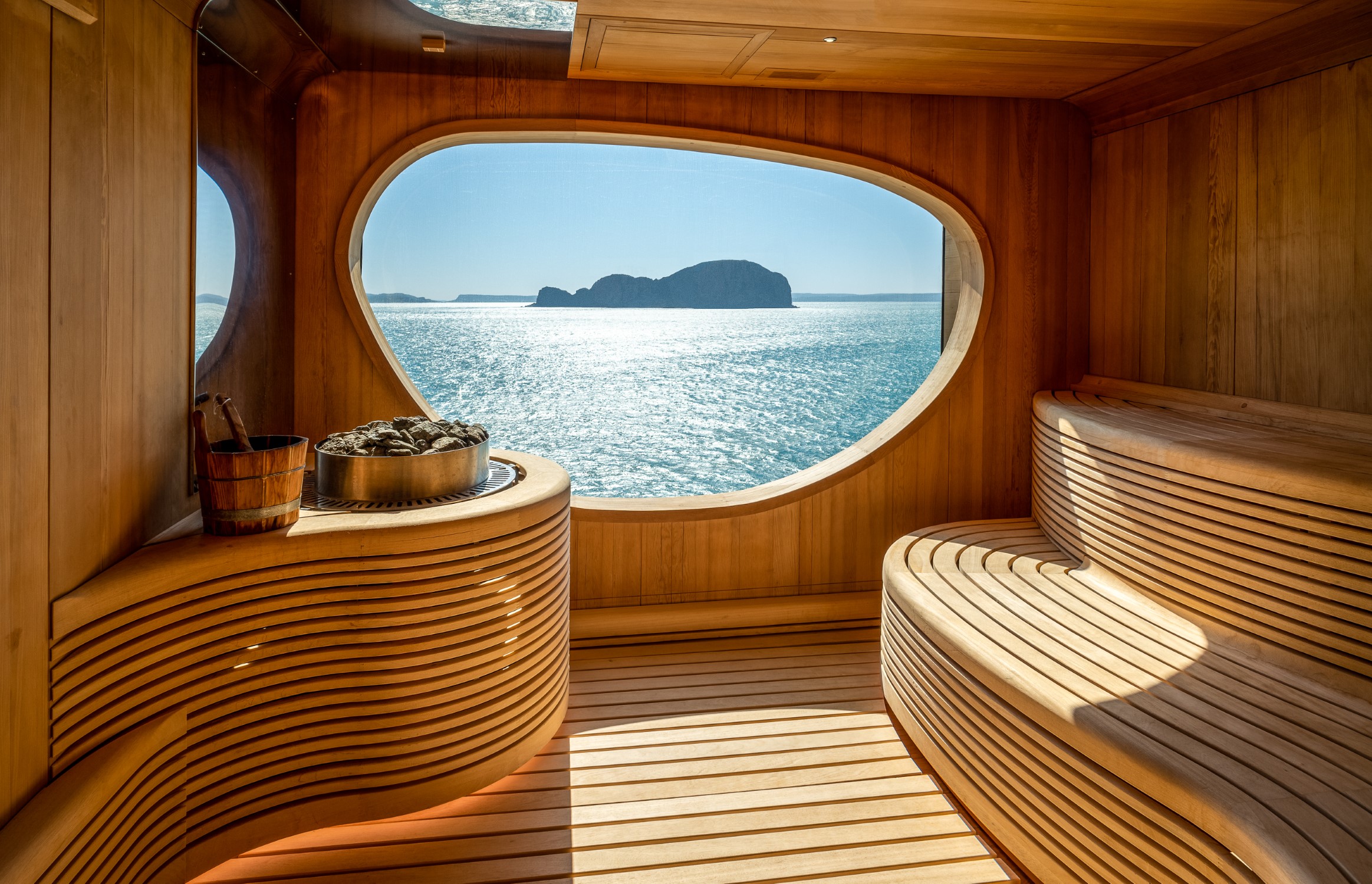
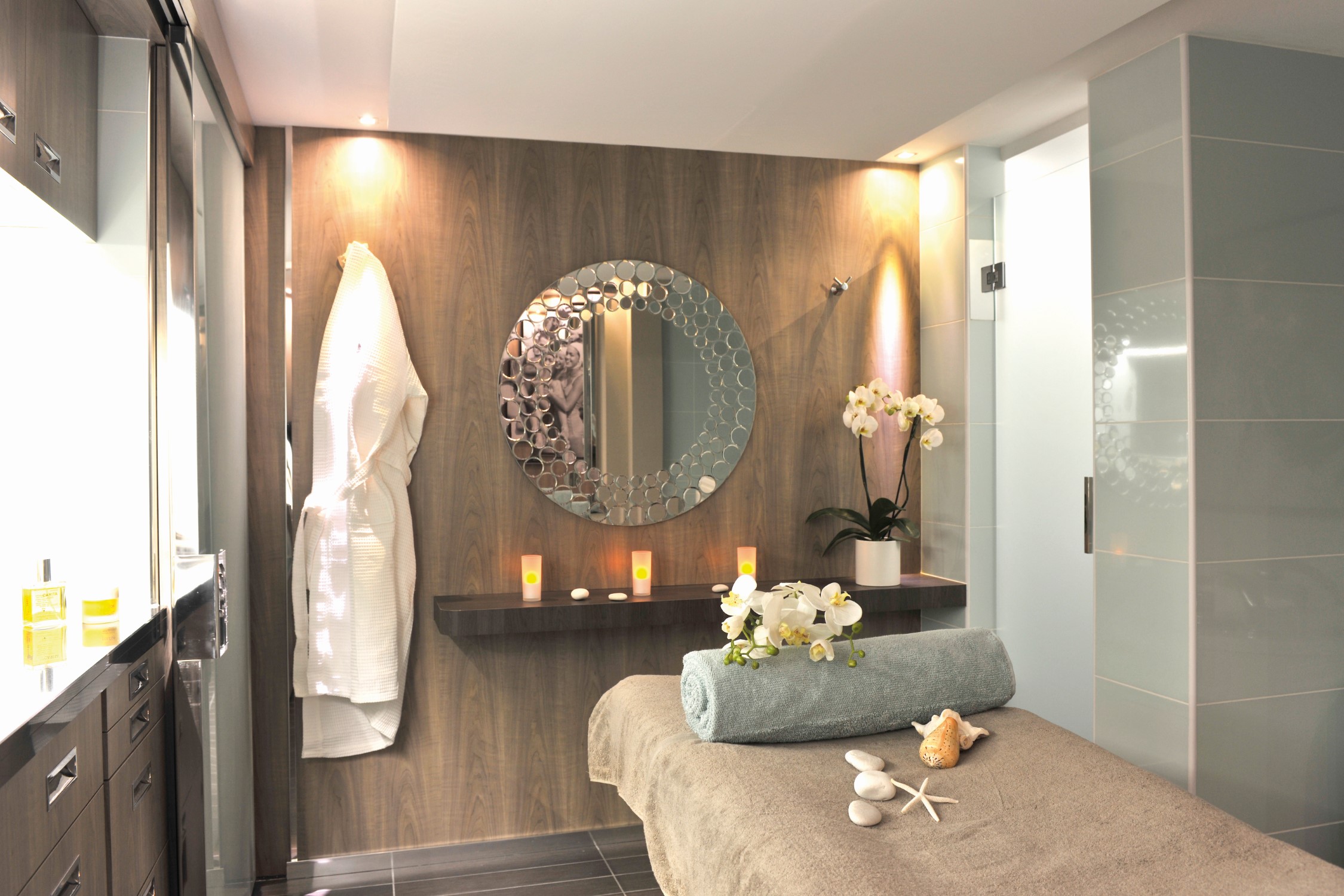
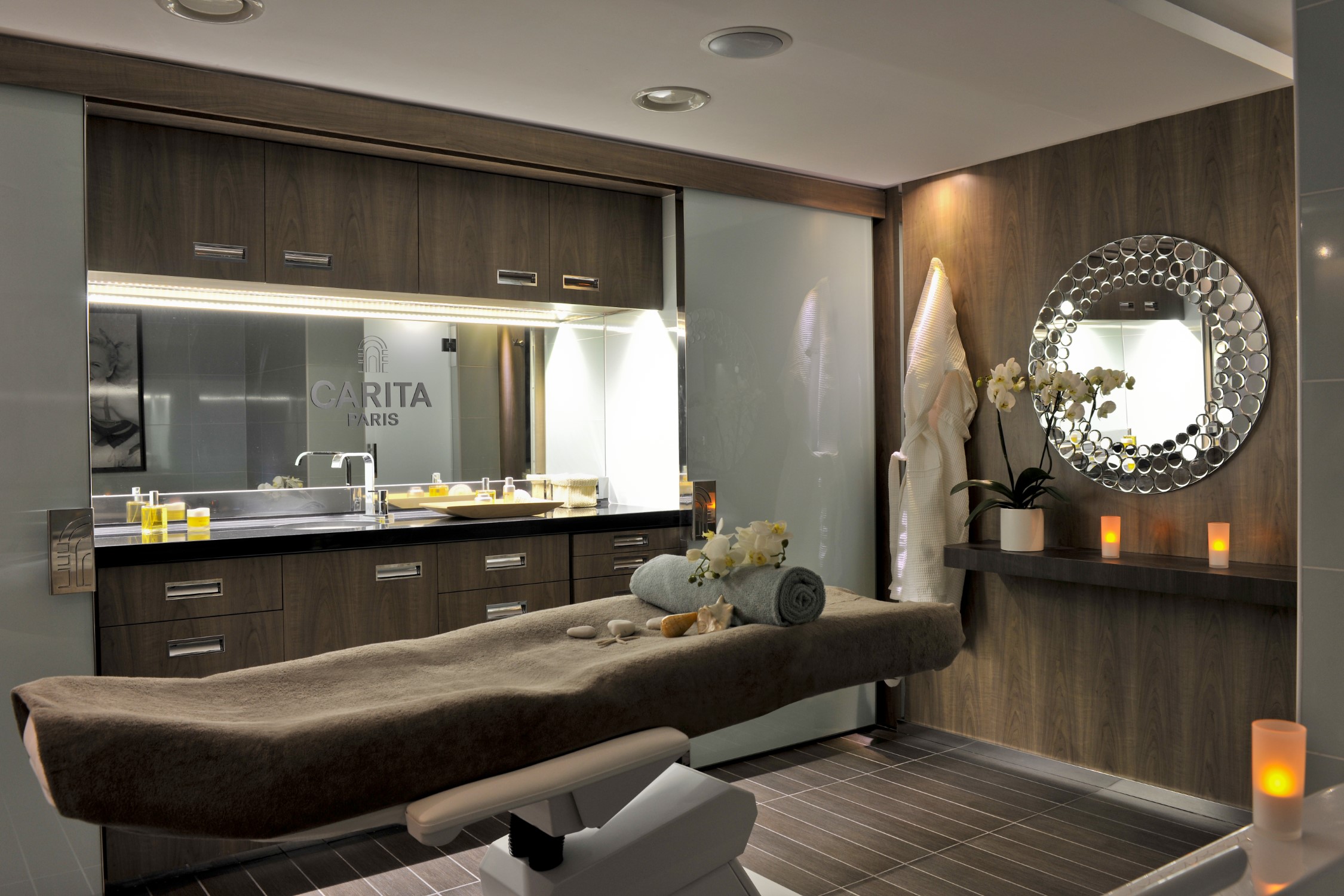
The Spa
Onboard our ships, in the heart of an intimate and privileged environment with the ocean as your backdrop, discover a new way to enjoy the Spa experience.
In association with SOTHYS™ Paris, we are offering you a selection of expert face and body treatments. The “savoir-faire” and expertise of our hair professional partner DAVINES® will be able to satisfy all your expectations.
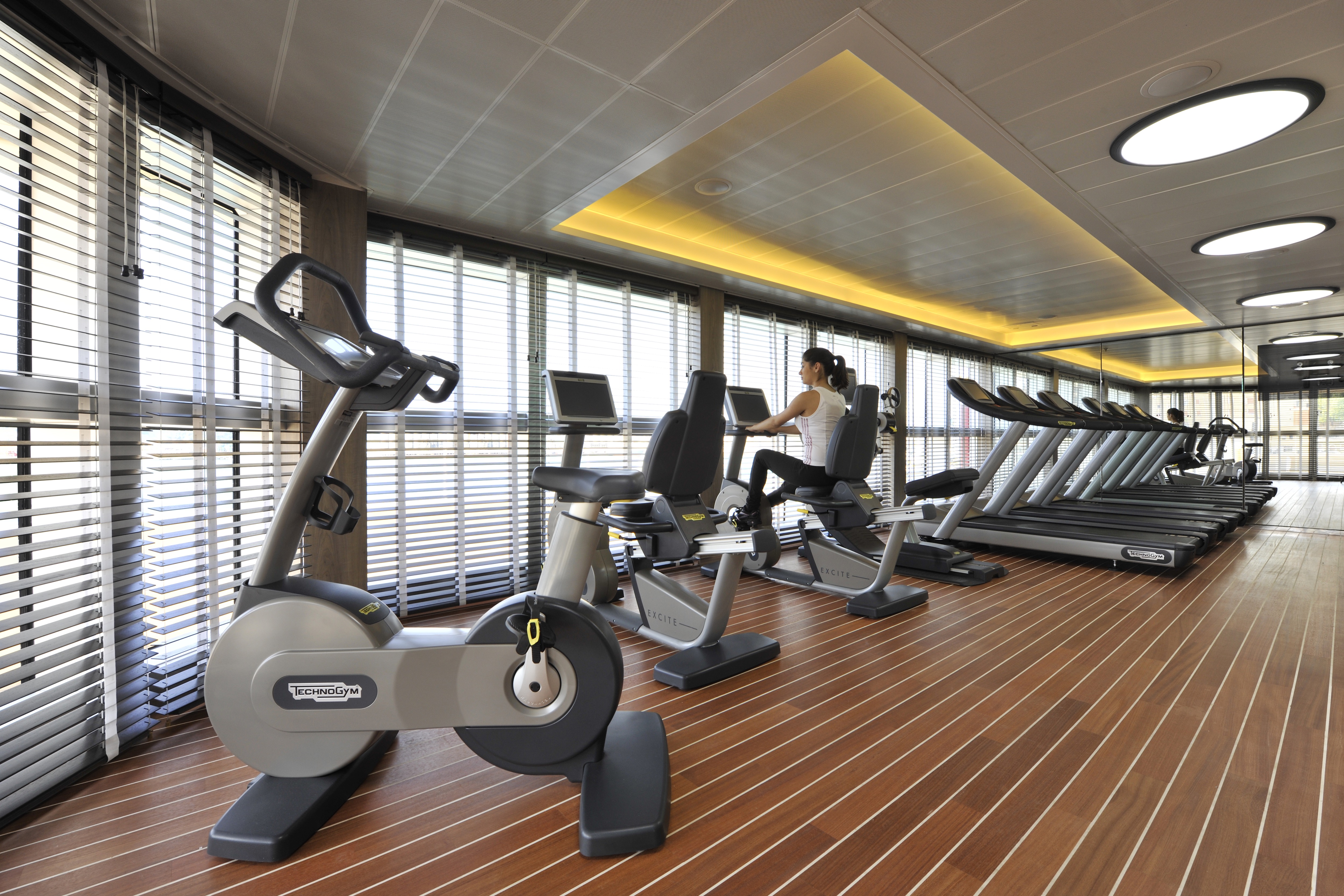
The Fitness Centre
The fitness room offers a wide range of exercises suitable for all levels to train facing magnificent views.

The Hairdressing Salon
Each product has been crafted using the most advanced cosmetic technologies and natural ingredients. Developed and packaged while minimising the environmental impact, Davines® products are inspired by the Sustainable Beauty ideal, an inseparable unit between Beauty and Being. During your cruise, treat your hair to a unique beauty experience. Our expert stylist will do an in-depth analysis of your hair and recommend the most appropriate treatment.